When should game review scores be revised after post-launch patches or new content?
The Evolving Landscape of Game Reviews
In the fast-paced world of video games, a title’s initial release is rarely its final form. Post-launch development, including crucial bug fixes, performance enhancements, and substantial new content via DLC or free updates, has become the norm. This evolving nature of modern games presents a unique challenge for traditional game reviews, which are typically published within days or weeks of a game’s launch. The core question then arises: should a review score, often seen as a definitive judgment, be revised to reflect these significant post-launch changes?
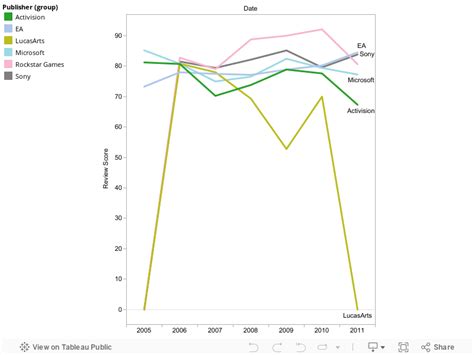
Traditionally, a review captures a game’s state at a specific moment in time. It’s a snapshot, informing consumers about what they can expect on day one. However, with many games, particularly live-service titles or those with notoriously rocky launches, that day-one experience can be vastly different from the experience six months or a year later. This disparity has led to a growing debate among players, developers, and critics alike about the responsibility of review outlets to maintain accurate, up-to-date assessments.

The Case for Score Revisions
There are compelling arguments for revisiting and potentially revising review scores. Perhaps the most obvious is when a game launches with severe technical issues – game-breaking bugs, abysmal performance, or critical design flaws – that are later addressed through extensive patching. If these fixes fundamentally transform the player experience from frustrating to enjoyable, an updated score could better reflect the game’s current quality for prospective buyers.
Similarly, the addition of significant new content can drastically alter a game’s value proposition. A barren open world might become vibrant with new quests and areas, or a shallow combat system might gain depth through new mechanics or characters. If this new content is so substantial that it feels like an expansion of the core experience rather than a mere add-on, it warrants a re-evaluation of the game’s overall score. This is especially true when the original review explicitly criticized the lack of content or longevity.

The Challenges and Counterarguments
Despite the merits of score revision, the practice is fraught with challenges. One primary concern is the historical integrity of the initial review. Critics argue that changing an original score erases the historical context of a game’s launch and the experience early adopters faced. A game that launched broken but was later fixed still was broken, and the original review serves as a record of that.
Practicalities also play a role. The sheer volume of games released, combined with the continuous patching cycle, makes constant re-reviewing an immense logistical burden for review outlets. When is a change significant enough to warrant a score revision? How much new content constitutes a new review? And what about games that get worse after patches or poorly received DLC? Consistency and a clear methodology are crucial but difficult to establish.

Proposed Approaches and Best Practices
Rather than a blanket approach, a nuanced strategy is often advocated. Many outlets opt for ‘living reviews’ where an initial score is given, but the article text is updated with addendums detailing significant patches or DLC, often without changing the core score. This preserves the original assessment while providing updated information. Some go further, adding a new, distinct ‘re-review’ or ‘post-launch analysis’ article with an updated score, clearly differentiating it from the original.
Transparency is key. Whatever the chosen method, review sites should clearly communicate their policies regarding post-launch updates. For live-service games, a different review philosophy might be necessary from the outset, acknowledging that the game is a continually evolving product. This could involve periodic ‘state of the game’ updates or even a rolling review score that is explicitly designed to change over time.

Conclusion: Towards a More Dynamic Review Model
The debate over revising game review scores highlights the need for game journalism to adapt to the realities of modern game development. While maintaining the historical record of a game’s launch is important, providing consumers with the most accurate and up-to-date assessment of a game’s current quality is equally vital. A dynamic approach that combines initial critical analysis with transparent, periodic updates or dedicated re-reviews for significant changes seems to be the most responsible path forward.
Ultimately, the goal of a review is to inform. As games continue to evolve long after their initial release, so too must the methodologies we employ to critically evaluate them, ensuring that the scores and analyses we provide truly reflect the experiences players have, both on day one and years down the line.