





1440p 144Hz vs. 4K 60Hz: Which monitor setup offers the best competitive gaming edge?
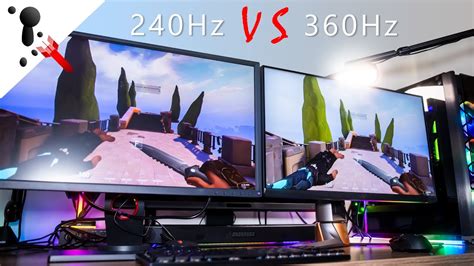
The Great Debate: Refresh Rate vs. Resolution for Competitive Gaming
In the fiercely competitive world of esports and online multiplayer, every millisecond and pixel can mean the difference between victory and defeat. When choosing a monitor, gamers are often torn between two primary camps: a 1440p display boasting a high 144Hz refresh rate, or a visually stunning 4K panel capped at 60Hz. This article delves into which setup provides the superior edge for competitive play, examining the nuances of resolution, refresh rate, and their impact on your gaming performance.
Understanding the Core Metrics
Resolution: Clarity vs. Detail
- 1440p (2560×1440): Often referred to as Quad HD (QHD), this resolution offers a significant step up in clarity from 1080p without the extreme processing demands of 4K. It provides a good balance of sharpness and performance.
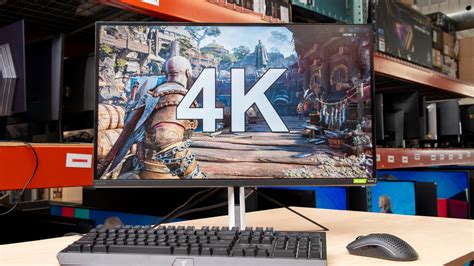
- 4K (3840×2160): Also known as Ultra HD (UHD), 4K delivers four times the pixel count of 1080p, resulting in incredibly sharp images and immense detail. For non-gaming content and single-player immersive experiences, it’s unparalleled.
Refresh Rate: Fluidity vs. Latency
- 144Hz: A monitor with a 144Hz refresh rate can display 144 frames per second, meaning the image on your screen updates 144 times every second. This results in significantly smoother motion, reduced motion blur, and a more responsive feel, crucial for tracking fast-moving targets.
- 60Hz: The standard refresh rate for most televisions and many entry-level monitors. It updates the screen 60 times per second. While perfectly fine for general use and slower-paced games, the difference is stark when compared to higher refresh rates in fast-action scenarios.
1440p 144Hz: The Competitive Advantage
For competitive gaming, the 1440p 144Hz setup is overwhelmingly considered the superior choice. Here’s why:
- Unparalleled Smoothness and Responsiveness: The higher refresh rate dramatically reduces input lag and motion blur. In fast-paced shooters like Valorant, CS:GO, or Apex Legends, this means you can see enemies sooner, track them more accurately, and react quicker. The visual fluidity allows for precise aiming and a more immediate connection between your input and the on-screen action.
- Easier to Drive High Frame Rates: Achieving a consistent 144 frames per second (or higher, up to 144Hz) at 1440p is significantly more attainable with modern mid-to-high-end GPUs compared to hitting 60 FPS at 4K. Consistent high frame rates are vital for competitive integrity.
- Improved Target Acquisition: The smoother motion makes it easier to spot and track opponents, giving you a tangible advantage in aiming and dodging.
4K 60Hz: The Visual Feast, Less Competitive Edge
While a 4K monitor offers breathtaking visual fidelity, its 60Hz refresh rate is a significant handicap in competitive gaming:
- Reduced Responsiveness: The lower refresh rate introduces more display latency. Compared to 144Hz, the delay between your action and its display on screen is noticeable, potentially putting you at a disadvantage in reaction-time critical scenarios.
- More Demanding on Hardware: Driving games at 4K resolution, even at 60 FPS, requires a very powerful and often expensive graphics card. Maintaining a stable 60 FPS can be challenging in graphically intensive titles, and any dips below this can feel jarring.
- Visual Clutter (for some): While the detail is incredible, in competitive games, sometimes less visual clutter allows for better enemy identification. The sheer density of pixels in 4K can, for some, make it harder to quickly discern important game elements from background detail, especially on smaller screens.
- Input Lag Concerns: Many 4K 60Hz displays, especially those not specifically designed for gaming, can have higher input lag compared to optimized high-refresh-rate gaming monitors.
Hardware Demands and Practicality
The choice also heavily depends on your PC’s hardware. To fully utilize a 1440p 144Hz monitor, you’ll need a capable GPU (e.g., an Nvidia RTX 3060/4060 Ti or AMD RX 6700 XT/7700 XT or better) to consistently push high frame rates in demanding titles. For 4K 60Hz, especially in newer AAA games, you’re looking at top-tier GPUs (e.g., Nvidia RTX 4070/4080/4090 or AMD RX 7800 XT/7900 XT/XTX or better) to maintain a stable 60 FPS, let alone higher.
The cost consideration extends beyond just the monitor; it impacts the entire PC build. Investing in a high-refresh-rate 1440p monitor allows more budget for other components that directly boost in-game performance.
The Verdict for Competitive Gaming
For serious competitive gamers, the answer is clear: 1440p 144Hz (or even higher refresh rates like 165Hz, 240Hz, etc.) is the superior choice. The advantage gained from smoother motion, lower input lag, and the ability to consistently achieve high frame rates far outweighs the extra pixel density of a 4K 60Hz display. In games where split-second reactions and precise tracking are paramount, seeing more frames per second directly translates to better performance and a tangible competitive edge.
While 4K offers an undeniably beautiful visual experience, its benefits are best suited for single-player, graphically intensive games, content creation, or media consumption where immersion and detail take precedence over raw responsiveness.
Conclusion
Ultimately, your monitor choice should align with your primary gaming goals. If your ambition is to climb leaderboards, win tournaments, or simply gain an advantage in online skirmishes, a 1440p 144Hz monitor will serve you far better than a 4K 60Hz counterpart. The enhanced fluidity and responsiveness directly impact gameplay, offering a smoother, more immediate, and ultimately more competitive experience. Save the breathtaking 4K visuals for cinematic adventures; when victory is on the line, refresh rate trumps resolution.


