My FPS drops mid-game. What are the top GPU driver settings to optimize for stable gaming performance?

Tackling Mid-Game FPS Drops: The Power of GPU Driver Optimization
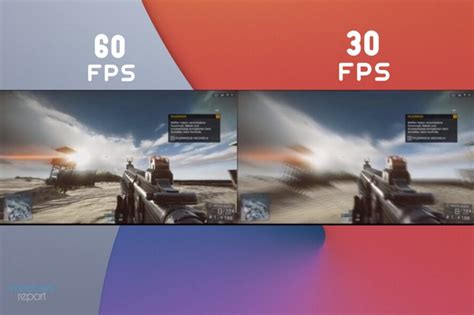
There’s nothing more frustrating than your smooth gaming experience suddenly turning into a stuttering mess due to mid-game FPS drops. While many factors can contribute to inconsistent frame rates, your GPU driver settings are a powerful, often overlooked, tool for achieving stable and optimal gaming performance. Adjusting these settings can help prevent bottlenecks, reduce input lag, and ensure your graphics card is working at its peak efficiency for consistent frame delivery.
Before Diving into Driver Settings: A Quick Checklist
Before you start tweaking, ensure these foundational elements are in order, as they can heavily influence your FPS stability:
- Keep Drivers Updated (Cautiously): While it’s generally good advice to update your GPU drivers, sometimes the very latest version might introduce instability for certain games. If you experience issues after an update, consider rolling back to a previous stable version.
- Monitor Temperatures: Overheating components (GPU, CPU) will throttle performance to prevent damage, leading to FPS drops. Use monitoring software (e.g., MSI Afterburner, HWMonitor) to check your temperatures during gaming.
- Adequate Power Delivery: Ensure your power supply unit (PSU) has enough wattage for your system, especially your GPU, and that all power connectors are properly seated.
- Clean System: Remove dust from your PC, particularly around fans and heatsinks, to improve airflow and cooling.
NVIDIA Control Panel: Top Settings for Stability
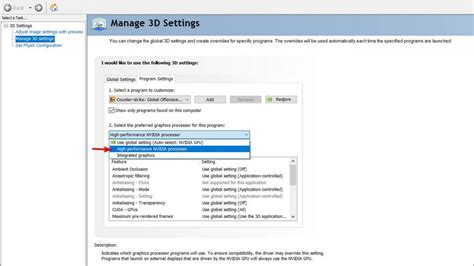
For NVIDIA users, the NVIDIA Control Panel offers a comprehensive suite of settings. Here are the most impactful ones for stable performance:
- Power Management Mode: Prefer Maximum Performance
Path: Manage 3D settings > Global Settings
This prevents your GPU from downclocking when it thinks it’s underutilized, ensuring it’s always ready for peak performance. - Low Latency Mode: Ultra or On
Path: Manage 3D settings > Global Settings
Reduces input lag by submitting frames just-in-time for the GPU to process them. ‘Ultra’ offers the lowest latency but might not be suitable for all systems or games. Experiment with ‘On’ first. - Texture Filtering Quality: High Performance
Path: Manage 3D settings > Global Settings
Prioritizes performance over image quality in texture filtering. The visual difference is often negligible, but the performance gain can be valuable. - Vertical Sync: Off (Unless Screen Tearing is Severe)
Path: Manage 3D settings > Global Settings
V-Sync synchronizes your frame rate with your monitor’s refresh rate to prevent screen tearing, but it can introduce input lag and cap your FPS, potentially leading to noticeable drops when your system can’t consistently maintain the refresh rate. If you have a G-Sync monitor, enable G-Sync and leave V-Sync ‘Off’ in the control panel. - Shader Cache Size: Driver Default or Unlimited
Path: Manage 3D settings > Global Settings
This setting controls the storage for compiled shaders. A larger cache can reduce stutters by ensuring shaders are readily available. ‘Unlimited’ is often a good choice, especially if you play many different games.
AMD Radeon Software: Key Optimizations for Stability
AMD Radeon Software (formerly Radeon Settings) also provides essential controls for optimizing your gaming experience:
- Radeon Anti-Lag: Enabled
Path: Gaming > Global Graphics
Similar to NVIDIA’s Low Latency Mode, Anti-Lag reduces input lag by dynamically adjusting frame pacing. This can significantly improve responsiveness and stability. - Wait for Vertical Refresh (V-Sync): Off (Unless Tearing is Severe)
Path: Gaming > Global Graphics
Just like NVIDIA’s V-Sync, this setting should generally be ‘Off’ for maximum FPS and minimal input lag. If you have a FreeSync monitor, ensure FreeSync is enabled and set V-Sync ‘Off’ in the software. - Texture Filtering Quality: Performance
Path: Gaming > Global Graphics > Advanced
Prioritizes raw performance in texture rendering over the highest possible image quality. - Shader Cache: AMD Optimized
Path: Gaming > Global Graphics > Advanced
Allows the driver to store compiled shaders, reducing CPU overhead and potential stutters. ‘AMD Optimized’ is the recommended setting. - Radeon Chill & Radeon Boost: Disabled for Max FPS (or Configured)
Path: Gaming > Global Graphics
While useful for power saving (Chill) or dynamic resolution scaling (Boost), these features can sometimes interfere with stable, maximum FPS if not configured correctly for your specific game and preferences. For pure FPS stability, consider disabling them globally or on a per-game basis unless you understand their impact.
Crucial General Considerations for Stable Performance
- Game-Specific Profiles: Both NVIDIA and AMD drivers allow you to set specific profiles for individual games. If a game consistently gives you trouble, try optimizing its specific profile instead of changing global settings. This allows for fine-tuning without affecting other titles.
- Monitor Technology (G-Sync/FreeSync): If you have a compatible monitor, ensure G-Sync (NVIDIA) or FreeSync (AMD) is properly enabled. These technologies dynamically adjust your monitor’s refresh rate to match your GPU’s frame rate, drastically reducing screen tearing and improving overall smoothness without the input lag penalties of traditional V-Sync.
- Test and Iterate: Changes to driver settings should be tested. Make one or two changes at a time, then test your games. If performance worsens, revert the change. What works best can vary significantly between hardware configurations and individual games.
- In-Game Settings: Don’t forget that in-game graphics settings are often the most impactful. Prioritize settings like resolution, texture quality, and anti-aliasing.
Conclusion
Optimizing your GPU driver settings is a powerful step towards achieving stable and consistent gaming performance, especially when battling mid-game FPS drops. By understanding and carefully adjusting settings like power management, low latency modes, and texture filtering, you can unlock your graphics card’s full potential. Remember to approach these changes systematically, testing after each adjustment, to find the perfect balance for your system and ensure a smoother, more enjoyable gaming experience.