How to optimize NVIDIA Reflex or AMD Anti-Lag for lowest input latency?

In the world of competitive gaming, every millisecond counts. Input latency – the delay between your action (like a mouse click) and its on-screen representation – can be the difference between victory and defeat. NVIDIA Reflex and AMD Anti-Lag are two powerful technologies designed specifically to minimize this delay, giving you a crucial edge. But simply enabling them isn’t always enough; proper optimization is key to unlocking their full potential.
Understanding Input Latency and Its Impact
Input latency stems from various sources, including your mouse, keyboard, monitor, and the PC’s rendering pipeline. The rendering pipeline is where NVIDIA Reflex and AMD Anti-Lag primarily focus. When your GPU renders frames faster than your CPU can process game logic, a render queue builds up, adding delay. These technologies aim to synchronize the CPU and GPU more efficiently, reducing or eliminating this queue.
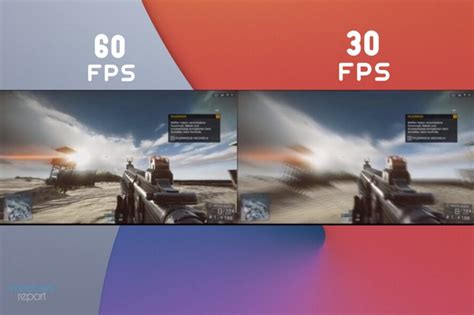
Lower input latency results in a more responsive and fluid gaming experience, allowing you to react quicker to in-game events, improve aiming precision, and feel more connected to the game. For competitive players in fast-paced shooters or esports titles, this can directly translate to better performance and higher rankings.

NVIDIA Reflex: Enhancing Responsiveness
NVIDIA Reflex is a suite of technologies that measures and reduces system latency in competitive games. It works by dynamically reducing the render queue, ensuring that the GPU isn’t sitting idle waiting for new frames from the CPU, especially in CPU-bound scenarios. This results in the fastest possible responsiveness, particularly when your GPU is utilized to its fullest.
Enabling NVIDIA Reflex
To use Reflex, you need an NVIDIA GeForce GTX 900 series GPU or newer. Most Reflex-supported games will have an in-game setting to enable it. Look for options like ‘NVIDIA Reflex Low Latency’ in the graphics or display settings.
NVIDIA Reflex Optimization Tips
- On vs. On + Boost: The ‘On’ setting is usually sufficient for most scenarios, reducing latency significantly. ‘On + Boost’ works best when your system is CPU-bound (e.g., lower resolutions, older CPUs), preventing the CPU from falling behind and keeping the GPU clocks high. If your GPU utilization is consistently high (97-99%), ‘On’ might be enough. Experiment to see what feels best for your specific setup and game.
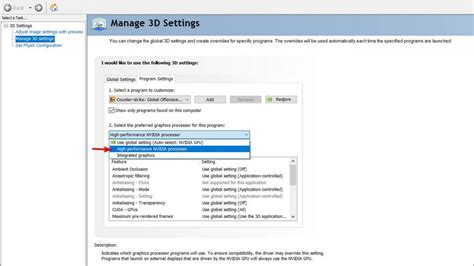
- Frame Rate Caps: Reflex benefits from higher frame rates. However, if you’re hitting a consistent frame rate ceiling (e.g., your monitor’s refresh rate), consider capping your FPS slightly below your monitor’s refresh rate (e.g., 141 FPS for a 144Hz monitor) using an in-game limiter or NVIDIA’s Control Panel. This ensures consistent frame delivery without unnecessary GPU strain.
- GPU Utilization: Aim for high GPU utilization (ideally above 90%). If your GPU utilization is low, it suggests your CPU is the bottleneck. In such cases, ‘On + Boost’ might be more effective.

AMD Anti-Lag: Reducing Input Delay
AMD Anti-Lag is a feature within AMD’s Radeon Software Adrenalin Edition that helps reduce input lag by controlling the pace of the CPU work to ensure it doesn’t get too far ahead of the GPU. Similar to Reflex, it aims to reduce the amount of CPU back-pressure, minimizing render queue buildup.
Enabling AMD Anti-Lag
Anti-Lag is available on Radeon RX 500 series GPUs and newer. You enable it through the AMD Radeon Software Adrenalin Edition. Open the software, navigate to the ‘Gaming’ tab, then ‘Games’, and select the specific game or enable it globally under ‘Graphics’ settings.
AMD Anti-Lag Optimization Tips
- Global vs. Per-Game: You can enable Anti-Lag globally for all games or set it per-game. For maximum control, setting it per-game allows you to tailor your experience.
- Frame Rate Management: Anti-Lag works best when your frame rate is consistently high but not excessively high. If your FPS far exceeds your monitor’s refresh rate, you might want to consider using AMD’s Radeon Chill to cap your frame rate, which can also save power and reduce heat, while still benefiting from Anti-Lag’s latency reduction.
- Monitor FreeSync: If you have an AMD FreeSync compatible monitor, enabling FreeSync in conjunction with Anti-Lag can provide a very smooth, low-latency experience by eliminating screen tearing without the traditional input lag of V-Sync.

Beyond Reflex and Anti-Lag: Holistic Latency Reduction
While Reflex and Anti-Lag are crucial, they are part of a larger ecosystem contributing to input latency. For the absolute lowest latency, consider these additional optimizations:
Monitor Settings
- High Refresh Rate: A monitor with a higher refresh rate (e.g., 144Hz, 240Hz, 360Hz) displays frames more frequently, reducing the time between frames and thus improving overall responsiveness.
- Low Response Time: Look for monitors with a low grey-to-grey (GtG) response time to minimize ghosting and motion blur.
- Adaptive Sync: Enable NVIDIA G-Sync or AMD FreeSync if your monitor and GPU support it. These technologies eliminate screen tearing and stuttering without the input lag penalty of traditional V-Sync.

GPU Drivers and Game Settings
- Latest Drivers: Always keep your GPU drivers updated to the latest stable version. Manufacturers often release performance optimizations and latency improvements with new drivers.
- Reduce Visual Fidelity: In competitive games, prioritize frame rate over graphical eye candy. Lower settings for shadows, textures, anti-aliasing, and view distance can significantly boost your FPS, which directly correlates to lower input latency.
- Disable V-Sync: Unless you are using adaptive sync (G-Sync/FreeSync), disable V-Sync. While it prevents screen tearing, traditional V-Sync adds significant input lag.
Peripherals and System Optimization
- High Polling Rate Mouse: A gaming mouse with a high polling rate (e.g., 1000Hz or 8000Hz) communicates with your PC more frequently, reducing the delay between your physical mouse movement and the cursor’s response.
- Wired Peripherals: While wireless technology has improved, wired mice and keyboards still offer the most consistent and lowest latency connection.
- Power Plan: Set your Windows power plan to ‘High Performance’ to ensure your CPU and GPU aren’t throttling due to power-saving measures.
- Background Processes: Close unnecessary applications and background processes while gaming to free up CPU cycles and RAM.
- Game Mode (Windows): Ensure Windows Game Mode is enabled, as it optimizes system resources for gaming.
Conclusion: A Responsive Gaming Experience
Optimizing NVIDIA Reflex or AMD Anti-Lag is a critical step towards achieving the lowest possible input latency in your games. By understanding how these technologies work and fine-tuning their settings, you can gain a noticeable performance advantage. Combine these specialized optimizations with general best practices for hardware, drivers, and game settings, and you’ll create a highly responsive and competitive gaming environment where every action feels immediate and precise. Experiment with the various settings to find the sweet spot for your specific hardware and games, and prepare to elevate your gameplay.