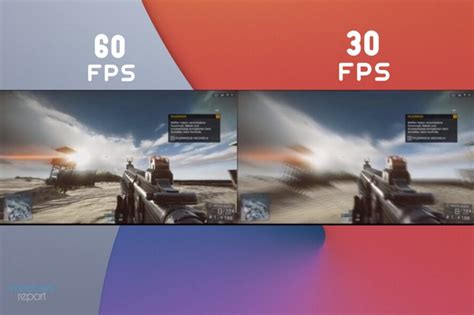
Troubleshooting low FPS in new PC games? Best driver & in-game optimization tips?

There’s nothing quite as frustrating as investing in a brand-new PC, only to discover that your favorite games aren’t running as smoothly as you expected. Low Frames Per Second (FPS) can turn an exciting gaming experience into a stuttering nightmare. But don’t despair! Often, the solution lies in a combination of driver updates and smart in-game settings. This guide will walk you through the essential steps to diagnose and resolve low FPS issues, ensuring you get the most out of your powerful new rig.
Start with the Foundation: System Verification
Before diving into complex optimizations, let’s ensure the basics are covered. Many low FPS issues stem from simple oversights.
Update Your Graphics Drivers
This is paramount. Outdated or corrupted graphics drivers are the most frequent culprits for poor performance. Always download the latest stable drivers directly from NVIDIA, AMD, or Intel’s official websites. Consider a clean installation using a tool like Display Driver Uninstaller (DDU) for best results.
Check Power Settings
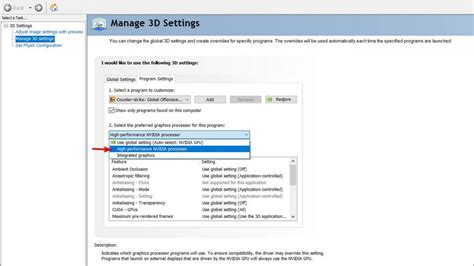
Ensure your Windows power plan is set to “High Performance” or “Ultimate Performance.” Similarly, within your GPU’s control panel (NVIDIA Control Panel or AMD Adrenalin), set the power management mode to “Prefer Maximum Performance.”
Verify Monitor Refresh Rate
Make sure your monitor’s refresh rate is set to its maximum (e.g., 144Hz, 240Hz) in Windows display settings. While not directly affecting FPS, it ensures you’re seeing all the frames your PC is capable of producing.
Close Background Applications
Resource-hungry apps running in the background (web browsers with many tabs, streaming software, other games) can hog CPU and RAM, impacting game performance. Close anything you don’t need while gaming.

Deep Dive into Driver and System Optimization
Once the basics are sorted, we can fine-tune your system for gaming performance.
NVIDIA Control Panel / AMD Adrenalin Settings
- Image Quality: For NVIDIA, set “Texture filtering – Quality” to “High Performance.” For AMD, similar settings are available under “Graphics” > “Advanced.”
- Anisotropic Filtering: Let the application control this, or set it to 2x/4x if needed.
- V-Sync: Disable V-Sync in the driver control panel unless you experience severe screen tearing and your monitor doesn’t support G-Sync/FreeSync. If you have G-Sync/FreeSync, ensure it’s enabled in both the monitor and driver settings.
- Low Latency Mode (NVIDIA): Experiment with “On” or “Ultra” for reduced input lag, but it can sometimes slightly impact FPS.
- Shader Cache: Ensure it’s enabled for faster loading and smoother gameplay.
Windows Game Mode and Graphics Settings
Windows Game Mode is designed to optimize your PC for gaming. Ensure it’s turned “On” in Windows Settings > Gaming > Game Mode. Additionally, under Graphics Settings, you can specify individual games to run using your high-performance GPU.
Mastering In-Game Optimization Tactics
The settings within each game are your primary tools for balancing visual quality and performance.
Resolution is Key
Lowering the game’s resolution is the single most impactful way to boost FPS. If running at native 4K or 1440p is too demanding, try scaling down to 1080p or using resolution scaling features (like NVIDIA’s DLSS, AMD’s FSR, or Intel’s XeSS) if available, which can render the game at a lower resolution internally and upscale it, providing near-native quality with much better performance.
Graphics Presets vs. Individual Settings
While presets (Low, Medium, High, Ultra) are a good starting point, fine-tuning individual settings offers the best control:
- Shadows: Often the biggest FPS killer. Reduce shadow quality or disable them if possible.
- Reflections: Can be very demanding, especially ray-traced reflections. Lowering these can yield significant gains.
- Anti-Aliasing (AA): Techniques like MSAA or TAA can be performance-intensive. Try FXAA, SMAA, or simply a lower AA setting.
- Volumetric Clouds/Fog: Graphically intensive; reduce quality if present.
- Draw Distance / Level of Detail (LoD): Reducing these can help, but might make objects pop in. Find a balance.
- Post-Processing Effects: Bloom, motion blur, depth of field can be taxing. Disable or reduce them.
- Texture Quality: This primarily affects VRAM usage. If you have ample VRAM (e.g., 8GB+), you can often keep this high without a significant FPS hit.
Use an in-game FPS counter (or tools like MSI Afterburner) to monitor your frames as you adjust settings, allowing you to see the impact of each change.

Advanced Troubleshooting and Hardware Checks
If basic and in-game optimizations aren’t enough, it might be time to look deeper.
Monitor CPU/GPU Temperatures
Overheating components will throttle their performance to prevent damage, leading to lower FPS. Use monitoring software (e.g., HWMonitor, MSI Afterburner) to check temps during gaming. Ensure good airflow in your case and clean out dust from fans and heatsinks.
Check RAM Speed and Capacity
Ensure your RAM is running at its advertised speed (XMP/DOCP enabled in BIOS) and that you have sufficient capacity (16GB is generally recommended for modern gaming). Insufficient RAM or slow RAM can bottleneck even powerful CPUs and GPUs.
Game Installation Drive
While not directly affecting average FPS, installing games on an SSD (Solid State Drive) rather than an HDD (Hard Disk Drive) significantly reduces loading times and can prevent stuttering issues caused by asset streaming.
BIOS/UEFI Updates
Occasionally, a motherboard BIOS/UEFI update can improve system stability and compatibility, potentially resolving performance quirks. Consult your motherboard manufacturer’s website.
Conclusion
Experiencing low FPS on a new PC is disheartening, but with a systematic approach, it’s usually resolvable. Start with driver updates and basic system checks, then move to fine-tuning driver control panel settings and, most importantly, in-game graphics options. Always monitor your FPS and temperatures to understand the impact of your changes. By following these tips, you’ll be well on your way to a smoother, more enjoyable gaming experience on your new machine.
![How to Improve PC Performance for Gaming [Ultimate Guide]](/images/aHR0cHM6Ly90czIubW0uYmluZy5uZXQvdGg/aWQ9T0lQLmJ2LVBEMHhGTnNRZXdQY2FfXzBvMUFIYUVIJnBpZD0xNS4x.webp)