Eliminate gaming input lag: Best monitor refresh rate & mouse settings?
Understanding the Impact of Input Lag in Gaming
Input lag, the delay between your action (like a mouse click or keyboard press) and its corresponding reaction on screen, can be the deciding factor between victory and defeat in fast-paced video games. While a few milliseconds might seem insignificant, competitive gamers know that every fraction of a second counts. Eliminating or significantly reducing input lag is paramount for achieving peak performance, allowing for quicker reactions, more precise aim, and an overall smoother, more immersive gaming experience.
This article dives deep into two primary areas often overlooked by casual gamers but crucial for enthusiasts: optimizing your monitor’s refresh rate and fine-tuning your mouse settings. By understanding how these components contribute to responsiveness, you can unlock a truly fluid and responsive gaming setup.

Monitor Refresh Rate: The Visual Gateway to Responsiveness
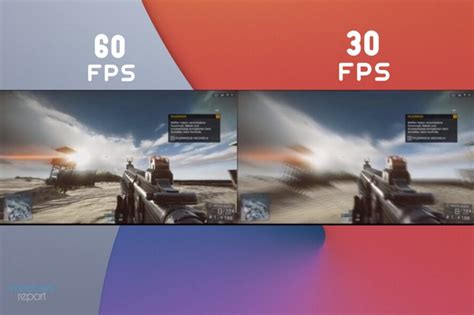
Your monitor’s refresh rate, measured in Hertz (Hz), indicates how many times per second the display updates its image. A higher refresh rate means more frames are displayed per second, leading to a smoother visual experience and, more importantly, reduced visual input lag.
The Sweet Spot for Gaming Monitors:
- 144Hz: This is generally considered the minimum for a competitive gaming monitor, offering a significant upgrade over standard 60Hz displays.
- 240Hz: For serious esports players, 240Hz provides an even greater edge, delivering incredibly fluid motion and allowing for near-instant visual feedback.
- 360Hz and Beyond: The latest high-end monitors push refresh rates even further. While the jump from 240Hz to 360Hz might be less dramatic than 60Hz to 144Hz, every millisecond saved contributes to a competitive advantage.
Beyond raw refresh rate, consider technologies like NVIDIA G-Sync or AMD FreeSync. These adaptive sync technologies synchronize your monitor’s refresh rate with your graphics card’s frame rate, eliminating screen tearing and further reducing perceived input lag, especially when your frame rate fluctuates.
Another crucial monitor specification is response time, typically measured in milliseconds (ms) Gray-to-Gray (GtG). This indicates how quickly pixels can change color. A low response time (e.g., 1ms GtG) is essential to prevent motion blur and ghosting, which can also contribute to a feeling of unresponsiveness.

Optimizing Mouse Settings: Precision at Your Fingertips
Your gaming mouse is your primary interface for aiming and interacting, and its settings play a critical role in input lag and precision. Here’s how to optimize it:
DPI (Dots Per Inch) / CPI (Counts Per Inch):
DPI determines how sensitive your mouse is. While some equate higher DPI with better performance, the optimal DPI is subjective and depends on your in-game sensitivity. The key is to find a comfortable DPI that allows for precise movements without overshooting targets. Many pro gamers use lower DPI (400-800) combined with higher in-game sensitivity to maintain precision.
Polling Rate:
The polling rate, measured in Hertz (Hz), indicates how often your mouse reports its position to your computer. A higher polling rate means more frequent updates, leading to less input lag. Most modern gaming mice offer 1000Hz (1ms report rate), which is ideal. Avoid lower polling rates like 125Hz or 500Hz if possible.
Mouse Acceleration: Disable It!
Mouse acceleration (also known as “enhance pointer precision” in Windows) is a feature that makes your cursor move further the faster you move your mouse. While useful for general desktop use, it creates inconsistent movement in games, making muscle memory impossible to build. Always disable mouse acceleration in both your operating system settings and any specific game settings.
Beyond Hardware: Software & System Optimization
While monitor and mouse settings are critical, other factors contribute to the overall input lag you experience:
- In-Game Graphics Settings: Running a game at settings your PC struggles with can lead to low frame rates, which in turn increases perceived input lag. Find a balance between visual fidelity and consistent high frame rates.
- V-Sync: Vertical Synchronization eliminates screen tearing by synchronizing your game’s frame rate with your monitor’s refresh rate. However, it often introduces significant input lag. Only use V-Sync if screen tearing is intolerable and you’re not using adaptive sync (G-Sync/FreeSync), or if your frame rate consistently exceeds your monitor’s refresh rate by a large margin.
- Network Latency (Ping): In online games, a high ping means a delay between your actions and the server’s response. While not directly related to local input lag, it heavily influences the feel of responsiveness. Use a wired Ethernet connection over Wi-Fi for stability.
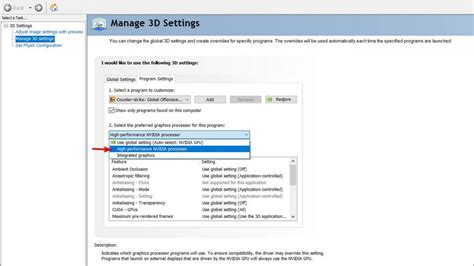
- System Optimization: Close unnecessary background applications, keep your drivers updated (especially GPU and chipset drivers), and ensure your operating system is running efficiently.
A Holistic Approach to a Lag-Free Experience
Eliminating gaming input lag is not about a single magical setting but rather a combination of optimized hardware and software configurations. By investing in a high refresh rate monitor with low response time and a gaming mouse with a high polling rate, then meticulously fine-tuning your settings, you lay a strong foundation.
Remember to disable mouse acceleration, choose appropriate DPI/sensitivity, and ensure your system can consistently deliver high frame rates. Experiment with settings to find what feels best for you, as personal comfort and consistency are key to competitive success.
A truly lag-free gaming setup provides an almost direct extension of your thoughts into the game world, allowing for peak performance and maximum enjoyment.