My gaming PC lags. How do I diagnose CPU, GPU, or RAM bottlenecks?

Understanding Bottlenecks in Gaming PCs
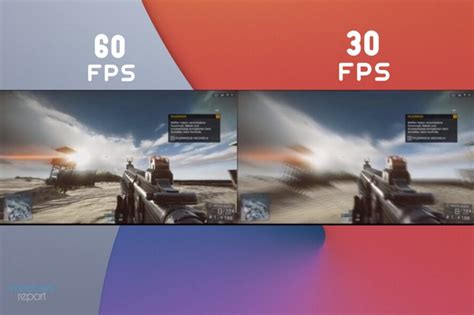
Experiencing lag, stuttering, or inconsistent frame rates in your favorite PC games can be incredibly frustrating. Often, these performance issues stem from a “bottleneck” – a situation where one component in your system is holding back the potential performance of the others. Identifying the culprit, be it your CPU, GPU, or RAM, is the first step toward resolving the problem and getting back to smooth gaming.
A bottleneck occurs when one hardware component reaches its maximum capacity while others still have processing power to spare. For instance, if your graphics card is extremely powerful but your CPU can’t feed it data fast enough, your GPU will sit idle for periods, leading to lower frame rates than expected. Let’s dive into how to systematically diagnose which component is limiting your gaming experience.
Tools for Diagnosis
Before you start, you’ll need some monitoring tools. These applications allow you to see real-time usage statistics for your CPU, GPU, and RAM while you’re gaming:
- Task Manager (Windows): A built-in tool providing basic CPU, GPU, RAM, and Disk usage statistics.
- MSI Afterburner (with RivaTuner Statistics Server): The gold standard for in-game overlay monitoring, showing detailed usage, temperatures, and clock speeds for CPU, GPU, and RAM.
- HWiNFO64: Provides extremely detailed sensor data for almost every component in your system.
- CapFrameX / OCAT: For more advanced frame time analysis and benchmarking.
For the average user, MSI Afterburner (with RTSS) is usually sufficient and highly recommended as it displays an overlay directly in your game, making real-time observation easy.
Diagnosing a GPU Bottleneck
A GPU (Graphics Processing Unit) bottleneck is the most common and often the most desirable bottleneck in a gaming PC, as it means your graphics card is working at its fullest to deliver the best visuals possible.
Indicators:
- High GPU Usage: Your GPU usage (monitored via MSI Afterburner or Task Manager) consistently hovers around 95-100% during gameplay.
- Lower CPU Usage: Your CPU usage is significantly lower, perhaps 30-70% (depending on the game and CPU core count).
- Frame Rates are Consistent but Below Target: You might get a stable 40-50 FPS but wish for 60, and your GPU is maxed out.
- High Graphics Settings: This is more likely to occur when you’re playing at high resolutions (e.g., 1440p, 4K) or with demanding graphical settings (e.g., ultra textures, ray tracing).
Diagnosis: If your GPU usage is constantly near 100% while your CPU has headroom, your graphics card is the bottleneck. The solution is typically to lower in-game graphics settings, reduce resolution, or upgrade your GPU.
Diagnosing a CPU Bottleneck
A CPU (Central Processing Unit) bottleneck occurs when your processor can’t keep up with the data processing demands of the game and other background tasks, thus limiting the frames your GPU can render.
Indicators:
- High CPU Usage: Your CPU usage (especially a few core threads, or overall usage if you have fewer cores) consistently hits 90-100% during gameplay.
- Lower GPU Usage: Your GPU usage is noticeably lower, perhaps 50-80%, even with demanding graphics settings.
- Frame Rate Stutters and Drops: You might experience significant frame rate drops in CPU-intensive scenarios (e.g., large open-world areas, crowded scenes, complex physics simulations).
- Less Impact from Graphics Settings: Changing graphics settings from high to low might not significantly improve your frame rate, as the GPU isn’t the limiting factor.
Diagnosis: If your CPU is maxed out while your GPU isn’t, your CPU is the bottleneck. Solutions include upgrading your CPU, ensuring background tasks are minimized, or in some cases, overclocking your existing CPU (if compatible and you have adequate cooling).
Diagnosing a RAM Bottleneck
RAM (Random Access Memory) bottlenecks are less common than CPU or GPU bottlenecks but can manifest as severe performance issues, often related to data access speed or insufficient capacity.
Indicators:
- High RAM Usage: Your system’s RAM usage is near or at 100% (or very close to your total capacity, e.g., 15GB used on a 16GB system).
- Excessive Paging/Swapping: Windows starts using your slower storage drive (SSD/HDD) as virtual RAM, leading to massive stutters, long loading times, and overall system unresponsiveness. You might hear your drive working harder.
- General System Sluggishness: Even outside of games, your PC feels slow, especially when multitasking.
- Frame Rate Stuttering: Rather than consistently low FPS, you might experience severe, periodic hitches or freezes as the system struggles to load assets into memory.
Diagnosis: Use Task Manager’s ‘Performance’ tab to monitor RAM usage. If it’s consistently maxed out, or you notice frequent disk activity during lag spikes, you likely have a RAM capacity issue. For speed-related RAM bottlenecks (e.g., slow RAM impacting CPU performance), checking your RAM’s advertised speed and ensuring XMP/DOCP is enabled in BIOS is crucial. The solution is usually to upgrade your RAM capacity or ensure it’s running at its optimal speed.

Putting It All Together: A Diagnostic Session
- Install Monitoring Software: Get MSI Afterburner and RTSS set up with an in-game overlay displaying CPU usage (per core and overall), GPU usage, RAM usage, CPU temperature, and GPU temperature.
- Launch a Demanding Game: Pick a game that typically gives you performance issues.
- Play and Observe: Pay close attention to the overlay.
- If GPU usage is 99-100%, and CPU usage is lower, it’s a GPU bottleneck.
- If CPU usage (especially specific cores) is 99-100%, and GPU usage is lower, it’s a CPU bottleneck.
- If RAM usage is near your total capacity and you experience disk activity and stuttering, it’s a RAM capacity bottleneck.
Conclusion
Diagnosing bottlenecks is a process of elimination and observation. By utilizing real-time monitoring tools, you can pinpoint which component is struggling to keep up, allowing you to make informed decisions about potential upgrades or system optimizations. Remember, the goal isn’t necessarily to eliminate all bottlenecks (a system will always have one component that’s the current limiting factor), but rather to ensure the bottleneck is where you want it to be – ideally, your GPU, working hard to deliver the best visuals your budget allows.