Optimize GPU settings in NVIDIA/AMD control panels for maximum FPS in new AAA games?

Unleashing Peak Gaming Performance: A Deep Dive into GPU Control Panel Optimization
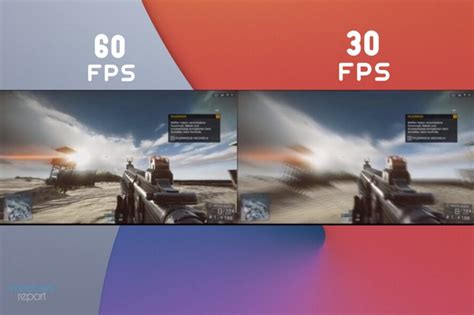
For gamers chasing every last frame in the latest graphically intensive AAA titles, optimizing your GPU settings is paramount. While in-game settings offer a level of control, a significant boost in performance can often be found by fine-tuning options within your graphics card’s control panel – be it NVIDIA Control Panel or AMD Radeon Software. This guide will walk you through the most impactful settings to tweak for maximum Frames Per Second (FPS) without completely sacrificing visual fidelity.
General Optimization Principles for Both NVIDIA and AMD Users
Before diving into brand-specific settings, some universal principles apply. The core idea is to shift workload away from demanding visual enhancements towards raw performance. This often means reducing the quality of effects that have a high performance cost but offer marginal visual improvement.
- Power Management Mode: Always set this to ‘Prefer Maximum Performance’ (NVIDIA) or ‘Performance’ (AMD). This ensures your GPU is always running at its highest clock speeds when under load, preventing any power-saving measures from throttling performance.
- Shader Cache / OpenGL Triple Buffering: Ensure shader cache is enabled (NVIDIA) or a similar caching mechanism is active (AMD). This helps reduce CPU overhead by storing compiled shaders, leading to smoother gameplay and fewer stutters. Triple Buffering for OpenGL can also help reduce tearing and stutters in OpenGL games.
- Vertical Sync (VSync): For maximum FPS, VSync should generally be OFF. While it prevents screen tearing, it caps your FPS to your monitor’s refresh rate and can introduce input lag. If tearing is an issue, consider FreeSync/G-Sync or Adaptive Sync technologies instead.
NVIDIA Control Panel: Maximizing FPS
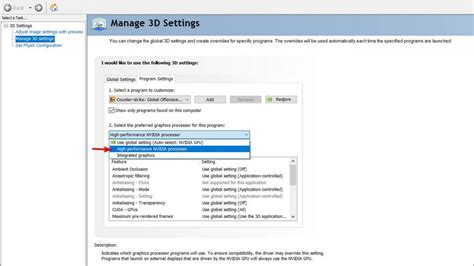
NVIDIA’s control panel offers a robust suite of options. Here are the key settings to focus on under ‘Manage 3D settings’:
- Image Sharpening: Keep this off or at very low levels if you prefer. While it can make games look crisper, it adds a slight processing overhead.
- Low Latency Mode: Experiment with ‘Ultra’ for competitive gaming. This can reduce input lag but might introduce a slight FPS drop on older GPUs. Start with ‘On’ or ‘Off’ if performance is critical.
- Max Frame Rate: If you experience erratic frame rates or your GPU is consistently hitting 100% usage even when FPS is far above your monitor’s refresh rate, capping your frame rate slightly above your refresh rate (e.g., 144 FPS for a 120Hz monitor) can reduce GPU load and power consumption, sometimes leading to more stable frame delivery.
- Preferred Refresh Rate: Always set to ‘Highest Available’.
- Texture Filtering – Anisotropic Sample Optimization: Set to ‘On’. This allows the driver to optimize anisotropic filtering, potentially improving performance without significant visual loss.
- Texture Filtering – Quality: Set to ‘High Performance’. This is one of the most impactful settings for FPS, reducing the quality of texture filtering for a significant performance boost.
- Threaded Optimization: Set to ‘On’ to allow multi-threaded optimization for modern CPUs.
- Triple Buffering: Leave ‘Off’ for DirectX games, but consider ‘On’ for OpenGL if VSync is enabled.
AMD Radeon Software: Boosting Frame Rates
AMD’s Radeon Software (formerly Radeon Settings) provides similar capabilities for optimizing performance. Look under the ‘Gaming’ tab, then ‘Global Graphics’ for these tweaks:
- Radeon Anti-Lag: Enable this for competitive gaming to reduce input latency. Similar to NVIDIA’s Low Latency Mode, it can have a minor performance impact but is usually worth it for responsiveness.
- Radeon Boost: Consider enabling this. It dynamically lowers resolution during fast-motion scenes, offering a significant FPS boost without a noticeable drop in quality when you’re moving quickly.
- Image Sharpening: Keep ‘Radeon Image Sharpening’ off or at a low percentage if you prioritize maximum FPS.
- Wait for Vertical Refresh (VSync): Set to ‘Always Off’ for maximum FPS.
- Anti-Aliasing Mode: Set to ‘Override application settings’ and then choose ‘Adaptive supersampling’ or ‘Multisampling’ with lower levels. Even better, consider turning it off entirely if in-game AA is sufficient or you need every frame.
- Texture Filtering Quality: Set to ‘Performance’. This reduces the quality of texture filtering for better FPS.
- Tessellation Mode: Set to ‘Override application settings’ and choose ‘AMD Optimized’ or reduce the ‘Max Tessellation Level’ to 8x or 16x. High tessellation can be very demanding.
Application-Specific Settings
Beyond global settings, both NVIDIA and AMD allow you to create custom profiles for individual games. This is incredibly useful for fine-tuning performance for specific AAA titles that might benefit from different settings without affecting your general gaming experience. Always remember to test settings one by one to identify which changes have the most impact on your FPS in a particular game.

Conclusion: Balance is Key
While chasing maximum FPS is a noble goal, remember that a balanced approach often yields the best results. Aggressively lowering every setting might give you high frame rates but could make the game visually unappealing. Start with the most impactful settings (power management, texture filtering, VSync) and then gradually experiment with others. Always monitor your FPS using an overlay like MSI Afterburner or the in-game counter to see the real-world impact of your changes. With a little patience, you can significantly optimize your GPU for a smoother, more responsive gaming experience in new AAA games.