How to best structure gaming guides for quick answers to common player problems?

The Need for Efficient Gaming Guides
In the fast-paced world of gaming, players often encounter roadblocks – a tricky boss, a confusing quest objective, or an inexplicable game mechanic. When these moments hit, their primary goal isn’t to read an exhaustive lore dump or a comprehensive game analysis; it’s to find a solution, and find it fast. Traditional, linear walkthroughs, while thorough, can often be overwhelming and inefficient for players seeking immediate answers to specific problems.
The challenge for guide creators lies in presenting information in a way that is both comprehensive and easily navigable, catering to the urgency of a player stuck in a critical moment. A well-structured guide doesn’t just provide answers; it empowers players by giving them the tools to quickly overcome obstacles and get back to enjoying their game.
Key Principles for Structuring Accessible Guides
Designing gaming guides for quick problem-solving revolves around a few core principles: modularity, clarity, and searchability. Your guide should be broken down into discrete, self-contained units of information, presented in a straightforward manner, and easily locatable through various navigational aids.
By adopting a player-centric approach, focusing on the common questions and pain points, guide writers can transform a dense compilation of information into an invaluable resource. This means moving beyond chronological game progression and instead thinking about the ‘why’ and ‘how’ of player searches.

The “Problem-First” Approach
The most effective way to address common player problems is to organize your guide around those problems directly. Instead of a section titled “Chapter 3: The Dark Forest,” consider sections like “How to navigate the Dark Forest maze” or “Solving the Dark Forest ancient puzzle.” This immediate relevance helps players identify their issue within your guide quickly. Implement comprehensive FAQ sections that are genuinely built from common player queries, rather than assumed ones.
Think about the language players use when they search for help. They don’t search for ‘best sword in area X,’ but rather ‘where to find good early game weapon’ or ‘what weapon for Y boss’. Mirror this natural language in your headings and introductory sentences.
Clear Headings and Subheadings
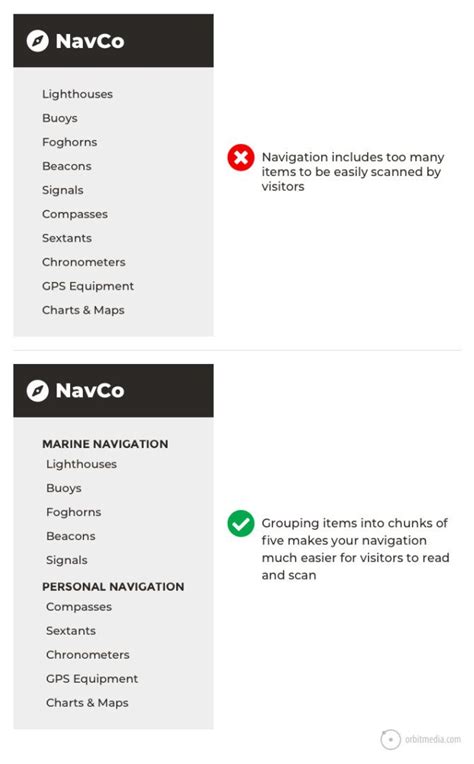
The backbone of any navigable guide is a robust hierarchy of headings. Utilize <h2> for major sections (e.g., specific game zones, core mechanics), <h3> for subsections (e.g., boss strategies, quest solutions within a zone), and <h4> for specific details (e.g., enemy attacks, item locations). Each heading should be descriptive and contain keywords that a player might use in a search query.
This visual segmentation not only makes the guide look less daunting but also allows players to scan for relevant information quickly. A consistent heading structure across the entire guide also contributes to a professional and user-friendly experience.
Concise and Direct Answers
When a player is stuck, they need an answer now. Provide the solution upfront, ideally in the first sentence or paragraph of a section. You can then follow up with more detailed explanations, background information, or alternative strategies for those who wish to delve deeper. This “TL;DR” (Too Long; Didn’t Read) approach ensures that even a quick skim yields the necessary information.
Avoid lengthy introductions or tangential information when addressing a specific problem. Get straight to the point, then elaborate. Use bullet points and numbered lists for steps or crucial facts to enhance readability and speed of comprehension.
Visual Aids and Examples
A picture is worth a thousand words, especially in gaming guides. Screenshots, maps with marked locations, diagrams of puzzle solutions, or short animated GIFs can convey complex information far more efficiently than text alone. When describing a location, an item, or a puzzle mechanic, provide a visual reference. This drastically reduces ambiguity and helps players confirm they are looking at the correct in-game element.
Step-by-step instructions accompanied by visuals are particularly effective for quest walkthroughs or complex combat encounters. Ensure these visuals are high-quality and clearly illustrate the intended information.

Indexing, Search, and Navigation
For larger guides, a comprehensive table of contents at the beginning (with internal links to sections) is non-negotiable. If the guide is published online, a robust search function that prioritizes exact matches and common synonyms can dramatically improve user experience. Cross-referencing related topics with internal links also allows players to explore associated solutions or background information without having to navigate back to the main index.
Consider adding a glossary for game-specific jargon or acronyms, especially for games with deep lore or complex mechanics. This helps new players quickly grasp terms that might be second nature to veterans.

Regular Updates and Community Feedback
Games, especially live service titles, evolve. Patches introduce new content, balance changes, and even alter existing mechanics. To maintain relevance, guides must be updated regularly. Encourage community feedback – comments, forum posts, or direct messages – to identify areas where the guide might be unclear, inaccurate, or missing information. These player interactions are goldmines for discovering new common problems that need addressing.
A guide is a living document, and an active commitment to its maintenance ensures it remains the best possible resource for players.

Empowering Players with Effective Guides
Structuring gaming guides for quick problem-solving isn’t just about efficiency; it’s about respecting the player’s time and enhancing their overall enjoyment of the game. By prioritizing clear, direct answers, organizing content around common questions, and leveraging visual aids and robust navigation, guide creators can build resources that are truly valuable.
Ultimately, a well-structured guide minimizes frustration, maximizes gameplay, and fosters a more engaged and satisfied player base, ensuring that when challenges arise, the solution is never more than a few clicks or scrolls away.