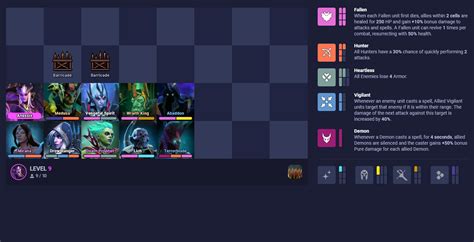
Post-patch meta: What underrated builds are now viable for competitive play?

The Shifting Sands of Competitive Meta
Every major game patch brings a wave of anticipation and speculation within the competitive community. While some changes are immediately obvious, others subtly alter the landscape, paving the way for overlooked strategies and character builds to rise to prominence. The latest update is no exception, having introduced a series of adjustments that have inadvertently buffed certain combinations of abilities, items, or playstyles that were previously considered niche or suboptimal.
Understanding these shifts is crucial for any aspiring competitive player or team. Sticking rigidly to old meta builds can leave you at a significant disadvantage against opponents who have successfully adapted to the new environment. This article delves into some of the most promising underrated builds that are now not just viable, but potentially game-changing in the current competitive meta.

Identifying Hidden Strengths: Why Now?
The viability of a build often hinges on a delicate balance of factors: character stats, item effectiveness, ability cooldowns, map dynamics, and even the prevailing popular strategies. A minor buff to a specific item or a slight nerf to a dominant playstyle can have cascading effects. For instance, increased mana regeneration on a utility item might empower ability-spamming supports, or a reduction in burst damage across the board could make sustained damage builds more effective.
Our focus is on builds that weren’t necessarily *bad* before, but simply outshone by more oppressive options. Now, with those top-tier strategies reined in or their counters diminished, these hidden gems have the space to breathe and demonstrate their true potential. Their strength lies not just in raw numbers, but often in unexpected synergies or counter-meta properties that exploit the weaknesses of the newly established top picks.
The ‘Resilient Bruiser’ Build
Previously: Often ignored due to its perceived lack of burst damage and susceptibility to focused fire, the ‘Resilient Bruiser’ was seen as a less efficient frontline option compared to highly mobile assassins or dedicated tanks. Its damage ramp-up was slow, and its survivability relied heavily on prolonged engagements that often didn’t occur.
Why it’s viable now: The recent patch introduced a global reduction in armor penetration items and slightly increased base health for several ‘tanky’ archetypes. This, coupled with a rework of certain defensive abilities that now scale better with health, makes the Resilient Bruiser incredibly difficult to take down. Its sustained damage output, while not flashy, becomes exceptionally potent in longer team fights, which are now more common due to the general decrease in early-game snowball potential. It also excels at peeling for carries and disrupting enemy backlines with its crowd control, making it a pivotal force in the current meta’s more drawn-out engagements.
The ‘Utility-Focused Marksman’
Previously: Marksmen were almost exclusively chosen for their high-damage output and carry potential. Any build diverting from maximum damage per second (DPS) was deemed inferior, leading to utility-focused variants being ignored in competitive play.
Why it’s viable now: A significant shift occurred with changes to vision mechanics and objective control, emphasizing team-wide utility. This build capitalizes on marksmen who possess innate crowd control or team-buffing abilities, enhancing them with items that provide vision, healing reduction, or area-of-effect debuffs, rather than pure damage. While its individual damage numbers might be slightly lower than traditional hyper-carries, the ‘Utility-Focused Marksman’ contributes immensely to objective secures, vision denial, and crucial team fight initiations/disengagements. They often pair exceptionally well with the Resilient Bruiser, providing sustained pressure and utility from a safe distance.
The ‘Aggressive Roaming Support’
Previously: Supports were primarily lane-bound, focusing on protecting their carry and warding. Aggressive roaming often left the carry vulnerable and risked falling behind in experience and gold, making it a high-risk, low-reward strategy.
Why it’s viable now: The patch introduced new early-game objective bounties and increased global experience from jungle camps, making early map presence and skirmishing incredibly impactful. Supports with strong early-game crowd control or damage, previously restricted by gold income, can now thrive. By utilizing new itemizations that provide early mobility and vision control, these supports can effectively pressure multiple lanes, invade enemy jungle, and secure crucial early objectives. This build transforms the support role from a passive protector to an active shot-caller and play-maker, dictating the tempo of the game from the outset and creating significant advantages across the map.

Strategic Implications for Competitive Play
These emerging builds challenge the established meta in profound ways. The ‘Resilient Bruiser’ forces teams to rethink their damage allocation and target priority. The ‘Utility-Focused Marksman’ introduces a new dimension to backline contributions, moving beyond pure DPS. And the ‘Aggressive Roaming Support’ completely alters early-game macro strategy, demanding proactive responses from opponents.
Teams that master these underrated builds will gain a significant competitive edge by being able to surprise opponents, diversify their drafting options, and exploit the weaknesses of conventional strategies. It’s a call to innovation and adaptation, pushing players to experiment and discover new synergies that were once hidden beneath the surface of a seemingly fixed meta.

Conclusion: Embrace the Evolution
The post-patch meta is a dynamic ecosystem, constantly evolving with player creativity and strategic innovation. The builds highlighted here are just a few examples of how a seemingly minor update can open up a wealth of new possibilities. Success in competitive play is not just about mastering the strongest builds; it’s about understanding the underlying mechanics, adapting to change, and having the foresight to identify and capitalize on emergent strategies. Experiment, theorycraft, and don’t be afraid to challenge the status quo – the next game-breaking build might just be waiting for you to discover it.