





How can gaming review scores better reflect post-launch patches and ongoing game updates?

The Evolving Challenge for Game Review Scores
In an era dominated by live service titles and games that frequently receive substantial post-launch patches, the traditional day-one review score feels increasingly antiquated. A game launched in a rough state might be completely transformed by a series of updates months later, yet its initial, often low, score can stick like a permanent scarlet letter, misleading potential players long after the issues have been resolved. Conversely, a highly-praised launch title might slowly degrade due to poor update cycles or monetization changes, without its initial glowing score ever reflecting the decline.

This dissonance creates a significant dilemma for both reviewers and consumers. How can a single, static score accurately represent a product that is constantly in flux? The current system struggles to account for the iterative nature of modern game development, leaving many to wonder if review scores truly capture a game’s long-term value and player experience.

The Pitfalls of Static Evaluations
The primary issue lies in the static nature of most review scores. A 7/10 awarded at launch, reflecting bugs or missing content, remains a 7/10 even if a “version 2.0” patch fixes everything and adds substantial new features. This inflexibility fails to acknowledge the effort developers put into improving their products and the vastly different experience players might have at different points in a game’s lifecycle. It also undermines the credibility of reviews, as players might dismiss a low score only to find a fantastic game a year later, or be disappointed by a high score for a game that has since deteriorated.
Proposing Dynamic Review Methodologies
To better reflect the reality of modern gaming, review outlets could adopt several dynamic approaches:
Living Scores and Updates
One prominent solution is the concept of “living” or “dynamic” scores. Instead of a single final score, reviews could feature an initial score and then be updated with supplementary scores or revised overall scores as major patches land. This might involve a clear version number associated with the score (e.g., “7/10 – v1.0, 9/10 – v2.0”). Reviewers would need to revisit games for significant updates, reassessing performance, content, and player experience. This ongoing commitment would provide a more accurate, up-to-date picture of a game’s quality.
Modular Reviews and Editor’s Notes
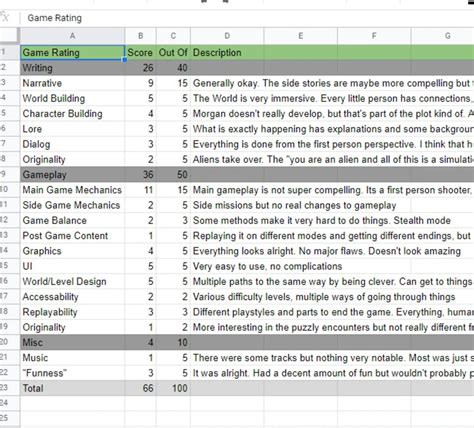
Another approach is to break down reviews into modular components (e.g., Gameplay, Story, Graphics, Technical Performance, Post-Launch Support). Specific sections, particularly “Technical Performance” and “Post-Launch Support,” could be updated independently. Furthermore, prominent “Editor’s Notes” or “Update Appendices” could be added to original reviews, detailing significant changes, improvements, or regressions without necessarily altering the initial score but providing crucial context. Some outlets already do this, but making it a more standardized practice could enhance transparency.

Version-Specific Reviews and Re-reviews
For games that undergo massive overhauls, a full re-review might be warranted. This would involve a completely new article and score, clearly indicating it’s a review of a substantially different product (e.g., “Cyberpunk 2077: Phantom Liberty Expansion Re-review”). While resource-intensive, this method acknowledges when a game has evolved beyond its original incarnation, offering a fresh perspective for new and returning players. Clearly labeling review versions is also critical, ensuring readers know which iteration of the game the reviewer experienced.
Challenges and Considerations
Implementing dynamic review systems comes with its own set of challenges. The most significant is the increased workload for review teams, requiring ongoing dedication to revisit and re-evaluate games. There’s also the potential for confusion if scores are constantly fluctuating, and the need for clear communication about why and when scores are updated. Furthermore, determining what constitutes a “significant enough” update to warrant a score change requires careful editorial guidelines. Balancing initial impressions with long-term evolution demands a nuanced approach, preventing an endless cycle of re-evaluation for minor tweaks.

Conclusion: Adapting to a New Reality
As the gaming landscape continues to evolve, so too must the methodologies we use to evaluate it. Static, day-one review scores, while foundational, are increasingly insufficient in a world of persistent online experiences and iterative development. By embracing dynamic scoring, modular updates, explicit versioning, and strategic re-reviews, the industry can create a more accurate, relevant, and trustworthy system for assessing games. This evolution will not only better serve consumers seeking informed purchase decisions but also fairly acknowledge the ongoing efforts of developers to polish and expand their creations long after launch.



