What specific communication drills improve competitive team synergy mid-match?

In the high-stakes environment of competitive esports, a team’s ability to communicate effectively under pressure is often the deciding factor between victory and defeat. While pre-match strategies are vital, the dynamic chaos of mid-match scenarios demands real-time, precise, and adaptable communication. Developing these skills isn’t accidental; it requires specific, targeted drills designed to harden team synergy when it matters most.
Establishing Concise & Prioritized Callouts
One of the most common pitfalls in competitive communication is information overload or ambiguity. Players often transmit too much information, too slowly, or in an unclear manner, leading to hesitation or misinterpretation. To combat this, teams can practice “Keyword-Only Callouts” drills. In this exercise, players are tasked with communicating critical information using only 1-3 pre-defined words. For example, instead of “Enemy top lane is missing, he might be rotating bot,” a concise callout would be “Top missing, bot watch.”
Another crucial drill is “Information Prioritization.” During a practice match or even in custom scenarios, players are given a limited “word count” for each callout (e.g., 5 words per call). This forces them to distill complex situations into their most vital components, focusing on threats, objectives, and immediate actions. This not only improves individual clarity but also trains the team to anticipate what information is truly essential.
Structured Shot-Calling & Role Delegation
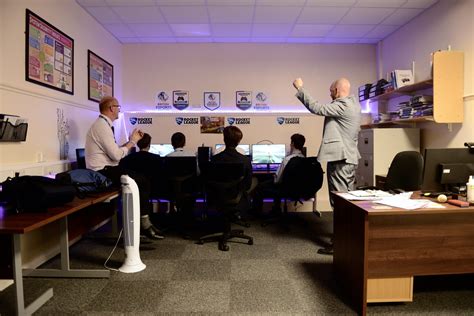
While every player should contribute information, effective mid-match communication often benefits from a clear, though flexible, shot-calling structure. The “Designated Caller Rotation” drill helps teams understand the nuances of leading. Instead of having one static shot-caller, different players take on the primary shot-calling role for specific phases of the game (e.g., jungler early game, support mid-game, carry late game). This builds leadership skills across the roster and ensures multiple perspectives can guide the team.
Alongside rotation, “Layered Callouts” drills focus on distinguishing between macro and micro calls. The primary shot-caller might focus on macro-level objectives (“We need to contest dragon in 30 seconds”), while individual players provide micro-level tactical information relevant to their immediate area (“My ultimate is up,” “Enemy flash down”). Practicing this separation prevents micro-details from drowning out critical macro strategy and vice-versa.

Active Listening & Confirmation Drills
Communication isn’t a one-way street. A callout is only effective if it’s received and understood. The “Echo Chamber” (or “Confirmation Call”) drill encourages players to verbally acknowledge critical calls. For instance, if a shot-caller says, “Dive the carry,” individual players confirm with “On carry” or “Diving.” This simple act confirms receipt, reinforces the command, and creates a shared understanding of the immediate objective.
For more complex or ambiguous situations, the “Challenge & Clarify” drill is invaluable. If a player hears a callout that is unclear or seems risky, instead of silently hesitating, they are encouraged to immediately ask for clarification or propose an concise alternative. For example, “Are we pushing for tower or backing?” This quick feedback loop prevents misplays and ensures everyone is on the same page before committing to a potentially game-losing action.
Rapid Adaptation & Contingency Communication
Competitive matches are unpredictable. Teams must be able to adapt their strategy on the fly, and communication is key to this flexibility. The “If-Then Scenario” drill involves presenting the team with unexpected mid-game events (e.g., “Opponent stole our buff,” “Our mid-laner died unexpectedly”) and having them verbally formulate an immediate contingency plan. This trains rapid problem-solving and proactive communication.
Moreover, “Panic Proofing” drills focus on maintaining calm and coherent communication during high-stress moments. Teams can practice specific phrases or protocols for when a team fight goes poorly or an objective is lost. Instead of shouting or blaming, players are trained to immediately shift to re-grouping calls or identifying the next best course of action. This preserves mental fortitude and prevents a single setback from spiraling into a full collapse.
Continuous Feedback & Iteration
Finally, the most effective communication drills are those that are constantly refined. Post-match debriefs, even short ones immediately after a practice game, are critical. The “Communication Review” drill involves reviewing specific VODs (video on demand) to identify moments of excellent or poor communication. Players can pinpoint exactly where a call was missed, too slow, or perfectly timed, providing concrete examples for improvement.
These dedicated communication drills, when consistently practiced, transform chaotic chatter into synchronized action. They build not just better communicators, but a more cohesive, adaptable, and ultimately, more synergistic competitive team capable of executing complex strategies under immense pressure.