





Best SSD for gaming? NVMe vs SATA: Which storage upgrade boosts game load times most?

Why SSDs Are Essential for Modern Gaming
In the world of PC gaming, every millisecond counts, not just in frame rates, but also in how quickly you can jump into the action. Traditional Hard Disk Drives (HDDs) have long been the bottleneck for system responsiveness, especially when loading large game worlds and intricate textures. Solid State Drives (SSDs) revolutionized storage by replacing spinning platters with flash memory, dramatically improving boot times, application launches, and crucially, game load times.
But not all SSDs are created equal. As technology advances, two primary types dominate the market: SATA SSDs and NVMe SSDs. Understanding their differences is key to making the best upgrade decision for your gaming rig.
The Reliable Workhorse: SATA SSDs
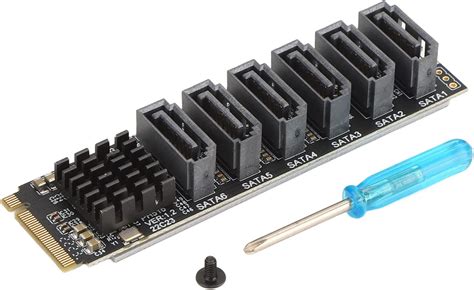
SATA (Serial Advanced Technology Attachment) has been the standard interface for connecting storage devices to a computer’s motherboard for decades. SATA SSDs, typically in a 2.5-inch form factor, look similar to laptop hard drives and connect via a SATA data cable and a SATA power cable.
- Performance: SATA III, the most common standard, offers a theoretical maximum throughput of 600 MB/s (megabytes per second). In real-world scenarios, most SATA SSDs deliver sequential read/write speeds in the range of 500-550 MB/s.
- Compatibility: Almost all modern motherboards have multiple SATA ports, making these drives highly compatible and easy to install in a variety of systems, including older ones.
- Cost: SATA SSDs are generally more affordable per gigabyte than their NVMe counterparts, offering excellent value for a significant performance boost over HDDs.
The Speed Demon: NVMe SSDs
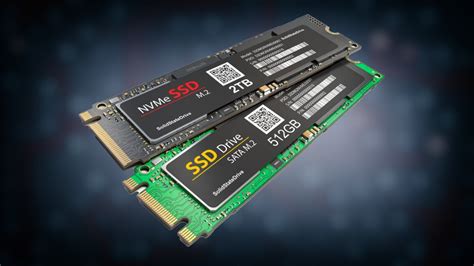
NVMe (Non-Volatile Memory Express) is a communication protocol specifically designed for SSDs to take full advantage of the PCI Express (PCIe) interface. Unlike SATA, which was originally designed for HDDs, NVMe allows SSDs to communicate directly with the CPU, bypassing bottlenecks and dramatically increasing speed.
NVMe SSDs typically come in a small, stick-like M.2 form factor, although U.2 and PCIe add-in card versions also exist. They plug directly into an M.2 slot on your motherboard.
- Performance: NVMe SSDs leverage PCIe lanes, offering vastly superior speeds. Depending on the PCIe generation (Gen3, Gen4, Gen5), speeds can range from 3,500 MB/s (PCIe Gen3) up to 7,000 MB/s (PCIe Gen4) and even 10,000-14,000 MB/s (PCIe Gen5) for sequential reads and writes. This is many times faster than SATA.
- Compatibility: Requires an M.2 slot on your motherboard that supports NVMe. Most modern motherboards have at least one, if not several, M.2 slots. Older motherboards might lack this feature.
- Cost: Generally more expensive than SATA SSDs, especially for the latest generation drives, but prices have become much more competitive.
NVMe vs. SATA: Raw Speed vs. Real-World Gaming Load Times
The core question for gamers is whether the immense theoretical speed advantage of NVMe translates into a significantly better gaming experience, particularly in game load times. While NVMe SSDs are undeniably faster in benchmarks and tasks like large file transfers, the difference in typical game load times between a high-end SATA SSD and an NVMe SSD is often less dramatic than you might expect.
Most games today are optimized for SSDs in general, and many game engines simply aren’t designed to fully saturate the bandwidth provided by NVMe. The primary bottleneck shifts from storage speed to other system components like CPU, RAM, and how the game assets are designed to load. For many titles, moving from an HDD to a SATA SSD provides a monumental improvement, often cutting load times by 50-70%. Moving from a SATA SSD to an NVMe SSD might shave off an additional few seconds, or even just fractions of a second, depending on the game.

Where NVMe Can Shine for Gaming
- Future-proofing: Newer games, especially those designed with technologies like Microsoft’s DirectStorage API (which allows the GPU to decompress game assets directly from NVMe drives), will increasingly take advantage of NVMe’s speed. This could lead to noticeable improvements in load times and texture streaming in future titles.
- Open-world games: Games with massive open worlds and seamless transitions might see more benefit from NVMe, as they constantly stream new assets.
- Content creation/streaming: If you’re a gamer who also creates content, edits videos, or streams, the overall system responsiveness and faster file handling of NVMe will be a significant advantage.
Making Your Choice: Recommendations
When deciding between NVMe and SATA for your gaming PC, consider your budget, current hardware, and gaming habits.

- Budget-Conscious Gamer: If you’re still on an HDD or looking for the most cost-effective upgrade, a high-quality SATA SSD is an excellent choice. It offers an incredible performance boost over HDDs for a reasonable price, and you likely won’t feel significantly disadvantaged in most current games compared to an NVMe drive.
- Mainstream Gamer: If your motherboard has an M.2 slot, an entry-level or mid-range NVMe PCIe Gen3 SSD offers a great balance of performance and price. You’ll get slightly faster load times than SATA, future-proof your system a bit, and enjoy the convenience of a cable-free M.2 drive.
- Enthusiast/High-Performance Gamer: If you want the absolute best, have a motherboard supporting PCIe Gen4 or Gen5, and your budget allows, a high-performance NVMe SSD is the way to go. While the immediate gaming load time benefits over Gen3 might be minor for many titles, you’ll benefit from overall system snappiness and be ready for games that fully utilize DirectStorage.

Conclusion
For most gamers looking to significantly improve their game load times, moving from an HDD to any SSD (SATA or NVMe) will yield the most impactful results. While NVMe SSDs offer vastly superior raw speeds, the real-world difference in game load times over SATA SSDs is often measurable in seconds or less, with diminishing returns for current game titles. However, with the advent of technologies like DirectStorage, NVMe is poised to become increasingly important for future gaming performance.
Ultimately, a SATA SSD remains a fantastic, cost-effective upgrade for gaming, while an NVMe SSD provides the peak of current storage performance and better future-proofing for the next generation of games. Choose the drive that best fits your budget, system compatibility, and performance expectations.


