Best gaming monitor settings for high refresh rate FPS titles?

Unlocking Peak Performance: Why Monitor Settings Matter for FPS
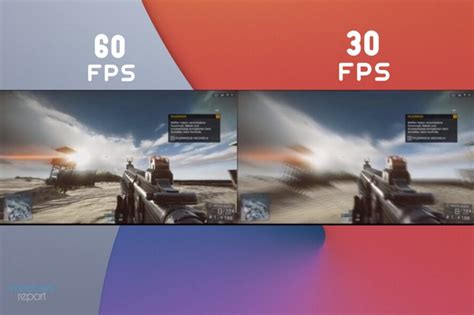
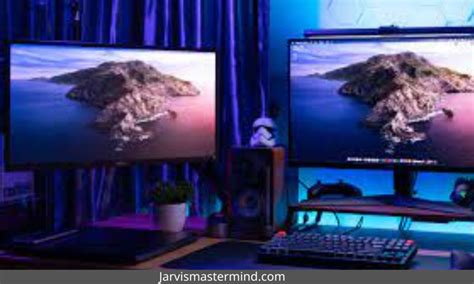
In the fast-paced world of competitive First-Person Shooters (FPS), every millisecond counts. While a high refresh rate monitor is a crucial hardware advantage, simply owning one isn’t enough. To truly dominate the battlefield, you need to fine-tune your monitor settings to ensure maximum fluidity, responsiveness, and visual clarity. This guide will walk you through the essential adjustments in your monitor’s On-Screen Display (OSD), GPU control panel, and in-game options to give you that critical edge.
Essential Monitor OSD Settings for FPS Dominance
Your monitor’s built-in settings are the first place to look for optimization. Access them via the physical buttons on your monitor.
1. Refresh Rate: Max It Out (or Verify)
Ensure your monitor is actually running at its advertised high refresh rate (e.g., 144Hz, 240Hz, 360Hz). While often detected automatically, it’s worth checking:
- Windows: Right-click Desktop > Display settings > Advanced display settings > Display adapter properties for Display [X] > Monitor tab. Select the highest available refresh rate.
- OSD: Some monitors show current refresh rate in their info tab.
2. Response Time / Overdrive: Finding the Sweet Spot
This setting reduces ghosting (motion blur). Most monitors offer several levels (e.g., Normal, Fast, Fastest, Extreme). Too low, and you’ll see ghosting; too high, and you’ll introduce inverse ghosting (overshoot artifacts). Experiment to find the optimal setting for your panel – usually one level below the maximum, like ‘Fast’ or ‘High’, not ‘Extreme’.
3. Adaptive Sync (G-Sync/FreeSync): Enable It
If your monitor and GPU support Adaptive Sync (NVIDIA G-Sync or AMD FreeSync), enable it. This technology synchronizes your monitor’s refresh rate with your GPU’s frame rate, eliminating screen tearing and reducing stuttering without the input lag penalty of VSync. Ensure it’s enabled in both your monitor’s OSD and your GPU control panel.
4. Brightness, Contrast, and Gamma: See Every Detail
These are largely personal preference but critical for visibility.
- Brightness: Adjust to a comfortable level that doesn’t strain your eyes but allows details in bright and dark areas.
- Contrast: Typically leave at default (50-70%) unless specific calibration tools are used.
- Gamma: Often defaulted to 2.2, which is standard. Adjusting it can make dark areas lighter (lower gamma) or darker (higher gamma). Experiment slightly if you struggle to see enemies in shadows.
5. Black Equalizer / Dynamic Black / Shadow Boost: Reveal Hidden Enemies
Many gaming monitors offer a ‘Black Equalizer’ or similar setting. This feature selectively brightens dark areas without overexposing the rest of the screen, making it easier to spot enemies lurking in shadows. Use it moderately to avoid washing out the image.
6. Low Input Lag Mode / Game Mode: Turn It On
Some monitors have a dedicated ‘Game Mode’ or ‘Low Input Lag’ setting. These modes often bypass certain image processing, directly reducing the delay between your input and the on-screen action. Always enable this for competitive play.
Optimizing Your GPU Control Panel (NVIDIA/AMD)
Beyond your monitor’s OSD, your graphics card software offers crucial settings.
NVIDIA Control Panel / AMD Radeon Software
- Verify Refresh Rate: Double-check that your desired high refresh rate is selected.
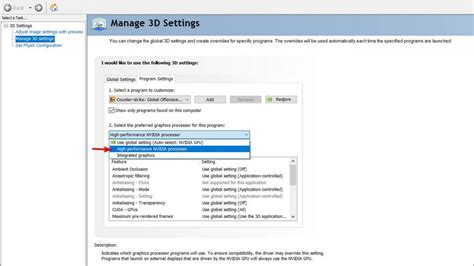
- Enable Adaptive Sync: For NVIDIA users, ensure G-Sync is enabled for your display under ‘Set up G-SYNC’. For AMD users, FreeSync should be enabled under ‘Display’.
- Ultra-Low Latency Mode (NVIDIA): Set to ‘Ultra’ to submit frames just in time for the GPU to process them, further reducing input lag. For AMD, ‘Radeon Anti-Lag’ serves a similar purpose.
- Display Scaling: For best performance and lowest latency, select ‘No Scaling’ or ‘Full-screen’ scaling.
Crucial In-Game Display Settings
Finally, your game’s internal settings also play a vital role.
1. Resolution and Refresh Rate: Match Your Hardware
Always play at your monitor’s native resolution (e.g., 1920×1080, 2560×1440) for the sharpest image. Also, ensure the in-game refresh rate setting matches your monitor’s maximum refresh rate.
2. VSync: The Great Debate
With Adaptive Sync enabled, VSync should generally be turned OFF in-game to minimize input lag. Adaptive Sync already handles tearing and stuttering. If you don’t have Adaptive Sync and experience unbearable tearing, you might consider ‘Fast Sync’ (NVIDIA) or ‘Enhanced Sync’ (AMD) as lower-latency alternatives to traditional VSync.
3. Field of View (FOV): Personal Preference, Tactical Advantage
A higher FOV (often between 90-110 in FPS) can give you a wider view of the battlefield, making it easier to spot enemies on your periphery. However, it can also make distant targets appear smaller. Experiment to find a FOV that feels comfortable and gives you a competitive advantage without distorting too much.

Additional Tips for a Flawless Experience
- Display Cable Matters: Always use a DisplayPort (DP) cable for high refresh rates and Adaptive Sync. While some HDMI versions (2.0+) can support high refresh rates, DP is generally preferred for gaming.
- Monitor Firmware Updates: Check your monitor manufacturer’s website for any firmware updates. These can sometimes improve performance, fix bugs, or add features.
- Professional Calibration: For absolute color accuracy, consider investing in a colorimeter for professional monitor calibration. While less critical for competitive FPS, it ensures the most accurate visual representation.
Conclusion: Dominate the Battlefield
By meticulously adjusting these monitor, GPU, and in-game settings, you’re not just getting a prettier picture; you’re gaining a tangible competitive advantage. Smoother visuals, reduced input lag, and enhanced enemy visibility translate directly into faster reaction times and more consistent performance in your favorite high refresh rate FPS titles. Take the time to fine-tune your setup, and you’ll be well on your way to dominating the leaderboard.