How can solo queue players effectively climb ranks & improve competitive esports skill?

Conquering the Solo Queue Challenge
Solo queue can often feel like a coin flip, a chaotic arena where individual prowess clashes with unpredictable team dynamics. Yet, many high-ranking players have forged their skills and ascended the ladders primarily through solo play. The key lies not in expecting perfect teammates, but in maximizing personal impact, maintaining a strong mental game, and consistently improving competitive skills. For aspiring esports athletes or simply those aiming for higher ranks, solo queue is a crucible for growth.
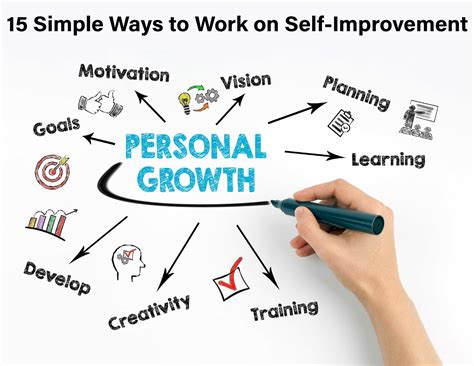
Effective rank climbing and skill improvement in solo queue demand a multi-faceted approach, focusing on aspects within your control. It’s about self-reflection, adaptability, and a relentless pursuit of marginal gains, all while navigating the unique challenges of playing without a pre-made team.
Mastering the Mental Game
Perhaps the most critical aspect of solo queue success is maintaining a strong mental fortitude. Tilt is the enemy of progress. When frustration sets in, performance inevitably dips, leading to a downward spiral. Cultivate resilience by focusing on your own play and accepting that some games are simply unwinnable due to factors beyond your control.
Practice positive self-talk and take short breaks after frustrating losses to reset your mental state. A healthy mindset allows for consistent performance and better decision-making, even when teammates are struggling. Remember, every game is an opportunity to learn and apply new strategies, regardless of the outcome.

Sharpening Individual Performance
In solo queue, you are your most reliable asset. Therefore, investing in your individual skill set is paramount. This involves rigorous mechanical practice, understanding your champion/character pool deeply, and critically reviewing your own gameplay.
Mechanical Proficiency
Dedicate time to isolated practice for mechanics specific to your game – last hitting, aim training, combo execution, movement patterns. Muscle memory is built through repetition. The smoother your mechanics, the more mental bandwidth you free up for strategic thinking.
VOD Review and Self-Analysis
Record your gameplay and watch it back. Be honest with yourself. Identify mistakes – missed opportunities, poor positioning, bad rotations, incorrect ability usage. Don’t just focus on what went wrong; understand why it went wrong. Compare your decisions to those of professional players or higher-ranked streamers. This is where true learning happens.
Strategic Game Understanding (Macro & Micro)
Beyond individual mechanics, a deep understanding of the game’s strategic layers is crucial. This includes both macro (overall game flow, objectives, rotations) and micro (lane matchups, ability timings, small skirmishes) aspects. In solo queue, your ability to make optimal strategic decisions can often compensate for team coordination gaps.
Objective Control and Vision
Learn to prioritize objectives over kills. Understand when to push, when to defend, and when to group. Vision control is often overlooked in solo queue but provides immense strategic advantages, allowing for safer rotations, picks, and objective secures. Being the player who consistently places crucial wards or pings enemy movements provides invaluable support to a less coordinated team.
Adaptive Playstyles
While specializing in a few roles or characters is beneficial, learn to adapt your playstyle based on your team composition and the enemy’s. Sometimes you need to be the primary damage dealer, other times the shot-caller, or the selfless initiator. Flexibility allows you to fill crucial gaps and increase your team’s chances of success.
Effective Communication & Team Interaction
Even without voice chat, effective communication is possible in solo queue. Utilize pings intelligently and sparingly. A clear ping on an enemy, an objective, or a retreat can convey a lot of information without needing to type.
Avoid excessive toxicity. Engaging in arguments in chat is a surefire way to lose focus and demoralize your team. If a teammate is being negative, mute them and focus on your own game. Your goal is to win, and fostering a positive environment, even passively, helps achieve that.

The Long Climb: Consistency and Review
Climbing ranks is not a sprint; it’s a marathon. Consistency in applying these principles over a long period is what truly yields results. Don’t get discouraged by losing streaks; they are inevitable. Focus on your win rate over dozens of games, not individual matches.
Regularly reassess your goals and strategies. Are you still making the same mistakes? What new aspects of the game can you learn? Continuous learning, adapting, and refining your approach will not only help you climb but also build fundamental esports skills that are valuable at any competitive level. Take care of your physical and mental health; adequate sleep, nutrition, and breaks prevent burnout and ensure you perform at your best.
Conclusion
Solo queue is a challenging yet rewarding path for skill development and rank climbing. By mastering your mental game, relentlessly improving individual mechanics, deepening your strategic understanding, communicating effectively, and maintaining consistency, you can overcome its inherent unpredictability. Focus on what you can control – your performance, your attitude, and your commitment to learning – and you will inevitably see progress in both your competitive rank and overall esports skill.