How do I optimize my monitor’s refresh rate & G-Sync for competitive gaming?

For competitive gamers, every millisecond and visual cue can make the difference between victory and defeat. Optimizing your monitor’s refresh rate and NVIDIA G-Sync technology is not just about aesthetics; it’s about gaining a tangible performance edge. By eliminating screen tearing, reducing stutter, and ensuring the smoothest possible motion, you can enhance your reaction times and situational awareness. This comprehensive guide will walk you through the precise steps to configure your display for a superior competitive gaming experience.
Unlocking Peak Performance: The Foundation
Competitive gaming demands every possible advantage, and your display setup is a crucial component. Optimizing your monitor’s refresh rate and NVIDIA’s G-Sync technology can significantly enhance visual fluidity, reduce input lag, and eliminate frustrating screen tearing, providing a clearer, more responsive experience. This guide will walk you through the essential steps to configure your monitor for maximum competitive advantage.
Understanding Refresh Rate: Speed Matters
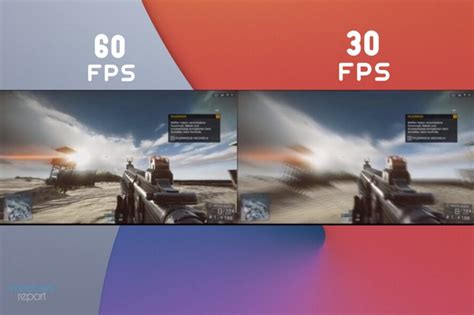
Refresh rate, measured in Hertz (Hz), indicates how many times per second your monitor can draw a new image. A higher refresh rate means smoother motion and less motion blur, making it easier to track fast-moving targets and react quickly. For competitive gaming, 144Hz, 240Hz, or even 360Hz monitors are highly sought after. Ensure your monitor is set to its maximum refresh rate.
How to Set Your Monitor’s Refresh Rate:
- Windows Display Settings: Right-click on your desktop and select “Display settings.” Scroll down to “Advanced display settings,” then choose your primary gaming monitor. Click on “Display adapter properties for Display [X]” and navigate to the “Monitor” tab. Here, you can select the desired screen refresh rate from the dropdown menu.
- NVIDIA Control Panel: Open the NVIDIA Control Panel. Under “Display,” select “Change resolution.” Choose your gaming monitor, then select the highest available refresh rate from the “Refresh rate” dropdown.
Always ensure your display cable (DisplayPort or HDMI) supports the desired refresh rate and resolution.
Harnessing G-Sync: Adaptive Sync Advantage
NVIDIA G-Sync is an adaptive synchronization technology that eliminates screen tearing and minimizes stuttering by synchronizing your monitor’s refresh rate directly with your GPU’s frame rate. Unlike traditional V-Sync, which can introduce input lag, G-Sync dynamically adjusts the refresh rate, ensuring every frame is displayed completely and without delay within the monitor’s G-Sync range.
Enabling and Configuring G-Sync:
- Connect via DisplayPort: G-Sync primarily works over DisplayPort. Ensure your monitor is connected via a DisplayPort cable.
- Enable G-Sync on Monitor: Many G-Sync compatible monitors require you to enable G-Sync or “Adaptive Sync” through their OSD (On-Screen Display) menu.
- NVIDIA Control Panel Setup:
- Open the NVIDIA Control Panel.
- Under “Display,” select “Set up G-SYNC.”
- Check the box for “Enable G-SYNC, G-SYNC Compatible.”
- Select your G-Sync capable monitor.
- Check “Enable settings for the selected display model.”
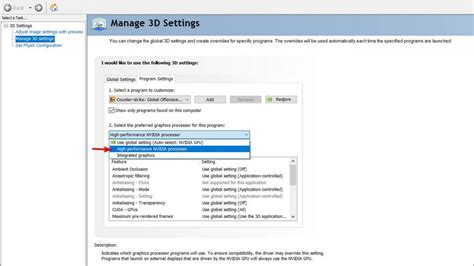
- Go to “Manage 3D settings,” then “Global Settings” (or “Program Settings” for specific games).
- Scroll down to “Monitor Technology” and ensure it’s set to “G-SYNC.”
- Set “Vertical sync” to “On.” (Yes, “On” with G-Sync! This helps prevent tearing above your monitor’s max refresh rate if your frames exceed it. G-Sync handles tearing below the max refresh rate.)
Optimizing the Synergy: Refresh Rate + G-Sync
For the ultimate competitive gaming experience, it’s not just about enabling these features; it’s about making them work together harmoniously.
Frame Rate Management:
While G-Sync prevents tearing within its operational range, it’s crucial to manage your in-game frame rates. Ideally, you want your frames per second (FPS) to be consistently just below your monitor’s maximum refresh rate. This ensures G-Sync is always active and provides the smoothest, lowest-latency experience. For example, if you have a 144Hz monitor, cap your in-game FPS at 141 or 143 FPS.
- In-Game Capping: Many games have built-in FPS limiters.
- NVIDIA Control Panel Limiter: Under “Manage 3D settings,” find “Max Frame Rate” and set it to your desired cap (e.g., 141 FPS for a 144Hz monitor).
This strategy, combined with “Vertical sync” set to “On” in the NVIDIA Control Panel (which only activates if your FPS exceeds the G-Sync range), creates a virtually tear-free, low-latency setup.

Additional Tips for Peak Performance
- Exclusive Fullscreen: Whenever possible, play games in exclusive fullscreen mode. This often gives the game direct control over the display, leading to lower latency and better G-Sync performance.
- Low Latency Mode: In the NVIDIA Control Panel, under “Manage 3D settings,” consider setting “Low Latency Mode” to “On” or “Ultra” for an additional reduction in input lag.
- Display Drivers: Always keep your graphics drivers updated to the latest stable version. New drivers often include performance optimizations and bug fixes for G-Sync and display technologies.
- Cable Quality: Use high-quality DisplayPort cables. Poor quality or too-long cables can cause issues with high refresh rates and G-Sync.

Troubleshooting Common Issues
If G-Sync doesn’t seem to be working, or you’re experiencing stuttering or tearing:
- Verify Connection: Ensure you’re using DisplayPort.
- Check Monitor OSD: Confirm G-Sync/Adaptive Sync is enabled on your monitor.
- Driver Reinstall: Perform a clean installation of your NVIDIA drivers.
- Test Different Games: See if the issue is specific to one game or across all titles.
- Monitor Refresh Rate: Double-check your monitor is set to its highest refresh rate in Windows and NVIDIA Control Panel.
- In-Game Settings: Disable any in-game V-Sync, as it can conflict with G-Sync’s operation when managed by the NVIDIA Control Panel.
Conclusion
Mastering your monitor’s refresh rate and G-Sync settings is paramount for gaining a competitive edge. By correctly configuring these features, you can achieve an incredibly smooth, responsive, and tear-free gaming experience, allowing you to focus purely on gameplay and react with pinpoint precision. Take the time to fine-tune these settings, and you’ll undoubtedly feel the difference in your next competitive match.