





How to balance objective game critique with a reviewer’s personal enjoyment?

The Dual Nature of Game Reviewing
For professional game reviewers, the task extends far beyond simply playing a game and sharing an opinion. It involves a sophisticated interplay between analytical deconstruction and personal experience. The core challenge lies in delivering a critique that is both fair and insightful, dissecting a game’s technical merits and design philosophy while acknowledging, and often integrating, the reviewer’s individual journey through its virtual world.

Defining Objective Critique
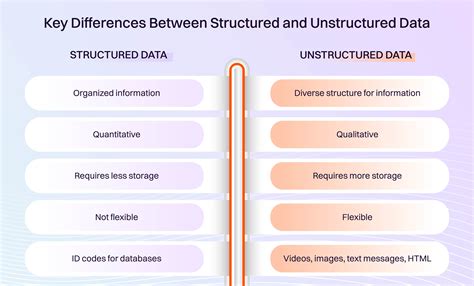
Objective critique in game reviews focuses on verifiable elements and industry standards. This includes evaluating:
- Technical Performance: Frame rates, stability, bug prevalence, optimization.
- Core Mechanics: How well systems work, responsiveness, balance, depth.
- Visual and Audio Fidelity: Art direction, graphic detail (relative to target hardware), sound design, voice acting quality.
- Design Principles: Level design, user interface (UI), user experience (UX), tutorial effectiveness, progression systems.
- Narrative Cohesion: Plot consistency, character development, thematic strength.
- Value Proposition: Content quantity, replayability, price point relative to offerings.
These are aspects that can, to a significant degree, be assessed against industry benchmarks, design best practices, and the game’s own stated intentions. A well-constructed objective critique explains what a game does well or poorly, and why, often without needing to lean on personal preference.
The Inevitability of Personal Enjoyment
Despite the pursuit of objectivity, a reviewer is fundamentally a human being with unique tastes, past experiences, and emotional responses. Personal enjoyment (or lack thereof) is an intrinsic part of the gaming experience. A reviewer might personally dislike a genre (e.g., horror, turn-based RPGs) but still recognize a game’s excellence within that genre. Conversely, a game might resonate deeply with a reviewer’s personal preferences, leading to immense enjoyment, even if it has some technical flaws.
Ignoring this subjective layer entirely would render reviews sterile and unrelatable. Players often seek reviews not just for facts, but for a proxy experience – to understand how a game feels. The challenge isn’t to eliminate personal enjoyment, but to contextualize and communicate it effectively.
Strategies for Striking the Balance
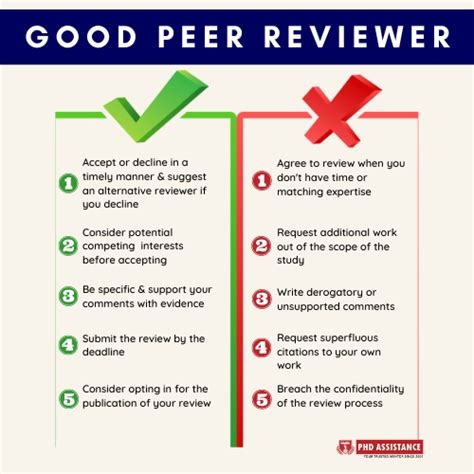
1. Transparent Self-Awareness
A good reviewer understands their own biases and preferences. Are you particularly fond of open-world games? Do you get easily frustrated by permadeath mechanics? Acknowledging these tendencies, either explicitly or implicitly, helps the reader understand the lens through which the review is being written.
2. Separate ‘I like’ from ‘It is good’
This is perhaps the most crucial distinction. A reviewer might say, “I personally find this game’s repetitive side quests tedious” (subjective) and follow it with, “However, the core quest line is expertly paced and provides satisfying narrative arcs, appealing to players who prioritize story over open-world busywork” (objective contextualization).
3. Contextualize for the Audience
Instead of just saying “I loved/hated this,” explain who else might love or hate it. “Fans of challenging souls-like combat will appreciate the unforgiving difficulty curve, while those looking for a casual experience might find it frustrating.” This translates personal enjoyment into actionable advice for potential players.

4. Focus on Verifiable Strengths and Weaknesses
While discussing personal feelings, always ground them in concrete examples. If the reviewer found a game boring, explain why – was it poor level design, repetitive combat, or a lack of compelling objectives? Connect the subjective feeling to objective design flaws or successes.
5. Structured Reviewing
Many professional reviews adopt a structured approach, dedicating specific sections to graphics, gameplay, sound, story, and value. This structure naturally guides the reviewer towards objective analysis in each category, with personal enjoyment often reserved for concluding thoughts or a “personal take” section.
6. Comparative Analysis
Referencing similar games helps establish a baseline for objective evaluation. “While the combat isn’t as fluid as Devil May Cry, it offers more strategic depth than Bayonetta, carving out its own niche.” This comparison helps readers understand the game’s position within its genre, regardless of the reviewer’s personal preference for any of those titles.
The Ethical Reviewer
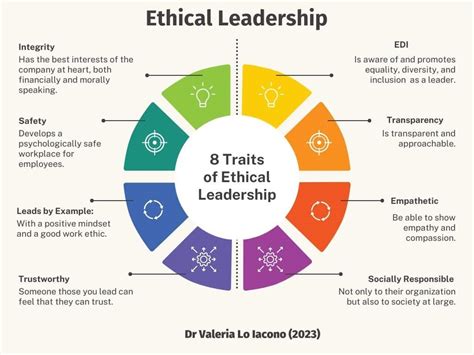
Ultimately, balancing objective critique with personal enjoyment boils down to ethical reviewing. It’s about respecting the reader, the developers, and the art form itself. An ethical reviewer strives to present a comprehensive, fair, and honest assessment, acknowledging that while numbers and facts are important, the subjective human experience is what often makes a game truly memorable, or forgettable.
The goal is not to eliminate personality from reviews, but to harness it responsibly, ensuring that the personal voice enhances the critique rather than overshadowing its analytical foundation.
Conclusion
The art of game reviewing lies in its inherent duality: the cold, hard facts of design and performance juxtaposed with the warm, often unpredictable, realm of personal connection and enjoyment. By employing transparency, structured analysis, and a commitment to distinguishing between subjective feeling and objective merit, reviewers can provide invaluable guides for players, helping them make informed decisions while still offering the rich, human perspective that makes reviews engaging and relatable.



