Reduce input lag for FPS games: Monitor settings, mouse polling, vsync impact?

Input lag can be the invisible enemy that separates you from that clutch headshot or a swift repositioning in fast-paced First-Person Shooter (FPS) games. Even milliseconds can make a difference when reaction times are paramount. Understanding and optimizing your hardware and software settings is crucial to gaining a competitive edge. This article delves into key areas—monitor configurations, mouse polling rates, and the impact of VSync—to help you minimize input lag and sharpen your gameplay.

Understanding Input Lag in FPS Games
Input lag refers to the delay between your action (like clicking your mouse or pressing a key) and that action being reflected on your screen. In FPS games, this manifests as a slight delay between you moving your mouse and your crosshair moving, or firing your weapon and seeing the shot. While modern systems have drastically reduced these delays, competitive players seek every advantage to achieve the lowest possible latency.
Monitor Settings for Low Latency
Your monitor is a critical component in your input lag chain. Optimizing its settings can yield significant improvements.
High Refresh Rate (Hz)
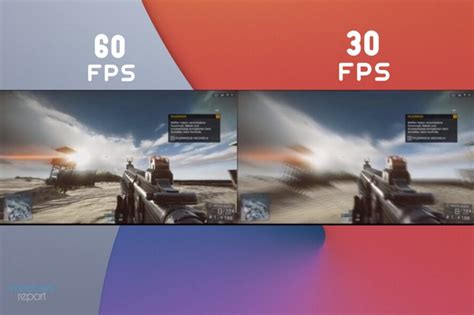
- Importance: A higher refresh rate (e.g., 144Hz, 240Hz, 360Hz) means the monitor updates the image on your screen more frequently. This directly translates to smoother visuals and less perceived input lag, as you see your actions reflected sooner.
- Action: Ensure your monitor is set to its highest possible refresh rate in your operating system’s display settings.
Response Time (GtG/MPRT)
- Importance: Response time measures how quickly pixels can change color. Lower GtG (Grey-to-Grey) or MPRT (Moving Picture Response Time) values (e.g., 1ms) reduce ghosting and motion blur, making fast movements clearer. While not direct input lag, poor response time can make the game feel less responsive.
Overdrive/OD Settings
- Importance: Most monitors have an Overdrive setting to accelerate pixel response times.
- Action: Experiment with your monitor’s Overdrive settings (often labeled ‘OD’, ‘Response Time’, ‘Trace Free’, etc.). Too aggressive an overdrive can introduce inverse ghosting or “overshoot,” while too low can cause blur. Find the sweet spot for your panel.
Game Mode
- Importance: Many gaming monitors feature a “Game Mode” preset. This mode often disables image processing features that, while improving picture quality for movies, introduce additional processing delay and thus input lag.
- Action: Enable your monitor’s Game Mode when playing FPS titles.
Mouse Polling Rate and Responsiveness
The polling rate of your gaming mouse dictates how often it reports its position to your computer. Measured in Hertz (Hz), a higher polling rate means more frequent updates.
- Importance: A 1000Hz polling rate means your mouse reports its position 1000 times per second, or every 1 millisecond. Compared to a 125Hz mouse (reporting every 8ms), this significantly reduces the delay between your physical mouse movement and the cursor’s movement on screen.
- Action: Set your gaming mouse to its highest stable polling rate (typically 1000Hz) using its accompanying software. While some newer mice offer 2000Hz, 4000Hz, or even 8000Hz, ensure your system can handle it without introducing CPU strain or micro-stutters. For most, 1000Hz is the optimal balance of responsiveness and stability.
- Raw Input: Whenever possible, enable “Raw Input” in your game’s settings. This bypasses Windows’ mouse acceleration and processing, ensuring your mouse input is translated directly and accurately.

VSync, Adaptive Sync, and Input Lag
Screen tearing—when parts of multiple frames are displayed simultaneously—is visually jarring. VSync was introduced to combat this, but at a cost.
VSync (Vertical Synchronization)
- How it works: VSync forces your GPU to synchronize its frame output with your monitor’s refresh rate. If your GPU renders frames faster than your monitor can display them, VSync makes the GPU wait.
- The Problem: Input Lag: This waiting period introduces significant input lag. When VSync is enabled and your frame rate exceeds your refresh rate, frames are buffered, and your actions are delayed until the next screen refresh cycle.
- Recommendation: For competitive FPS gaming, disable VSync unless you absolutely cannot tolerate screen tearing and your frame rate is consistently below your monitor’s refresh rate (which still introduces lag).
Adaptive Sync (NVIDIA G-Sync / AMD FreeSync)
- The Solution: Adaptive Sync technologies dynamically adjust your monitor’s refresh rate to match your GPU’s frame rate, eliminating tearing without the input lag penalty of VSync.
- Action: If your monitor and graphics card support G-Sync or FreeSync, enable it! This is the ideal solution for smooth, tear-free gameplay with minimal input lag. Make sure to enable it in both your GPU driver settings and your monitor’s OSD.
- Frame Rate Cap: Even with Adaptive Sync, it’s often recommended to cap your in-game frame rate slightly below your monitor’s maximum refresh rate (e.g., 141 FPS for a 144Hz monitor, or 237 FPS for a 240Hz monitor). This keeps your GPU within the Adaptive Sync range, preventing it from exceeding the refresh rate where VSync might kick in (if enabled by driver settings) or tearing might reoccur.

Other Factors Influencing Latency
- System Performance: A powerful CPU and GPU that can consistently render frames well above your monitor’s refresh rate are foundational for low input lag. Frame drops and stuttering inherently increase perceived latency.
- Networking Latency (Ping): While not input lag from your hardware, high ping (network latency) to game servers will delay your actions just as much as display lag. Use a wired Ethernet connection over Wi-Fi when possible.
- Display Cables: Ensure you’re using appropriate cables (DisplayPort or high-speed HDMI) capable of transmitting your desired resolution and refresh rate without limitations.
Conclusion
Minimizing input lag in FPS games is a multi-faceted endeavor that involves fine-tuning various components of your gaming setup. By optimizing your monitor’s refresh rate, response time, and game mode, ensuring your mouse uses a high polling rate with raw input, and intelligently managing VSync (ideally opting for Adaptive Sync), you can significantly reduce the delay between your intent and the on-screen action. Every millisecond saved contributes to a more responsive, enjoyable, and ultimately, more competitive gaming experience.