





Choosing a gaming monitor: 144Hz vs 240Hz for competitive FPS?
The Refresh Rate Dilemma for Competitive Gamers
For serious competitive FPS players, every millisecond counts. Beyond a powerful CPU and GPU, your monitor’s refresh rate plays a pivotal role in how smoothly your game appears and how quickly you can react. The debate often boils down to two popular choices: 144Hz and 240Hz. Both offer significant advantages over standard 60Hz displays, but understanding the nuanced differences is key to optimizing your setup for peak performance in titles like Valorant, CS:GO, Apex Legends, and Call of Duty.
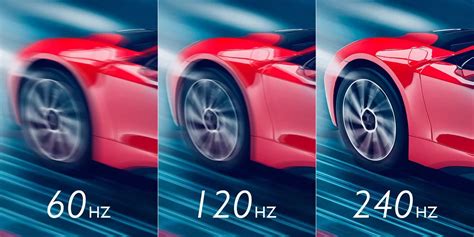
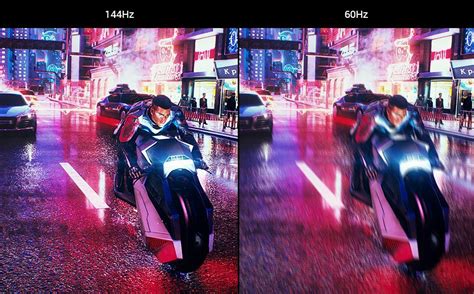
Refresh rate, measured in Hertz (Hz), indicates how many times per second your monitor can redraw the image on its screen. A higher refresh rate means more frames per second (FPS) can be displayed, resulting in a smoother, more fluid visual experience. This reduction in motion blur and input lag can provide a noticeable edge in fast-paced competitive environments.
144Hz: The Sweet Spot for Most
The 144Hz monitor has become the gold standard for many competitive gamers, and for good reason. It offers a dramatic improvement over 60Hz, making on-screen motion significantly smoother and reducing perceived input delay. For players upgrading from a standard monitor, the difference is often described as night and day, allowing for easier target tracking and more precise aiming.
One of the biggest advantages of 144Hz is its accessibility. These monitors are generally more affordable than their 240Hz counterparts, and they require less powerful hardware to consistently push 144 frames per second (FPS) in most popular competitive titles. This makes 144Hz an excellent balance of performance and value, providing a highly competitive experience without breaking the bank or demanding a top-tier graphics card.

240Hz: Pushing the Limits of Responsiveness
Stepping up to 240Hz takes visual fluidity to the next level. While the jump from 60Hz to 144Hz is revolutionary, the leap from 144Hz to 240Hz is often described as evolutionary. For elite players, or those highly sensitive to motion clarity, 240Hz can provide an almost imperceptible but potentially critical advantage. The extra frames per second can result in even less input lag and a slightly clearer image during rapid movements, which can translate to quicker target acquisition and reaction times in clutch moments.
However, 240Hz comes with its own set of considerations. These monitors are typically more expensive, and more importantly, they demand a very powerful PC setup to consistently achieve and maintain 240 FPS in games. If your system can’t reliably hit these frame rates, much of the benefit of a 240Hz monitor will be lost, as the monitor can only display what your GPU renders.

Direct Comparison: FPS Performance and Perception
When comparing 144Hz and 240Hz for competitive FPS, the key question is often about diminishing returns. While 144Hz offers a massive leap from 60Hz, the visible difference between 144Hz and 240Hz is less pronounced for many users. Some players might find the 240Hz experience marginally smoother, offering a slight edge in tracking rapidly moving targets or reducing ghosting. Others, especially those without highly trained eyes or extensive competitive experience, might struggle to perceive a significant difference.
Professional esports players often utilize 240Hz monitors, but it’s important to remember that their setups are optimized for every conceivable advantage, and their skill level is already extremely high. For the vast majority of players, the difference in tangible performance gain between 144Hz and 240Hz is likely to be less impactful than improvements in aim, strategy, or team communication. Research suggests that while higher refresh rates do improve performance, the individual’s skill remains the dominant factor.
Beyond Hertz: Resolution, Panel Type, and GPU Power
Choosing a gaming monitor isn’t solely about refresh rate. Several other factors play a crucial role, especially for competitive FPS:
- Resolution: For competitive FPS, 1080p (Full HD) is often preferred for its ease of achieving high frame rates. While 1440p offers crisper visuals, it’s more demanding on your GPU, making it harder to consistently hit 144+ FPS.
- Panel Type: TN (Twisted Nematic) panels are historically known for their fast response times and low input lag, making them favorites for competitive play. IPS (In-Plane Switching) panels offer superior color accuracy and wider viewing angles, with modern IPS panels now matching TN for speed. VA (Vertical Alignment) panels offer better contrast but typically have slower response times.
- Response Time: This refers to how quickly pixels can change color. A lower GtG (Gray-to-Gray) response time (1ms is ideal) minimizes motion blur and ghosting.
- Adaptive Sync (G-Sync/FreeSync): These technologies synchronize your monitor’s refresh rate with your GPU’s frame rate, eliminating screen tearing and stuttering for a smoother experience, particularly when your FPS fluctuates.
- GPU Power: Crucially, your graphics card must be powerful enough to consistently render frames at or above your monitor’s refresh rate to fully leverage its capabilities. A 240Hz monitor with a GPU that can only push 150 FPS is effectively a 150Hz monitor.
Making Your Choice: What’s Right for You?
The decision between 144Hz and 240Hz ultimately depends on your individual circumstances:
- Budget: If budget is a primary concern, a 144Hz monitor offers incredible value and performance.
- Current PC Specs: If your GPU struggles to hit 200+ FPS consistently in your preferred games, a 240Hz monitor would be overkill. Invest in a 144Hz monitor and consider upgrading your GPU first.
- Level of Competitiveness: For casual or aspiring competitive players, 144Hz is more than sufficient. For professional esports athletes or those striving for every marginal advantage at the highest levels, 240Hz might be considered.
- Personal Perception: If possible, try to experience both refresh rates firsthand. What feels essential to one player might be unnoticeable to another.
Conclusion
For the vast majority of competitive FPS players, a high-quality 144Hz monitor provides an exceptional, highly competitive gaming experience. It strikes an excellent balance between performance, cost, and hardware demands. While 240Hz monitors do offer the absolute pinnacle of refresh rate fluidity, their benefits are often subtle, require a significant investment in both the monitor and a powerful PC, and are most impactful for elite players where every fraction of a second can matter. Evaluate your budget, hardware, and competitive aspirations carefully, and you’ll find the perfect monitor to elevate your game.


