What’s the ideal refresh rate and resolution for competitive gaming?

In the high-stakes world of competitive gaming, every millisecond and pixel counts. Players constantly seek hardware advantages to elevate their performance, and two of the most critical factors influencing visual fidelity and responsiveness are refresh rate and resolution. But what’s the sweet spot for these settings when the goal is to dominate the leaderboard?
Understanding Refresh Rate: Speed and Fluidity
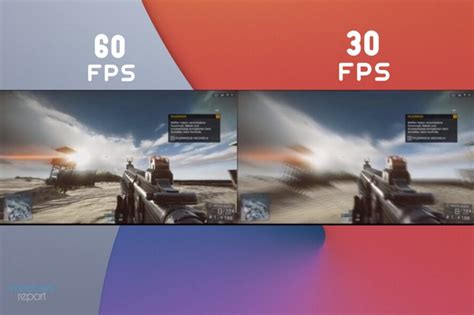
Refresh rate, measured in Hertz (Hz), dictates how many times your monitor updates the image on its screen per second. A higher refresh rate translates to a smoother, more fluid visual experience. For competitive gamers, this means less motion blur, clearer enemy outlines during fast movements, and a more immediate perception of in-game events.
While 60Hz has long been the standard, competitive gaming has largely moved towards 144Hz, 240Hz, and even 360Hz monitors. The difference between 60Hz and 144Hz is stark, offering a significant advantage in games where quick reflexes are paramount, such as first-person shooters (FPS) and fighting games. Moving from 144Hz to 240Hz provides a noticeable, though less dramatic, improvement for professional players, further reducing input lag and ghosting.

Decoding Resolution: Clarity and Detail
Resolution refers to the number of pixels displayed on your screen, typically expressed as width x height (e.g., 1920×1080). A higher resolution means more pixels, resulting in a sharper, more detailed image. Common resolutions include 1080p (Full HD), 1440p (QHD), and 2160p (4K UHD).
While a higher resolution certainly makes games look stunning, its impact on competitive gaming is more nuanced. Increased detail can make distant enemies slightly easier to spot, but it comes at a significant performance cost. Driving more pixels requires a much more powerful graphics card to maintain high frame rates, which is crucial for competitive play. Furthermore, at standard monitor sizes (24-27 inches), the visual difference between 1080p and 1440p might not be as impactful as the refresh rate in fast-paced scenarios.

The Synergy: Refresh Rate Meets Resolution
The ideal competitive setup isn’t about maximizing one stat; it’s about finding the optimal balance between refresh rate and resolution that your system can consistently drive. There’s little benefit in having a 4K monitor if your GPU can only push 60 frames per second (FPS) at that resolution, effectively negating any high refresh rate capabilities.
For most competitive esports titles, the consensus often leans towards prioritizing refresh rate over resolution. Achieving a consistent 144+ FPS at 1080p or 1440p is generally preferred over a lower, inconsistent FPS at 4K. This is because the immediate feedback and fluidity offered by a high refresh rate directly impact response time and target tracking, which are more critical than pixel density for competitive advantage.
Finding Your Sweet Spot
Based on current hardware capabilities and competitive demands, here’s a general guide:
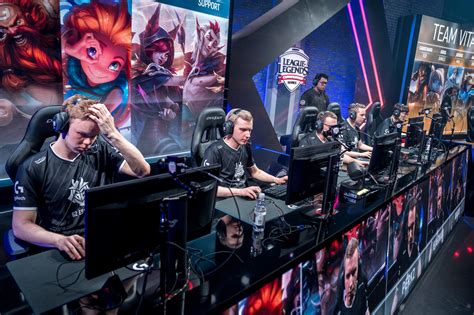
- 1080p (Full HD) with 144Hz or 240Hz: This is arguably the most popular and balanced choice for dedicated competitive gamers. 1080p is less demanding on your GPU, allowing even mid-range systems to comfortably achieve very high frame rates, which are then perfectly complemented by a 144Hz or 240Hz monitor. Many professional esports players still opt for 1080p for maximum FPS and minimal input lag.
- 1440p (QHD) with 144Hz or 240Hz: For those with a powerful graphics card (e.g., NVIDIA RTX 3070/4070 or AMD RX 6700XT/7700XT and above), 1440p offers a fantastic middle ground. You get significantly more visual detail than 1080p without the extreme performance hit of 4K, allowing you to still maintain high refresh rates. This resolution is becoming increasingly popular for gamers who want a competitive edge without sacrificing too much visual fidelity.
- 4K (UHD) with 120Hz+: While 4K monitors with high refresh rates are available, they are primarily aimed at immersive single-player experiences rather than pure competitive gaming. The hardware required to consistently drive competitive frame rates at 4K is extremely expensive, and the visual benefits over 1440p for competitive play are marginal compared to the performance cost.
Ultimately, your ideal setup will depend on your budget, your system’s hardware, the specific games you play, and your personal preference for visual sharpness versus raw performance.
Conclusion: The Ultimate Competitive Edge
For competitive gaming, prioritize refresh rate. A 144Hz or 240Hz monitor is a game-changer, providing smoother visuals and reduced input lag that directly translates to better performance. When it comes to resolution, 1080p remains the safe and highly effective choice for maximizing frame rates, especially for those with budget-conscious setups. However, if your system can handle it, 1440p offers a compelling upgrade for a sharper image without sacrificing the crucial high refresh rates needed to stay at the top of your game. Invest wisely, prioritize performance, and you’ll be well on your way to gaining that critical competitive edge.