What are the best monitor settings for competitive FPS gaming latency?

The Quest for Zero Latency: Why Monitor Settings Matter
In the high-stakes world of competitive First-Person Shooter (FPS) gaming, every millisecond can be the difference between a headshot and being eliminated. While your gaming PC’s hardware and internet connection are vital, your monitor’s settings play an equally critical, often overlooked, role in minimizing latency. Optimizing these settings can give you a significant competitive edge by ensuring what you see on screen is as close as possible to real-time game events.
High Refresh Rate: The Foundation of Fluidity
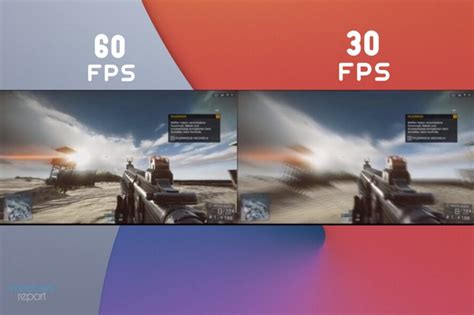
The refresh rate, measured in Hertz (Hz), dictates how many times your monitor updates its image per second. For competitive FPS gaming, a high refresh rate is non-negotiable. While 60Hz monitors are standard, competitive players should aim for 144Hz, 240Hz, or even 360Hz monitors. A higher refresh rate means more frames per second are displayed, leading to smoother visuals and, crucially, less input lag. This allows you to react faster to enemy movements and dynamic game situations.

Response Time and Overdrive: Eliminating Ghosting
Response time refers to how quickly a pixel can change from one color to another, typically measured in milliseconds (ms) Gray-to-Gray (GtG). Lower response times (1ms GtG is ideal for competitive play) reduce motion blur and ghosting, ensuring sharp images even during fast-paced action. Most gaming monitors include an ‘Overdrive’ or ‘AMA’ (Advanced Motion Accelerator) setting. This feature injects more voltage into pixels to accelerate their transitions. While beneficial, setting overdrive too high can introduce inverse ghosting or ‘overshoot’ artifacts, where pixels briefly display the wrong color before settling. It’s often best to test different overdrive levels (e.g., Medium/Normal vs. High/Extreme) to find the sweet spot that minimizes blur without causing noticeable artifacts for your specific panel.
Adaptive Sync (G-Sync/FreeSync): Friend or Foe for Latency?
Adaptive Sync technologies like NVIDIA G-Sync and AMD FreeSync synchronize your monitor’s refresh rate with your GPU’s frame rate. This eliminates screen tearing and stuttering, providing a smoother visual experience. For many casual gamers, this is a clear win. However, for elite competitive FPS players, the use of Adaptive Sync is debated. While it offers visual benefits, some implementations of Adaptive Sync can introduce a slight increase in input lag, particularly if your frame rate frequently drops below your monitor’s maximum refresh rate. Many professionals opt to disable Adaptive Sync and cap their in-game FPS slightly above their monitor’s refresh rate (e.g., 240 FPS on a 240Hz monitor) to ensure the lowest possible latency, tolerating minor screen tearing in exchange for absolute minimal lag.

Low Input Lag Modes and Game Modes: Bypassing Processing
Many gaming monitors include specific ‘Low Input Lag Mode’ or ‘Game Mode’ settings. These modes are designed to bypass as much of the monitor’s internal image processing as possible, sending the video signal directly to the display panel. This significantly reduces the time it takes for your actions to appear on screen. Always enable these modes when playing competitive FPS games. Similarly, ensure any superfluous image enhancement features like Dynamic Contrast, Noise Reduction, or Sharpness filters are turned off, as they add processing overhead and thus latency.
Display Scaling, Resolution, and Full-Screen Mode
While not strictly ‘monitor settings,’ these factors interact significantly with your monitor to affect latency:
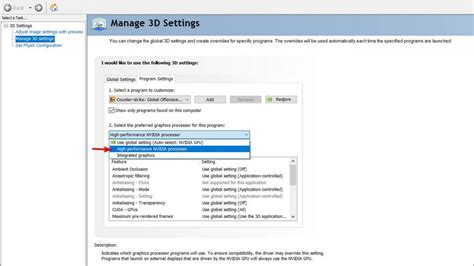
- Display Scaling: For competitive play, it’s generally recommended to set your GPU to perform display scaling rather than your monitor. This can sometimes shave off a tiny bit of latency. Check your graphics card control panel (NVIDIA Control Panel or AMD Radeon Software) for these options.
- Native Resolution: Always run your game at your monitor’s native resolution. Running at a non-native resolution can introduce scaling artifacts and potential lag.
- Full-Screen Mode: Play games in exclusive full-screen mode whenever possible. Windowed or borderless windowed modes often rely on the Desktop Window Manager (DWM), which can introduce additional buffering and input lag compared to true full-screen.
Connectivity and Cables: Don’t Overlook the Basics
Ensure you’re using the correct display cable for your monitor’s capabilities. For high refresh rates and resolutions, DisplayPort 1.2a (or newer) or HDMI 2.0 (or newer) are essential. Older cables or adapters may not support the bandwidth required for your desired refresh rate, forcing your monitor to run at a lower, laggier setting. Always use quality cables that are certified for the specifications you need.

Conclusion: Optimize for Performance
Achieving minimal latency in competitive FPS gaming requires a holistic approach. By meticulously configuring your monitor’s refresh rate, response time with appropriate overdrive, leveraging low input lag modes, and understanding the nuances of Adaptive Sync, you can fine-tune your setup for peak performance. Experiment with these settings to find the optimal balance for your specific monitor and playstyle, giving you the edge needed to outperform the competition.