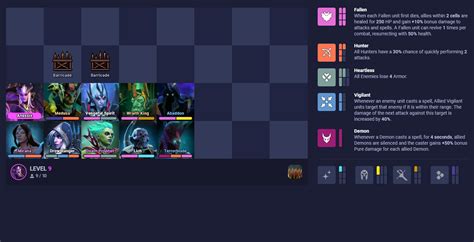
Meta shifts: How to quickly identify and counter new top-tier strategies?

In the dynamic world of competitive gaming, the ‘meta’ – the prevailing optimal strategies, builds, and character choices – is constantly in flux. A sudden shift can render previously dominant tactics obsolete overnight, leaving unprepared players struggling. The ability to quickly identify these meta shifts and formulate effective counters is not just an advantage; it’s a fundamental skill for anyone aspiring to climb the ranks and stay competitive.
Understanding Meta Shifts and Their Triggers
Meta shifts rarely happen in a vacuum. They are typically sparked by significant game updates, such as balance patches introducing buffs or nerfs, new characters or items, or even fundamental mechanic changes. Beyond official updates, meta evolution can also be driven by professional players discovering novel strategies, advanced theorycrafting within the community, or even simple trickle-down from high-tier play.
Recognizing the root cause of a shift is the first step toward understanding its implications. Is it a direct response to a powerful new item? A subtle buff making an overlooked character suddenly overpowered? Or a creative combo no one considered before? Pinpointing the trigger helps predict the direction the meta might take and how long the new strategy might remain dominant.

Rapid Identification: Spotting the Early Signs
The earliest indicators of a meta shift often appear in the highest echelons of play or among dedicated community members. Keeping an eye on these sources is crucial:
- High-Level Streams and VODs: Professional players and top ladder contenders are usually the first to experiment with new ideas or adapt to changes. Observe their pick rates, unique builds, and unexpected strategies.
- Community Forums and Discord Servers: Engaged communities often theorycraft extensively and share early findings. Discussions around ‘broken’ builds or ‘must-pick’ characters are strong signals.
- Data Aggregators: Websites that track statistics like pick rates, win rates, and item popularity can provide quantitative evidence of emerging trends, often before they become widespread knowledge. Look for sudden spikes or declines in specific metrics.
Pay attention to what feels ‘unusual’ or ‘too strong.’ A character suddenly dominating games with an unexpected item, or a team composition consistently outperforming others, are classic early warnings.
Deconstructing New Strategies
Once you’ve identified a new top-tier strategy, the next step is to break it down. Don’t just copy it; understand it. Ask yourself:
- What is its core strength? Is it burst damage, sustain, crowd control, map pressure, or a specific objective control?
- What are its key components? Which characters, items, abilities, or timings are essential for its success?
- What are its inherent weaknesses? Every strategy has a downside. Is it vulnerable to specific types of damage, crowd control, early aggression, late-game scaling, or certain counter-picks?
- What is its win condition? How does this strategy intend to secure victory? Early snowball, late-game team fights, split-pushing, etc.?
Understanding these elements provides the blueprint for both replicating and countering the strategy. It allows you to move beyond superficial observations to grasp the fundamental mechanics at play.

Crafting Effective Counter-Strategies
With a thorough understanding of the new meta strategy, you can begin to formulate counters. There are generally two approaches:
- Direct Counters: Exploit the strategy’s identified weaknesses. If a strategy relies on heavy engage, perhaps disengage tools or counter-initiation are effective. If it’s vulnerable to sustain damage, focus on prolonged fights over burst. This often involves specific character picks, item choices, or ability sequences that directly undermine the opponent’s game plan.
- Alternative Approaches: Sometimes, a direct counter isn’t feasible or optimal. In such cases, consider strategies that simply bypass or ignore the dominant strategy’s strengths. This could mean playing an entirely different style that the meta strategy isn’t designed to handle, or focusing on different objectives that negate its impact.
Practice is key. Test your counter-strategies in unranked or custom games before taking them into competitive play. Refine your execution and adapt based on your experiences.
Staying Ahead of the Curve
The meta is an ever-moving target. To stay competitive, you must adopt a mindset of continuous learning and adaptation:
- Experimentation: Don’t be afraid to try unconventional builds or strategies yourself. Sometimes the next meta shift is just waiting for someone to discover it.
- Review Your Own Play: Analyze your losses against new meta strategies. What went wrong? Could you have adapted better?
- Communicate with Teammates: Discuss emerging trends and potential counters with your team. A coordinated approach is always more effective.
Being proactive rather than reactive is the ultimate goal. The players who can not only adapt to meta shifts but also anticipate and even create them are the ones who truly dominate.

Mastering meta shifts is a continuous journey. By understanding their triggers, quickly identifying new trends, thoroughly deconstructing strategies, and developing effective counters, you can transform the challenge of a shifting meta into an opportunity to showcase your adaptability and rise to new heights in any competitive game.