Which budget GPU upgrade offers best value for 1080p gaming performance?
Finding the Sweet Spot for 1080p Gaming
For many PC gamers, 1080p resolution remains the preferred battleground, balancing visual fidelity with accessible hardware requirements. The quest for a budget-friendly GPU that delivers excellent value for 1080p performance is a common one, especially as new generations of graphics cards emerge and older models become more affordable. But which one truly offers the best bang for your buck?
When we talk about ‘best value’ for 1080p gaming, we’re looking for a card that can consistently achieve 60+ frames per second (FPS) in most modern AAA titles, ideally pushing closer to 90-120 FPS in esports titles, all without breaking the bank. This typically means cards in the $180-$250 price range, though prices can fluctuate significantly.
Top Contenders in the Budget Arena
In the current market, a few GPUs consistently rise to the top for their 1080p gaming prowess at a budget price point. We’ll focus on new cards for ease of access and warranty, though the used market can offer even better deals if you’re comfortable with the risks.
AMD Radeon RX 6600 Series
The AMD Radeon RX 6600 often emerges as the front-runner for budget 1080p gaming. Typically offering 8GB of VRAM, it consistently outperforms its direct NVIDIA competitor, the RTX 3050, in raw rasterization performance across a wide range of games. Its price-to-performance ratio is exceptionally strong, making it a compelling choice for those prioritizing raw FPS.
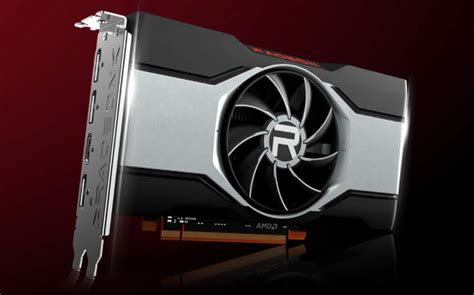
For a slight step up, the RX 6600 XT and RX 6650 XT models, if found at a good discount, push 1080p performance even further, often touching into 1440p territory for older or less demanding titles. They provide an excellent upgrade path without a significant leap in cost if the deals are right.
NVIDIA GeForce RTX 3050
NVIDIA’s answer in this segment is the GeForce RTX 3050, also usually equipped with 8GB of VRAM. While generally lagging behind the RX 6600 in traditional rasterization benchmarks, its key differentiator is access to NVIDIA’s DLSS (Deep Learning Super Sampling) technology and superior ray tracing performance in its price class. If you play games that heavily feature DLSS, the RTX 3050 can often close the performance gap and even surpass the RX 6600, offering a better visual experience with fewer performance penalties. However, for games without DLSS, its raw power often falls short.
Key Factors for Value Comparison
Beyond raw FPS numbers, several factors contribute to a GPU’s overall value proposition:
- Price-to-Performance: This is arguably the most crucial metric for a budget upgrade. How many frames per dollar do you get? The RX 6600 typically excels here.
- VRAM: For 1080p, 8GB of VRAM is increasingly becoming the sweet spot, providing ample headroom for modern textures and future-proofing. Both the RX 6600 and RTX 3050 generally offer this.
- Feature Set (DLSS vs. FSR): NVIDIA’s DLSS generally offers superior image quality and performance boosts compared to AMD’s FSR (FidelityFX Super Resolution), though FSR is open-source and widely supported across many GPUs. Consider which upscaling technology your favorite games utilize.
- Power Consumption & PSU Requirements: Budget GPUs are typically efficient, but it’s worth checking your existing power supply unit (PSU) to ensure it can handle the new card without needing an expensive upgrade.
- Driver Support & Ecosystem: Both AMD and NVIDIA offer robust driver support, but some users may have preferences based on past experiences or specific software features.
The Verdict: Best Value for 1080p Gaming
For pure raw gaming performance at 1080p, the **AMD Radeon RX 6600** typically offers the best value. Its consistent lead in rasterization performance and competitive pricing make it the go-to recommendation for gamers who want high frame rates without breaking the bank, especially if they are less concerned with ray tracing or exclusive NVIDIA features.
However, if your primary games heavily feature NVIDIA’s DLSS or you prioritize superior ray tracing capabilities within this budget, the **NVIDIA GeForce RTX 3050** can be a valid, albeit often slightly less powerful, alternative. The decision ultimately hinges on your specific game library and feature preferences.

Final Considerations Before Upgrading
Before making your purchase, always check current prices, as the market can fluctuate. Also, ensure your CPU isn’t a bottleneck for your new GPU, as even the best budget card won’t shine if paired with an ancient processor. A balanced system is key to maximizing your 1080p gaming experience.