What’s the best strategy for updating game reviews to reflect significant post-launch patches and DLC?

The Evolving Landscape of Game Reviews
In today’s dynamic gaming industry, a game’s launch state is rarely its final form. Developers frequently release significant post-launch patches, balance updates, and extensive downloadable content (DLC) that can dramatically alter the player experience, sometimes transforming a mediocre title into a masterpiece, or vice-versa. This constant evolution poses a unique challenge for game reviewers: how to ensure initial reviews remain relevant and accurate for an audience encountering a vastly different product months or even years later.
The core dilemma lies in balancing historical accuracy with current relevance. An initial review captures a specific moment in time, but if a game changes fundamentally, does that original assessment still serve the reader? Addressing this requires a strategic approach that prioritizes transparency, clarity, and ongoing value for the gaming community.
Option 1: The Dedicated Follow-Up Review
One prevalent strategy is to publish entirely new, dedicated reviews for significant DLC expansions or major game overhauls. This approach treats substantial updates as distinct products that warrant their own independent assessment. The original review stands as a historical document of the launch version, while the new review evaluates the added content or the game’s revised state.
Pros:
- Clarity: Readers can easily distinguish between the base game experience and the updated/expanded one.
- Timeliness: New content can be reviewed promptly without needing to revisit the entire original game.
- SEO Benefits: Separate content can rank for specific DLC or update keywords.
Cons:
- Fragmentation: A reader looking for a comprehensive view might need to consult multiple articles.
- Redundancy: If the core game experience hasn’t changed much, the follow-up might repeat points from the original.
- Score Inflation: Reviewing an expansion on its own might not reflect the total package’s value accurately.
Option 2: Amending or Re-Scoring the Original
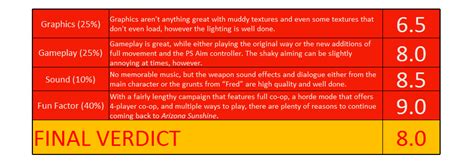
Another approach involves directly updating or re-scoring the original review. This can range from adding a brief “post-patch notes” section at the top or bottom of the existing article to a full re-evaluation, including a revised score. When the latter happens, the original score and reasoning are typically preserved for historical context, with the updated information clearly marked.
Pros:
- Centralized Information: All relevant information for a single game lives in one place, easy for readers to find.
- Direct Comparison: Readers can instantly see how a game’s perception has changed over time.
- Efficiency: Less content generation required than writing entirely new articles.
Cons:
- Reader Confusion: New readers might only see the updated score without understanding the original context.
- Dilutes Initial Impact: The original critical assessment can become muddled.
- Logistical Challenges: Requires careful archiving of past versions or clear demarcation of updated sections.

Option 3: The Living, Iterative Review
A more ambitious strategy is the “living review,” particularly suited for live-service games. This model involves a regularly updated review that evolves alongside the game, with new sections added or existing ones modified as patches, seasons, or DLC are released. The review never truly “finishes” but rather becomes a dynamic record of the game’s ongoing journey, often accompanied by a continuously updated score or a series of mini-reviews within the main article.
Pros:
- Always Current: Provides the most up-to-date assessment of the game’s state.
- Comprehensive: Offers a holistic view of the game’s evolution from launch to present.
- Reader Engagement: Fosters a sense of ongoing conversation with the audience.
Cons:
- Resource Intensive: Requires significant ongoing commitment from reviewers.
- Lack of Definitive Conclusion: Can be challenging to offer a concise, final judgment.
- Version Control: Managing updates and ensuring clarity on what’s new can be complex.

Key Principles for Transparency and Reader Trust
Regardless of the chosen strategy, transparency is paramount. Reviewers must clearly communicate their approach to updates. This includes:
- Date Stamps: Always clearly indicate when a review was originally published and when it was last updated.
- Revision Notes: Provide a visible changelog or detailed notes outlining what was modified and why.
- Methodology Explanation: Be upfront about whether a score was adjusted, why, and what content led to the change.
- Archiving: If an original review is significantly altered, consider linking to an archived version or clearly delineating the ‘before and after’.
- Editorial Policy: Some publications might have a clear policy on how they handle post-launch content, which should be communicated to readers.
Maintaining reader trust is the ultimate goal. By being open and consistent in how updates are handled, review outlets can ensure their content remains a valuable and reliable resource for gamers.

Finding the Optimal Approach
The “best” strategy often depends on the specific game, the magnitude of the update, and the editorial policy of the review outlet. For minor patches, an addendum might suffice. For substantial DLC, a dedicated follow-up review makes sense. For truly transformative overhauls or ongoing live-service titles, a re-evaluation or a living review might be most appropriate.
Ultimately, the aim is to provide clarity and value to the reader. By thoughtfully considering the impact of post-launch content and adopting a consistent, transparent strategy, game reviewers can uphold their journalistic integrity and continue to guide players through the ever-evolving landscape of interactive entertainment.