Best gaming monitor settings for high FPS & low input lag?

Optimizing Your Gaming Monitor for Peak Performance
In the competitive world of PC gaming, every millisecond counts. Achieving high Frames Per Second (FPS) and minimizing input lag are crucial for a responsive and immersive experience. While a powerful GPU and CPU are fundamental, your monitor’s settings play an equally vital role in translating that raw power into fluid, lag-free visuals. Let’s dive into the essential monitor settings you need to tweak to gain that coveted competitive advantage.
Understanding the Core Metrics: FPS, Input Lag, and Response Time
Before we adjust anything, it’s important to understand what we’re optimizing for:
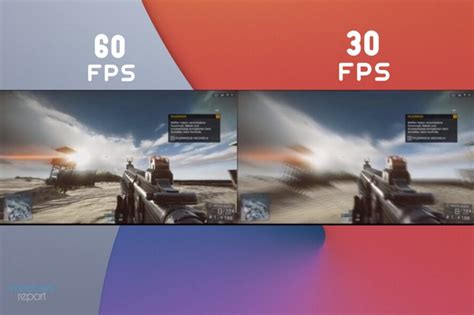
- FPS (Frames Per Second): This is how many individual images your graphics card renders and your monitor displays each second. Higher FPS means smoother motion and a more immediate visual update.
- Input Lag: The delay between an action (e.g., mouse click, key press) and that action being reflected on your screen. This includes delays from your peripherals, PC processing, and crucially, your monitor’s internal processing. Our goal is to minimize the monitor’s contribution.
- Response Time: This refers to how quickly your monitor’s pixels can change from one color to another (typically measured in milliseconds, GtG – Grey-to-Grey). Fast response times reduce motion blur and ghosting.
Essential Monitor Settings for Peak Performance
1. Refresh Rate (Hz)
Your monitor’s refresh rate dictates how many times per second it can update the image on the screen. A 144Hz monitor can display up to 144 frames per second, while a 60Hz monitor is capped at 60. For high FPS gaming, always set your monitor to its maximum refresh rate.
How to set it:
- Windows: Right-click on your desktop > Display Settings > Advanced Display Settings > Display adapter properties for Display 1 > Monitor tab > Screen Refresh Rate.
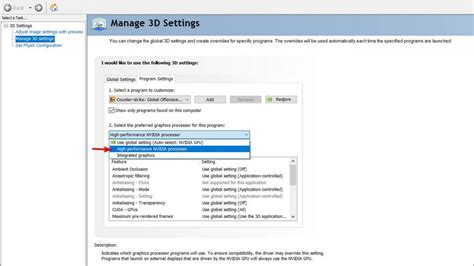
- NVIDIA Control Panel: Display > Change Resolution > Refresh rate dropdown.
- AMD Radeon Software: Display > Select your monitor > Refresh Rate dropdown.
Ensure your refresh rate matches your monitor’s highest capability (e.g., 144Hz, 240Hz, 360Hz).

2. Response Time (GtG)
Monitors often have an ‘Overdrive’ or ‘Response Time’ setting in their OSD (On-Screen Display) menu. This accelerates pixel transitions. The goal is to find the sweet spot: fast enough to eliminate ghosting without introducing inverse ghosting (undershoot/overshoot artifacts).
How to set it:
- Access your monitor’s OSD menu (usually via physical buttons on the monitor).
- Look for settings like ‘Response Time,’ ‘Overdrive,’ ‘OD,’ or ‘TraceFree’ (ASUS).
- Start with the ‘Fast’ or ‘Medium’ setting. Avoid ‘Fastest’ or ‘Extreme’ initially, as they often lead to inverse ghosting, which can be more distracting than slight motion blur.
- Test in-game. Pay attention to moving objects. If you see trails (ghosting), increase the setting. If you see halos or dark outlines (inverse ghosting), decrease it.
3. Adaptive Sync (G-Sync & FreeSync)
Adaptive Sync technologies (NVIDIA G-Sync and AMD FreeSync) synchronize your monitor’s refresh rate with your GPU’s frame output. This eliminates screen tearing and minimizes stuttering when your FPS fluctuates below your monitor’s maximum refresh rate.
How to set it:
- Hardware: Ensure your GPU and monitor support the same standard (G-Sync Compatible/Native G-Sync for NVIDIA, FreeSync for AMD). Use a DisplayPort cable (or HDMI 2.1 for newer FreeSync monitors).
- OSD: Enable ‘FreeSync’ or ‘G-Sync’ in your monitor’s OSD menu.
- Driver Software: Enable ‘G-Sync’ in the NVIDIA Control Panel (Display > Set up G-Sync) or ‘FreeSync’ in AMD Radeon Software (Display > AMD FreeSync).
While excellent for visual smoothness, G-Sync/FreeSync can introduce a tiny amount of input lag compared to having it off with unlimited FPS. For pure competitive play where FPS is consistently above refresh rate, some pros disable it. For most users, the benefits outweigh this minimal lag.
4. Overdrive/OD Setting
This is directly related to response time but is often a separate setting with various levels (Off, Normal, Extreme, etc.). As discussed, experiment carefully to reduce motion blur without introducing artifacts. The optimal setting is highly monitor-specific.
5. Input Lag
While monitors don’t have a direct ‘input lag’ setting, several features can indirectly affect it:
- Game Mode: Many monitors include a ‘Game Mode’ in their OSD. This mode often bypasses some of the monitor’s internal image processing (like scaling or color enhancements) to reduce latency. Always enable this for gaming.
- HDR (High Dynamic Range): While beautiful, HDR processing can sometimes add a small amount of input lag on certain monitors. For competitive gaming, consider disabling it if you prioritize every millisecond.
- Resolution Scaling: If your monitor is performing scaling (e.g., displaying a 1080p game on a 1440p monitor and letting the monitor do the upscaling), this can add lag. It’s often better to let your GPU handle scaling or run games at native resolution.

6. Other Considerations (Resolution, Picture Mode, HDR)
- Resolution: Always aim for your monitor’s native resolution. Running lower resolutions can impact visual clarity. If you need more FPS, lower in-game resolution settings or graphical presets before changing monitor resolution directly.
- Picture Modes: Beyond ‘Game Mode,’ other picture presets like ‘Standard,’ ‘Movie,’ or ‘sRGB’ prioritize color accuracy or viewing comfort over speed. Stick to ‘Game Mode’ or a custom profile optimized for responsiveness.
- Color & Brightness: While not directly impacting FPS or input lag, properly calibrated colors and brightness can reduce eye strain and improve visibility, especially in competitive scenarios where spotting enemies is key. Use calibration tools or online guides specific to your monitor model.

Putting It All Together: Your Game-Specific Setup
The best settings aren’t always a one-size-fits-all solution. What works perfectly for a fast-paced FPS might be slightly different for a visually stunning RPG. The key is to experiment. Start with the core recommendations (max refresh rate, optimal overdrive, Game Mode enabled), then fine-tune based on your personal preference and the specific games you play most. Always test changes in-game to observe their real-world impact.
Conclusion
Optimizing your gaming monitor settings is a crucial step towards unlocking your full potential in games. By understanding and properly configuring refresh rate, response time, adaptive sync, and other latency-reducing features, you can achieve a significantly smoother, more responsive, and ultimately more enjoyable gaming experience with high FPS and minimal input lag. Dive into your monitor’s OSD, tweak those settings, and get ready to elevate your game!