Best GPU upgrade on a budget for high FPS gaming? Value recommendations.

Unlocking High FPS Gaming on a Budget
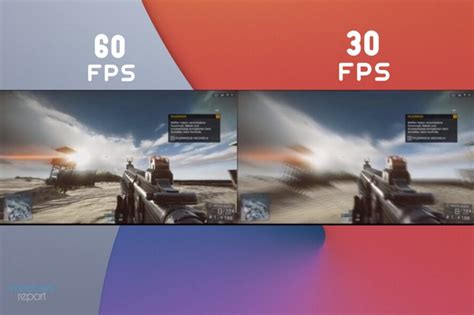
For many PC gamers, the dream of silky-smooth, high-frame-rate gameplay often clashes with the reality of a limited budget. Graphics cards are arguably the most crucial component for gaming performance, and their prices can quickly escalate. However, the good news is that achieving excellent performance at 1080p and even respectable frame rates at 1440p is more accessible than ever, thanks to competitive offerings from AMD, Nvidia, and Intel.
This guide will cut through the noise to recommend the best value GPUs for high FPS gaming, focusing on cards that deliver the most bang for your buck without requiring you to take out a second mortgage.
Defining “Budget” for GPU Upgrades
When we talk about a “budget” GPU, the price range can vary significantly. For the purpose of achieving high FPS, we’ll generally be looking at cards that fall between $200 and $350 USD, though some exceptional deals might push slightly above or below. This segment offers a sweet spot where performance gains are substantial over integrated graphics or older cards, without venturing into premium territory.

Crucial Considerations Beyond the GPU
Before diving into specific GPU recommendations, it’s vital to remember that a graphics card doesn’t work in isolation. Your CPU, RAM, and even your power supply unit (PSU) play critical roles in overall system performance. A powerful new GPU paired with an anemic CPU will result in a bottleneck, limiting your frame rates. Ensure your system has:
- A Decent CPU: An Intel Core i5 (9th gen or newer) or AMD Ryzen 5 (2000 series or newer) is a good baseline.
- Sufficient RAM: 16GB DDR4 (or DDR5) is highly recommended for modern gaming.
- Adequate PSU: Check the recommended wattage for your chosen GPU and ensure your PSU meets or exceeds it, with some headroom.
- Monitor Resolution: Most of our recommendations target 1080p high refresh rate gaming, but some can stretch to 1440p.
Top Value GPU Recommendations for High FPS
AMD Radeon RX 6600 / RX 6600 XT / RX 6650 XT
AMD’s 6000 series RDNA 2 architecture offers incredible value, especially the RX 6600, RX 6600 XT, and RX 6650 XT. The RX 6600 is often the best entry point, consistently delivering over 60 FPS in most modern titles at 1080p high settings and easily pushing 100+ FPS in esports games. The 6600 XT and 6650 XT offer incrementally better performance for a slight price bump, making them fantastic choices for 1080p high/max settings and even some playable 1440p.
- Pros: Excellent price-to-performance, 8GB VRAM (future-proof enough for 1080p), low power consumption.
- Cons: Ray tracing performance lags behind Nvidia, FSR is good but generally not as polished as DLSS.
Nvidia GeForce RTX 3050 / RTX 3060 (12GB)
Nvidia’s budget options are a bit more varied. The RTX 3050 is often debated for its value, but it offers a solid upgrade for entry-level gamers, especially with access to DLSS and better ray tracing performance than its direct AMD competitor. However, if your budget can stretch, the RTX 3060 (especially the 12GB version) is a much stronger contender.
The RTX 3060 12GB is a fantastic 1080p card, capable of high refresh rates in most games at high settings, and even decent 1440p performance with DLSS. Its 12GB of VRAM also offers better longevity compared to other cards in its class.
- Pros: Strong ray tracing performance, DLSS technology, broad software ecosystem.
- Cons: Generally pricier for equivalent raw performance compared to AMD, RTX 3050 can be borderline for “high FPS” in demanding titles.
Intel Arc A750
Intel’s entry into the discrete GPU market with the Arc A750 is a surprisingly strong budget contender, especially after driver improvements. It often trades blows with or surpasses the RTX 3060 in rasterization performance and offers competitive ray tracing for its price point. While its performance can be inconsistent in older DirectX 11 titles, it shines in modern DirectX 12 and Vulkan games.
- Pros: Excellent raw performance for the price, 8GB VRAM, good ray tracing, supports Intel’s XeSS upscaling.
- Cons: Performance can be inconsistent in legacy APIs, requires a modern CPU with Resizable BAR enabled for optimal performance.
The Used Market: A Goldmine for Value
For the ultimate budget upgrade, the used market (e.g., eBay, Facebook Marketplace, local classifieds) can yield incredible deals. Older high-end cards can often be found at prices similar to new budget cards, but with significantly better performance. Look for:
- Nvidia GTX 1080 Ti / RTX 2070 / RTX 2070 Super: Still very capable cards for 1080p and even 1440p.
- AMD RX 5700 XT / RX 6700 XT: Strong performers that offer great value.
When buying used, always exercise caution: ask for benchmarks, original packaging (if possible), and ensure the card hasn’t been used heavily for mining without proper care. A local pickup where you can test the card is ideal.

Conclusion: High FPS Gaming is Within Reach
Achieving high FPS gaming on a budget no longer means settling for compromises. With options like the AMD RX 6600 series, Nvidia RTX 3060, and Intel Arc A750, gamers have compelling choices that deliver excellent performance at 1080p and often extend to 1440p, all without breaking the bank.
Remember to consider your entire system, especially your CPU and RAM, to avoid bottlenecks. Whether you opt for a new budget champion or hunt for a gem on the used market, smart choices can lead to a satisfying and high-performance gaming experience.