Best monitor settings to reduce input lag for competitive FPS gaming?

Understanding Input Lag and Its Impact on FPS Gaming
In the high-stakes world of competitive FPS gaming, every millisecond counts. Input lag, the delay between your action (e.g., mouse click, keyboard press) and its corresponding visual representation on screen, can be the difference between a headshot and a missed opportunity. While many factors contribute to overall system latency, your monitor’s settings play a critical role. Optimizing these settings can give you a noticeable edge, making your movements and shots feel more responsive and precise.
This article will guide you through the most effective monitor settings to minimize input lag, ensuring your display isn’t holding you back from peak performance.
Maximizing Refresh Rate for Smoother Gameplay
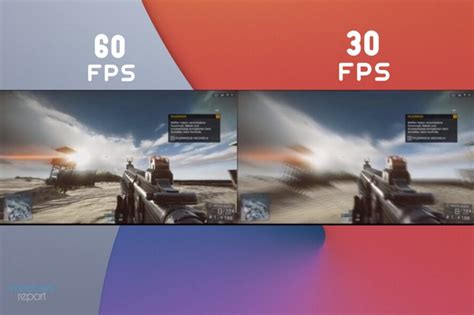
The refresh rate of your monitor, measured in Hertz (Hz), dictates how many times your screen updates per second. A higher refresh rate means more frames are displayed, leading to smoother motion and a more responsive feel. For competitive FPS, a monitor with at least 144Hz is highly recommended, with 240Hz or even 360Hz being ideal if your system can consistently achieve high frame rates.
To ensure your monitor is running at its maximum refresh rate:
- Right-click on your desktop and select ‘Display settings’.
- Scroll down and click ‘Advanced display settings’.
- Select your gaming monitor and click ‘Display adapter properties for Display 1’ (or similar).
- Go to the ‘Monitor’ tab and choose the highest available ‘Screen refresh rate’.
- Click ‘Apply’ and ‘OK’.
Always ensure your GPU drivers are up-to-date and that you are using a DisplayPort or high-speed HDMI cable (HDMI 2.0 or higher) capable of supporting your monitor’s maximum refresh rate and resolution.

Optimizing Response Time and Overdrive Settings
Response time refers to how quickly a pixel can change from one color to another (typically Grey-to-Grey or GtG). A lower response time (e.g., 1ms GtG) reduces motion blur and ghosting, making fast-moving objects appear sharper. Most gaming monitors offer an ‘Overdrive’ or ‘OD’ setting, which can accelerate pixel transitions.
However, be cautious with Overdrive: setting it too high can introduce inverse ghosting or ‘overshoot’ artifacts, where pixels overcorrect and display a temporary halo around moving objects. It’s often best to experiment with the ‘Medium’ or ‘Normal’ Overdrive settings on your specific monitor. You can usually find this setting in your monitor’s On-Screen Display (OSD) menu under ‘Picture’, ‘Gaming’, or ‘Response Time’ options.
Activating Low Input Lag Mode / Game Mode
Many modern gaming monitors include a dedicated ‘Low Input Lag Mode’ or ‘Game Mode’ in their OSD. Activating this mode bypasses certain image processing features that can add latency, prioritizing raw speed over visual enhancements. While this might slightly alter color accuracy or contrast, the reduction in input lag is often worth it for competitive play.
Check your monitor’s OSD under ‘Picture’, ‘Display’, or ‘Gaming’ settings to enable this feature. If your monitor has multiple ‘Game’ profiles, some might prioritize different aspects, so test which one feels most responsive.

Understanding Adaptive Sync (FreeSync/G-Sync) and Input Lag
Adaptive Sync technologies like AMD FreeSync and NVIDIA G-Sync synchronize your monitor’s refresh rate with your GPU’s frame rate, eliminating screen tearing and stuttering. While generally beneficial, the impact on input lag can vary:
- G-Sync/FreeSync On: Typically adds a tiny amount of input lag compared to having it off with V-Sync also off. However, it’s often preferred for its smoother experience, which can make aiming easier and more consistent, especially when frame rates fluctuate below your monitor’s max refresh rate.
- G-Sync/FreeSync Off (and V-Sync Off): This usually provides the absolute lowest input lag, but at the cost of potential screen tearing if your frame rate exceeds your monitor’s refresh rate, or if it fluctuates wildly.
For competitive FPS, many pros prefer to cap their in-game frame rate slightly below their monitor’s maximum refresh rate (e.g., 237 FPS on a 240Hz monitor) and use Adaptive Sync to maintain fluidity without V-Sync’s input lag. Experiment to find what feels best for you, but generally, having Adaptive Sync enabled with an FPS cap is a solid choice.
![What Is Input Lag And How Important Is It For Gaming? [Simple Guide]](/images/aHR0cHM6Ly90czIubW0uYmluZy5uZXQvdGg/aWQ9T0lQLlBTZHR3bHJsUTZWeU1WX2pubWZTWFFIYUNGJnBpZD0xNS4x.webp)
Other Important Settings and Considerations
Resolution and Scaling
Running your monitor at its native resolution (e.g., 1920×1080 for a 1080p monitor) is always recommended. Scaling to a lower resolution can introduce minor latency and often results in a blurry image. If you must use a lower resolution for performance reasons, ensure ‘Display scaling’ is set to ‘No Scaling’ or ‘Full GPU Scaling’ in your GPU control panel to minimize processing delay.
HDR (High Dynamic Range)
While HDR can make games look stunning, it often involves additional image processing which can slightly increase input lag. For competitive play, it’s generally recommended to turn HDR off in both your Windows display settings and in-game settings. Prioritize speed over visual fidelity in this scenario.
Picture Modes
Avoid using ‘Movie’, ‘Vivid’, or other enhanced picture modes. Stick to ‘Standard’ or ‘Game’ modes as these typically have less post-processing applied, resulting in lower input lag.

Conclusion: Fine-Tuning for Peak Performance
Reducing input lag is an ongoing process of optimization. By diligently adjusting your monitor’s refresh rate, response time, overdrive, and enabling specialized gaming modes, you can significantly enhance your responsiveness in competitive FPS games. Remember that while these settings are crucial, they are part of a larger ecosystem including your mouse, keyboard, network, and PC hardware.
Take the time to experiment with the settings discussed, using in-game training modes or specialized tools if available, to find the sweet spot that maximizes your performance and comfort. A well-configured monitor won’t guarantee victory, but it will ensure that your skills are translated onto the screen with minimal delay, giving you the best chance to outmaneuver and outshoot your opponents.