





Best strategy to update gaming reviews for live-service games post-launch?

Live-service games have fundamentally reshaped the gaming landscape, presenting a unique challenge for traditional review models. Unlike finite, static releases, these titles are designed to evolve continuously, making a single, definitive ‘score’ or review quickly outdated. The question then becomes: how can reviewers provide accurate, relevant, and valuable guidance for games that are in a perpetual state of flux?
The Dynamic Nature of Live-Service Gaming
Games such as Destiny 2, Final Fantasy XIV, Apex Legends, and Genshin Impact are prime examples of titles that consistently introduce new content, implement significant balance changes, overhaul core systems, and expand their narratives. A review penned at launch captures only a snapshot of a game’s infancy, not the marathon it intends to run. Initial impressions of technical performance, content depth, or monetization strategies can drastically change months, or even years, down the line.

Why Traditional Review Models Fall Short
The conventional review, often culminating in a single numerical score, struggles to accommodate the mutable nature of live-service games. A game lauded at launch might quickly become stale due to lack of updates, or conversely, a title lambasted for its initial state might find its stride and become a community favorite after several patches and expansions. This disparity leads to consumer confusion and erodes trust when a review score no longer reflects the current player experience. It creates a disconnect between the critical assessment and the living product.
Adopt a Phased Review Approach
The most effective strategy involves moving beyond a single, static review to a more dynamic, phased system. This involves:
- Initial Launch Review: Focus on core mechanics, day-one content, technical performance, initial monetization, and the game’s immediate value proposition. Clearly label this as a ‘Launch Review’ or ‘First Impressions’ and acknowledge its limited scope.
- Update Reviews / Living Reviews: Periodically revisit the game following major content drops, expansions, or significant system overhauls. These aren’t necessarily new, standalone scores but rather substantial updates to the existing review, or clearly linked ‘re-reviews’ that assess the game’s current state. This allows for an ongoing narrative of the game’s development.
Transparency and Version Control Are Paramount
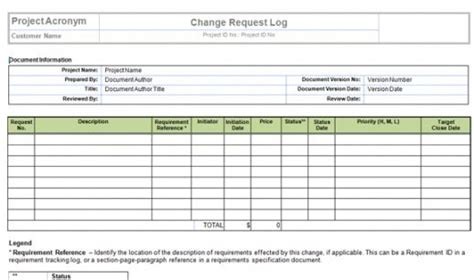
For a phased approach to be effective, transparency is key. Reviewers must clearly timestamp all reviews and subsequent updates. Implementing a visible change log or a summary of major updates directly within the review text can help readers quickly grasp what has changed since the last assessment. Consider a ‘state of the game’ indicator or a score modifier to reflect significant shifts without rewriting the entire piece. It’s crucial to acknowledge when previous criticisms have been addressed or when new issues have arisen, maintaining an honest dialogue with the audience.
Focus on Longevity and Value Proposition
Beyond the initial content, a comprehensive review strategy for live-service games must assess their long-term viability. This includes evaluating the game’s engagement loops, the health and responsiveness of its community, the clarity and consistency of developer communication, and the fairness of its monetization practices. Is the game sustainable? Does it respect player time and investment? How well does it deliver on its promise as an evolving live-service experience rather than just a series of disconnected content drops?

Leveraging Community Feedback and Developer Roadmaps
While journalistic integrity dictates that a review should be based on direct experience, it’s prudent to contextualize with significant community sentiment. Major complaints or widespread praises can be integrated as contextual information, demonstrating an awareness of the broader player experience. Additionally, referencing developer roadmaps and future plans can provide valuable foresight, but the review itself should always focus on the game *as it currently is*, not what it *will be*. This distinction is vital for maintaining objectivity.

Conclusion
Redefining review ethics and methodologies for live-service games is not just a best practice, but a necessity for providing accurate and valuable consumer guidance. A dynamic, transparent, and phased approach ensures that reviews remain relevant, insightful, and truly helpful in navigating the constantly shifting landscape of modern gaming. By embracing this evolution, reviewers can continue to serve their audience effectively, offering a more nuanced and enduring assessment of games that never truly end.



