




Boost FPS in PC games: what graphics settings impact performance most?

Decoding Graphics Settings: Where to Find Your FPS Gains
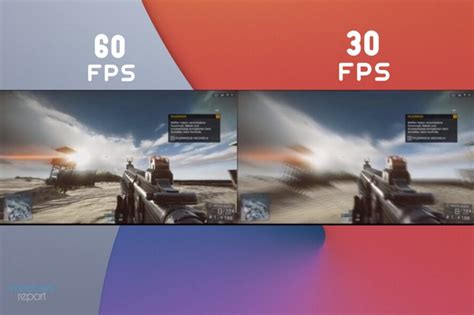
For PC gamers, achieving a smooth and high frame rate (FPS) is often paramount to an enjoyable experience. While upgrading your hardware is one solution, intelligently tweaking your in-game graphics settings can yield significant performance boosts without spending a dime. But with a bewildering array of options, which ones truly make a difference?
Understanding which settings are the biggest FPS eaters is key to striking a balance between visual fidelity and performance. Let’s break down the most impactful graphics options that demand the most from your system.
The Resolution Dilemma
Without a doubt, rendering resolution is the single most demanding graphics setting in any game. It dictates the number of pixels your GPU has to process and display on your screen. Moving from 1080p (Full HD) to 1440p (2K) or 2160p (4K) exponentially increases the pixel count, placing an immense load on your graphics card.
If you’re struggling for FPS, reducing your resolution is often the first and most effective step. While it might lead to a slightly less crisp image, the performance gains can be dramatic, especially on older or mid-range hardware. Experimenting with render scaling (a percentage of your native resolution) can also offer a more granular control over this impact.
Anti-Aliasing: Smoothing the Edges, Taxing the GPU
Jagged edges, often called ‘jaggies,’ are a common visual artifact in games, especially on diagonal lines. Anti-aliasing (AA) techniques aim to smooth these edges, making the image appear more realistic. While effective, many AA methods are incredibly resource-intensive.
Options like MSAA (Multi-Sample Anti-Aliasing) and SSAA (Super-Sample Anti-Aliasing) can be huge performance hogs because they render the scene at a higher resolution internally and then downsample it. Simpler, post-processing methods like FXAA (Fast Approximate Anti-Aliasing) and TAA (Temporal Anti-Aliasing) are less demanding but can sometimes introduce blurriness. If FPS is a concern, turning AA down or off entirely, or opting for a less intensive method, can free up significant frames.
![What Is The Best Anti-Aliasing Mode? [Simple] - Display Ninja](/images/aHR0cHM6Ly90czMubW0uYmluZy5uZXQvdGg/aWQ9T0lQLldfWmh3dWU0VVdZNVJIX1NlbWF1S1FIYUVLJnBpZD0xNS4x.webp)
Shadow Quality: Darkening Your FPS
Shadows add depth and realism to a game world, but high-quality, realistic shadows are computationally expensive. The complexity of shadows (resolution, softness, draw distance, number of light sources casting shadows) directly correlates with the performance hit.
Higher shadow settings often involve rendering shadows at a greater resolution, applying more complex filtering, and extending their draw distance. Reducing shadow quality, resolution, or disabling them for distant objects can provide a noticeable FPS boost. Often, the visual difference between ‘High’ and ‘Medium’ shadow quality is minimal, but the performance gap can be substantial.
Texture Quality: Visuals vs. VRAM
Texture quality refers to the resolution and detail of the textures applied to objects and surfaces in the game world. While high-resolution textures can make a game look incredibly sharp, their primary impact is on your graphics card’s Video RAM (VRAM).
If your GPU has insufficient VRAM for the chosen texture quality, the system will start swapping texture data between VRAM and slower system RAM, leading to significant stuttering and FPS drops. If you have a GPU with limited VRAM (e.g., 4GB or less), reducing texture quality from ‘Ultra’ to ‘High’ or ‘Medium’ is crucial to prevent VRAM bottlenecks and maintain smooth gameplay.

Draw Distance & LOD: Seeing Far, Sacrificing Speed
Draw distance (or view distance) determines how far into the game world objects and terrain are rendered in full detail. Closely related is the Level of Detail (LOD) which defines how detailed objects are at various distances.
Increasing these settings forces your system to render more geometry, textures, and effects across a wider area, demanding more from both your CPU (for drawing calls and object culling) and GPU. In open-world games, this can be a massive performance hog. Reducing draw distance or LOD bias will mean objects might appear or become more detailed closer to your character, but the FPS gains can be very significant, especially in CPU-bound scenarios.
Post-Processing Effects: The Subtle FPS Eaters
Modern games employ a range of post-processing effects that enhance the visual presentation but often come with a performance cost. These include:
- Reflections: Especially real-time screen space reflections (SSR) or ray-traced reflections, which are incredibly demanding.
- Ambient Occlusion (e.g., HBAO, SSAO): Adds soft shadows to corners and crevices, making lighting more realistic. Can be quite performance-intensive.
- Volumetric Lighting/Fog: Renders light shafts and realistic fog, creating atmosphere but taxing the GPU.
- Depth of Field: Blurs distant or close objects, mimicking camera focus.
- Motion Blur: Blurs the screen during fast movement. While often a preference, some implementations can impact performance.
While individually some of these might seem minor, collectively, they can significantly reduce your frame rate. Experiment with turning them down or off, particularly reflections and ambient occlusion, to see noticeable improvements.

General Optimization Strategy
When optimizing your game settings, it’s best to take a systematic approach:
- Start with your desired resolution.
- Adjust anti-aliasing.
- Focus on shadow quality.
- Then move to texture quality (monitoring VRAM usage).
- Finally, tweak draw distance and individual post-processing effects.
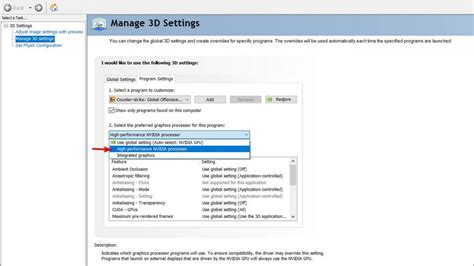
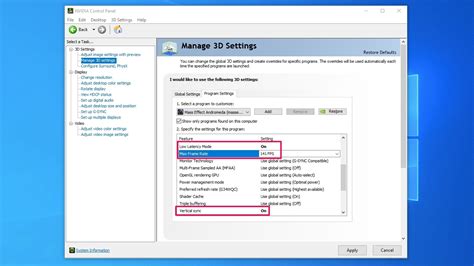
Always make one change at a time, test the performance in a demanding area of the game, and use an FPS counter to monitor your results. Remember to keep your graphics drivers updated, as new versions often include game-specific optimizations.
Conclusion
While every game and PC setup is unique, focusing your optimization efforts on resolution, anti-aliasing, shadow quality, texture quality, and draw distance will generally yield the greatest FPS gains. By understanding how these settings impact your system, you can intelligently tune your games for the best possible experience, balancing stunning visuals with buttery-smooth performance.