Crucial GPU settings for peak gaming performance and stable framerates?
Unlocking Your GPU’s Full Potential
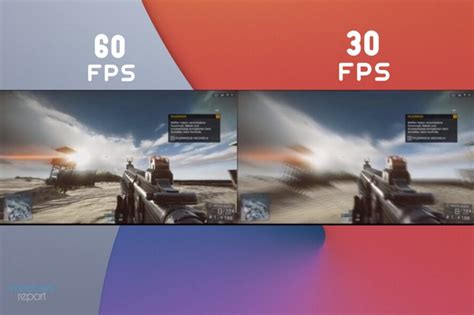
For PC gamers, achieving a smooth, high-performance experience with stable framerates is the ultimate goal. While powerful hardware is a prerequisite, merely owning a top-tier graphics card isn’t enough. The true magic happens when you meticulously configure your GPU settings. By understanding and adjusting these crucial parameters, you can significantly enhance visual fidelity, boost performance, and eliminate frustrating stutter or screen tearing, transforming your gaming sessions into truly immersive adventures.
Mastering Your Graphics Driver Settings
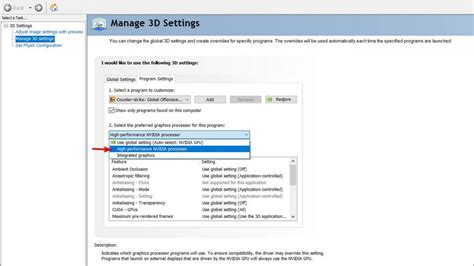
The foundation of GPU optimization lies within your graphics card’s driver software. Both NVIDIA (Control Panel) and AMD (Radeon Software) provide comprehensive tools to manage global and game-specific settings. Getting these right is paramount.
NVIDIA Control Panel & AMD Radeon Software Essentials:
- Global vs. Program Settings: Always start with game-specific profiles. This allows you to tailor settings for each title without affecting others. Only use global settings for universal changes you want across all applications.
- V-Sync & Adaptive Sync (G-Sync/FreeSync): V-Sync synchronizes your framerate with your monitor’s refresh rate to prevent screen tearing. If you have a G-Sync or FreeSync monitor, enable this technology for superior tear-free gaming without the input lag often associated with traditional V-Sync.
- Low Latency Mode / Anti-Lag: These NVIDIA and AMD features, respectively, aim to reduce input lag by optimizing frame rendering. Experiment with ‘On’ or ‘Ultra’ settings to see what works best for your setup.
- Image Sharpening / Radeon Image Sharpening: If you use a lower render scale or find games a bit blurry, these post-processing filters can add crispness without a huge performance hit. Use sparingly to avoid an over-sharpened look.
- Anti-aliasing (FXAA, MSAA, TAA): This smooths jagged edges. TAA (Temporal Anti-Aliasing) is common now but can introduce blur. MSAA is resource-intensive but generally clearer. FXAA is lighter but can soften the image. Experiment with in-game options first, then driver settings if needed.
- Texture Filtering Quality / Anisotropic Filtering: Set this to ‘High Quality’ (NVIDIA) or ‘Performance’ (AMD) as it usually has a minimal performance impact for a noticeable visual improvement, making textures look sharper at angles.
- Power Management Mode: For NVIDIA, set “Power management mode” to “Prefer maximum performance” to ensure your GPU always runs at its optimal clock speeds under load, preventing downclocking that can cause framerate drops. AMD typically manages this well by default.

Fine-Tuning In-Game Graphics Options
Beyond the driver, every game offers its own suite of graphical settings. These are often the most impactful for balancing performance and visual quality. The key is to find the sweet spot for your hardware and personal preference.
Key Settings to Adjust:
- Resolution and Render Scale: Always aim for your monitor’s native resolution. Render scale (or resolution scale) allows you to render the game internally at a higher or lower resolution and then scale it to your monitor. Lowering it can significantly boost FPS at the cost of image quality.
- Texture Quality: This impacts VRAM usage. If you have ample VRAM (8GB+), set it to High/Ultra. If not, lower it to prevent stuttering.
- Shadow Quality: Shadows are notoriously performance-intensive. Reducing this setting often yields significant FPS gains with a moderate visual impact.
- Anti-aliasing Methods: As discussed in driver settings, in-game AA options vary. Start by trying the lightest options (e.g., FXAA) or TAA, then move to more demanding ones if performance allows.
- Post-Processing Effects: Volumetric fog, depth of field, motion blur, and screen space reflections can be very demanding. Disabling or lowering these can often free up considerable resources.
- Draw Distance and Volumetric Effects: These affect how far objects are rendered and the complexity of environmental effects like smoke or clouds. Reducing them can improve FPS in open-world games.
The best approach is to adjust one setting at a time, test the performance in a demanding area of the game, and then move to the next. Use an in-game benchmark if available.
System-Wide Power Management
Your operating system’s power settings can also influence GPU performance. Ensuring your system provides consistent power to your components is vital for stability.
Windows Power Plan:
Navigate to “Power & sleep settings” > “Additional power settings” and select a “High performance” or “Ultimate Performance” plan. This ensures your CPU doesn’t throttle and provides consistent power to your GPU.
GPU Power Limits:
Tools like MSI Afterburner allow you to adjust your GPU’s power limit. Increasing it (within safe limits) can sometimes allow the GPU to boost to higher clock speeds for longer, improving performance. Decreasing it can help with stability or reduce heat/power consumption, but at a performance cost.
Monitoring Your Performance and Stability
To effectively optimize, you need to know what’s happening under the hood. Monitoring tools provide crucial feedback on your GPU’s behavior.
- MSI Afterburner (with RivaTuner Statistics Server): This indispensable tool lets you monitor GPU usage, temperature, clock speeds, VRAM usage, and crucially, framerates (FPS) and frametime consistency directly in your games.
- HWiNFO: A more comprehensive hardware monitoring tool that provides detailed information on nearly every component in your system, including various GPU sensors.
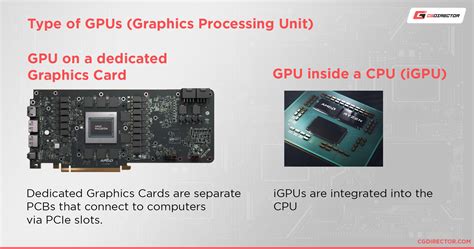
Pay close attention to GPU usage (should be near 99-100% in demanding scenes if not CPU-bottlenecked), temperature (keep below 80°C for longevity), and frametime graphs (lower and flatter is better for smoothness).
Conclusion: The Path to Smooth Gaming
Optimizing your GPU settings is an ongoing process of experimentation and fine-tuning. By understanding the impact of driver configurations, carefully adjusting in-game options, managing system power, and diligently monitoring your performance, you can unlock your graphics card’s full potential. The reward is a dramatically improved gaming experience characterized by high framerates, buttery-smooth visuals, and unwavering stability. Dive in, experiment, and enjoy your games as they were meant to be played.