





FPS drops in new games? Troubleshooting GPU throttling for smooth gameplay.
Understanding GPU Throttling: The Silent Performance Killer
There’s nothing more frustrating for a PC gamer than experiencing sudden frame rate drops in a brand-new, graphically intense title. You’ve invested in a powerful graphics card, yet your gameplay feels choppy and inconsistent. Often, the culprit behind these erratic performance dips is GPU throttling – a mechanism designed to protect your graphics card but which inadvertently ruins your gaming experience.
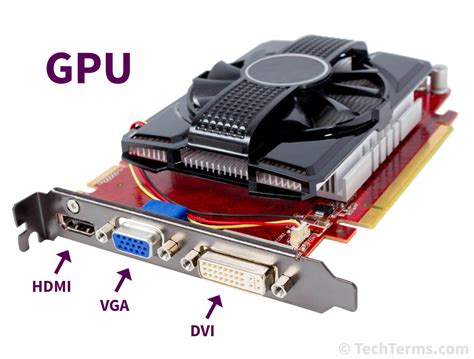
GPU throttling occurs when your graphics processing unit (GPU) automatically reduces its clock speed, voltage, or power draw to prevent damage from excessive heat, power limits, or other environmental factors. While it’s a built-in safety feature, it directly translates to a significant drop in FPS, stuttering, and an overall poor gaming experience.
How to Identify GPU Throttling
Before you can fix GPU throttling, you need to confirm it’s happening. The key indicators are inconsistent FPS, even in areas of a game that previously ran smoothly, and often accompanied by a sudden rise in GPU temperature just before the performance dip.
- Monitoring Software: Tools like MSI Afterburner, HWMonitor, or GPU-Z are indispensable. These utilities allow you to track your GPU’s clock speed, temperature, power consumption, and usage in real-time. Look for instances where your GPU clock speed drops significantly while under load, especially if temperatures are high (e.g., above 80-85°C).
- Consistent Performance Issues: If frame drops occur frequently across multiple demanding games, rather than just one title, it’s a strong sign of a hardware-related issue like throttling.
Common Causes of GPU Throttling
1. Overheating
This is the most prevalent cause. GPUs generate a lot of heat, and if this heat isn’t effectively dissipated, the card will throttle to prevent thermal damage. This can be due to:
- Dust accumulation on heatsinks and fans.
- Poor airflow within your PC case.
- Degraded thermal paste on the GPU die.
- Fans not spinning optimally or failing.

2. Insufficient Power Supply (PSU)
Your GPU needs a stable and sufficient power supply. If your Power Supply Unit (PSU) doesn’t provide enough wattage or isn’t delivering clean power, the GPU might throttle to draw less power, or even crash. Always ensure your PSU meets or exceeds the recommended wattage for your GPU and entire system.
3. Outdated or Corrupt Drivers
While less common for direct throttling, outdated or corrupt graphics drivers can lead to instability, inefficient GPU usage, and sometimes trigger performance issues that mimic throttling. Keeping drivers updated is crucial for optimal performance and stability.
4. Aggressive Overclocking
If you’ve manually overclocked your GPU beyond its stable limits without adequate cooling or voltage, it can lead to instability and throttling as the card tries to compensate or protect itself.
Troubleshooting Steps to Resolve GPU Throttling
Step 1: Clean Your PC and GPU
Start with the basics. Power down your PC, unplug it, and carefully open the case. Use compressed air to blow out dust from your GPU’s heatsink fins, fans, and the rest of your case components. Pay special attention to any intake and exhaust vents.
Step 2: Improve Case Airflow
Ensure your PC case has good airflow. Check if your case fans are oriented correctly (front fans intake, rear/top fans exhaust). Consider adding more fans if your case has available slots, or improving cable management to reduce obstructions to airflow.
Step 3: Update Graphics Drivers
Visit the official NVIDIA or AMD website and download the latest stable drivers for your specific graphics card. Perform a clean installation, ensuring all previous driver components are removed.
Step 4: Check Your Power Supply
Verify your PSU’s wattage and compare it to the recommended specifications for your GPU and overall system. If it’s borderline or below, consider upgrading your PSU. Ensure all power cables to the GPU are securely connected.
Step 5: Adjust Game Settings
Sometimes, pushing a game’s graphics settings too high can cause a GPU to hit its thermal or power limits more quickly. Experiment with lowering demanding settings like Anti-Aliasing, Shadow Quality, or Post-Processing effects. Sometimes, a slight reduction in graphical fidelity can yield significant and stable FPS gains.
Step 6: Revert Overclocks
If you’ve overclocked your GPU, revert it to stock settings using the software you used for overclocking (e.g., MSI Afterburner, EVGA Precision X1). Test your games again to see if stability improves.
Step 7: Consider Undervolting (Advanced)
Undervolting your GPU can reduce power consumption and heat output without significantly sacrificing performance. This is an advanced technique that requires careful testing and monitoring, often done through tools like MSI Afterburner. It can be very effective for mitigating thermal throttling.
Step 8: Replace Thermal Paste (Advanced)
If your GPU is several years old and cleaning hasn’t helped with high temperatures, the thermal paste between the GPU die and its heatsink may have dried out. Replacing it can dramatically improve thermal transfer. This is an advanced procedure that voids warranties and carries risks if not done correctly.
Conclusion
GPU throttling can be a major headache for gamers, but in most cases, it’s a solvable problem. By systematically working through these troubleshooting steps, you can identify the root cause of your FPS drops and restore your graphics card to its full, unthrottled potential, ensuring smooth and enjoyable gameplay for all your new titles.


