How can gaming guides quickly highlight critical boss strategies or puzzle solutions without spoilers?

Creating a gaming guide is a delicate dance between providing helpful information and preserving the player’s sense of discovery. The ultimate goal is to assist gamers who are stuck without robbing them of the joy of figuring things out themselves. This challenge becomes particularly acute when dealing with critical boss strategies or intricate puzzle solutions, where even a small hint can unravel a significant portion of the game’s challenge.

The Philosophy of Progressive Assistance
The most effective guides adopt a philosophy of progressive assistance. This means offering help in layers, starting with the least intrusive hints and gradually revealing more specific information only if the player indicates they need it. This approach respects the player’s agency and ensures they receive just enough information to overcome an obstacle without feeling like they cheated or had the experience ruined.
Layered Hints and Obfuscation
For boss battles, a guide might start by discussing common attack patterns, enemy weaknesses (elemental, status effects), or general safe zones without explicitly detailing a winning sequence. For puzzles, it could suggest examining the environment, noting key items, or recalling lore fragments. Only if these general tips prove insufficient would the guide then offer more direct, step-by-step instructions, often hidden behind click-to-reveal spoilers or dedicated spoiler sections.

Tactical Implementation: Tools and Techniques
1. Spoiler Tags and Toggle Buttons
The simplest and often most effective method is to use clear spoiler tags or toggle buttons. Content that contains direct solutions (e.g., “The code is 1234,” or “Hit the boss when it glows blue and then dodge right”) should be hidden by default. Players actively click to reveal this information, signaling their explicit consent to see spoilers. This puts the power firmly in the user’s hands.
2. Contextual Keywords and Non-Linear Navigation
Instead of a linear walkthrough, a guide can be structured around specific keywords or common sticking points. Players searching for help on a particular boss or puzzle can jump directly to that section. Within that section, information can still be layered. For instance, a quick-reference table for boss weaknesses might be available, followed by general combat tips, and finally, a hidden, detailed strategy.

3. Vague Visuals and Diagrams
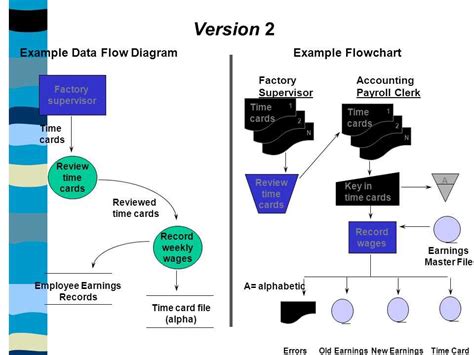
Visual aids are incredibly powerful, but they too must be handled with care. Instead of showing a screenshot of a solved puzzle, a guide could provide a diagram highlighting interactive elements, potential pathways, or environmental clues without showing the solution itself. For bosses, diagrams could illustrate attack ranges, safe zones, or ideal positioning, giving players a visual reference without spoiling the tactical execution.
4. Time-Gated or Progression-Based Hints
More advanced guide systems could even offer hints based on a player’s perceived progression. While harder to implement in static guides, this concept involves categorizing hints by their level of directness. A player could request a ‘small hint’, then a ‘medium hint’, and finally the ‘full solution’, with each level revealing progressively more information. This simulates a personal guide experience.
The Art of ‘Why’ vs. ‘How’
A great spoiler-free guide often focuses on the ‘why’ rather than just the ‘how’. Instead of simply stating to use a fire spell, it explains *why* fire is effective against a particular enemy type. For puzzles, it highlights the logical connections and patterns that lead to the solution, empowering the player to make the final leap themselves, rather than just spoon-feeding the answer.
Conclusion: Empowering, Not Enabling
Ultimately, the best gaming guides quickly highlight critical strategies or puzzle solutions by empowering players with understanding, not just enabling them with answers. Through layered information, clear spoiler controls, and thoughtful presentation, guides can be an invaluable resource that respects the player’s journey and enhances their overall gaming experience without diminishing the thrill of overcoming challenges.