How can we structure gaming guides to offer quick tips & detailed help without overwhelming players?

Mastering the Art of Guide Design
Creating a gaming guide that effectively serves both newcomers seeking quick answers and veterans craving deep insights is a delicate balancing act. The goal is to provide immediate value without drowning players in a sea of irrelevant information. This article explores strategies for structuring guides that are intuitive, comprehensive, and ultimately, user-friendly.

The Layered Approach: Overview First, Details Later
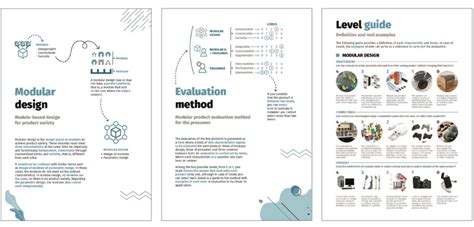
One of the most effective methods is the layered approach, where information is presented in increasing levels of detail. Start with a high-level overview or a “quick tips” section. This could be a bulleted list of essential steps, common pitfalls to avoid, or key takeaways for a specific mission or mechanic. Players can grasp the core information rapidly and decide if they need to delve deeper.
Following the quick tips, provide clear section headings that allow players to jump to more detailed explanations. For instance, after a “Quick Start for Dungeon X,” you might have sections like “Boss Mechanics: Phase 1,” “Optimal Gear Choices,” or “Advanced Stratagem Breakdown.” This empowers players to consume information at their own pace and only access what’s relevant to their current needs.
Visual Cues and Navigation Aids
Text-heavy guides can quickly become daunting. Incorporating visual cues is crucial for breaking up content and making it more digestible. Screenshots highlighting specific in-game locations, enemy weak points, or user interface elements can convey information much faster than words alone. Short video clips embedded or linked can also demonstrate complex actions or sequences.
- Clear Headings and Subheadings: Use H2s, H3s, and H4s to create a hierarchical structure.
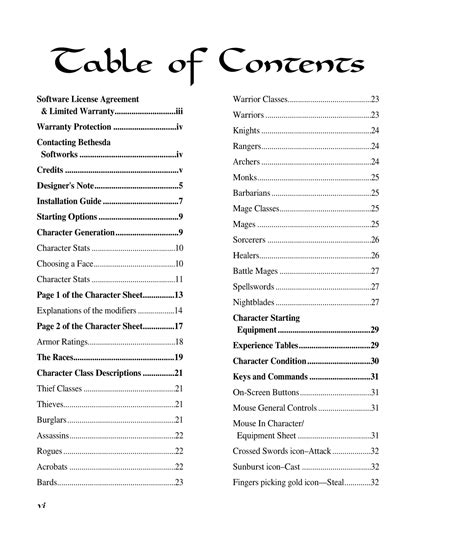
- Table of Contents: For longer guides, an interactive table of contents with jump links is indispensable.
- Callout Boxes: Highlight critical information, warnings, or pro-tips using distinct formatting.
- Icons and Color-Coding: Visually differentiate between various types of information (e.g., “Warning,” “Tip,” “Required Item”).
The “Quick Reference” vs. “Deep Dive” Sections
Consider explicitly segmenting your guide into “Quick Reference” and “Deep Dive” sections. The Quick Reference could be a concise summary table, a flowchart, or a brief bulleted list at the very top of the guide. It answers the immediate “what do I do now?” questions. The Deep Dive then provides the comprehensive walkthroughs, lore explanations, intricate strategies, and alternative approaches that more dedicated players seek.
This separation helps manage expectations. A player looking for a simple answer won’t feel pressured to read through pages of lore, while a player interested in every nuance knows exactly where to find it.
Consistent Formatting and Terminology
Consistency is key to reducing cognitive load. Use the same formatting for similar types of information throughout your guide. If item names are bolded in one section, they should be bolded everywhere. Maintain consistent terminology, referring to in-game elements by their official names. A consistent writing style also makes the guide feel more cohesive and professional.
Furthermore, provide context for any jargon or acronyms used, especially early in the guide. Assume players may not be familiar with community-specific terms, making the guide accessible to a wider audience.
Empowering Player Choice Through Modularity
Ultimately, the goal is to empower players to choose how much information they want and when they want it. A modular guide, where sections can be easily expanded, collapsed, or navigated between, achieves this. Think of a guide as a set of interconnected modules rather than a linear book. Each module addresses a specific topic, and players can jump between them as their needs evolve.
By prioritizing clear structure, strategic use of visuals, and empowering navigation, gaming guides can provide immense value to all players, from those needing a rapid solution to those seeking complete mastery, without ever becoming overwhelming.