



How do aspiring esports pros effectively analyze VODs for skill improvement?

In the highly competitive world of esports, raw talent alone isn’t enough. To truly ascend to professional ranks, players must constantly refine their skills, adapt to evolving metas, and outthink their opponents. One of the most potent, yet often underutilized, tools in an aspiring pro’s arsenal is Video On Demand (VOD) analysis. This systematic review of gameplay footage is not just about spotting mistakes; it’s a deep dive into strategic understanding, mechanical execution, and mental fortitude.
The Foundation: Why VOD Analysis Matters
VOD analysis is more than just rewatching your games; it’s a deliberate, analytical process designed to break down every facet of your performance. For aspiring pros, it offers an objective look at decision-making under pressure, highlights consistent errors that might otherwise go unnoticed, and provides a blueprint for targeted practice. Without this critical self-assessment, players risk repeating the same mistakes, hindering their growth and plateauing prematurely. It’s the difference between blindly grinding and intelligently improving.
Setting Up for Success: Preparation and Mindset
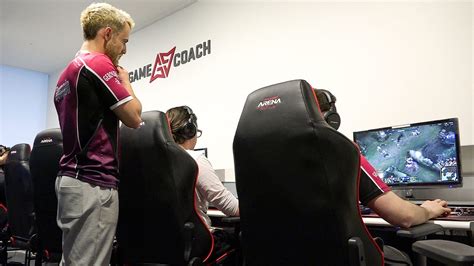
Before diving into a VOD, establish clear goals. Are you focusing on your laning phase, team fight positioning, map awareness, or specific hero/champion mechanics? Without a defined objective, analysis can become a superficial watch-through. Choose VODs strategically – don’t just pick your best games. Often, your losses or closely contested matches offer the most valuable lessons. Ensure you’re in a focused, analytical mindset, free from distractions. Grab a notebook, a digital document, or specialized VOD review software to jot down timestamps, observations, and action points.
The Structured Approach to VOD Review
Effective VOD analysis isn’t passive; it’s an active, multi-layered process.
Initial Watch-Through: The Big Picture
Start by watching the entire game at normal speed, as if you’re a spectator. Don’t pause or rewind. The goal here is to get a feel for the overall flow, identify key moments, and observe your general mood and reactions. What felt good? What felt bad? Note down any standout plays or glaring errors without dissecting them yet.
Targeted Review: Zooming In on Specifics
This is where the real work begins. Rewind and watch specific segments multiple times, often in slow motion.
- Decision-Making: Why did you choose that engage? Was it optimal? What other options were available? Consider the information you had at that exact moment.
- Positioning: Were you too far forward or too far back? Did you have proper vision? Were you exposed to ganks or key enemy abilities?
- Mechanics: Did you miss crucial ability casts? Was your last-hitting efficient? Were your rotations precise? Identify specific instances where mechanical execution fell short.
- Map Awareness: Did you miss enemy movements on the mini-map? Were you aware of objective timings? Did you react appropriately to pings or call-outs?
- Resource Management: How efficiently did you use your cooldowns, mana/energy, and consumables? Were you wasteful or overly conservative?
- Opponent Analysis: How did your opponents react to your plays? What were their tendencies? Could you have exploited them better, or did they outsmart you?
Identifying Patterns and Formulating Solutions
Individual mistakes are important, but identifying recurring patterns is paramount. If you consistently overextend in the early game, that’s a pattern to address. If you always forget to check a certain part of the map before an objective, that’s another. For each identified mistake or area for improvement, brainstorm specific, actionable solutions. It’s not enough to know you made a mistake; you need a plan to prevent it from happening again.

Leveraging Tools and External Feedback
While self-analysis is powerful, external perspectives can be invaluable. Share your VODs with higher-ranked players, coaches, or experienced teammates. They might spot things you missed or offer alternative strategies. Utilize software that allows for easy timestamping, drawing on the VOD, or creating detailed notes. Many games also offer built-in replay tools that provide detailed statistics and player perspectives.
Translating Analysis into Practice
The most crucial step is translating your VOD insights into actionable practice. Your notes and identified patterns are useless if they just sit there.
- Targeted Drills: If you identified poor last-hitting, dedicate practice time specifically to last-hitting drills.
- Mindful Gameplay: During live games, consciously focus on implementing the solutions you devised. For example, if you overextended, remind yourself to check the mini-map more frequently.
- Review Your Review: After implementing changes, review new VODs to see if the identified patterns have diminished or if new ones have emerged. This creates a continuous feedback loop.

Common Pitfalls to Avoid
- Emotional Bias: Don’t let frustration or ego cloud your judgment. Be objective and critical.
- Over-analyzing: You don’t need to dissect every single second of every game. Focus on high-impact moments and recurring issues.
- Lack of Action: Merely identifying mistakes without a plan to fix them is unproductive.
- Isolating Mistakes: Understand how one mistake can snowball into others. Look at the chain of events.

Conclusion
VOD analysis is a cornerstone of professional esports development. It transforms passive gameplay into an active learning experience, allowing aspiring pros to systematically deconstruct their performance, identify weaknesses, reinforce strengths, and build a robust strategic understanding. By approaching VODs with a structured methodology, a critical eye, and a commitment to actionable improvement, players can unlock their true potential and make significant strides toward achieving their competitive dreams. Embrace the VOD, and watch your game evolve.