How do I adapt my main’s build to the latest meta shifts without a full re-spec?

Navigating Meta Shifts Without a Full Re-Spec
The ever-evolving meta in online games often presents a dilemma: how do you stay competitive without constantly undergoing costly or time-consuming full re-specifications? For many players, their ‘main’ character’s build is a carefully crafted extension of their playstyle, and abandoning it entirely for every minor meta shift feels inefficient or undesirable. The good news is that smart, incremental adjustments can often bridge the gap, allowing you to adapt to new challenges and opportunities without hitting the reset button on your entire build.
Strategic Talent/Skill Point Reallocation
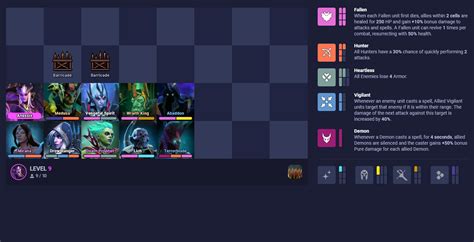
Most games offer some degree of flexibility in skill or talent trees. While a full re-spec might reset everything, many allow for minor point reallocation at a reduced cost or even for free up to a certain limit. Focus on identifying the key talents or skills that have either been buffed, nerfed, or become more (or less) relevant due to recent meta shifts. Perhaps a previously niche utility talent is now crucial for a new boss mechanic, or a damage talent has become significantly stronger.
Evaluate your current tree. Are there 1-3 points that can be moved from a ‘nice-to-have’ ability to a ‘must-have’ one? Can you shift focus from one damage type to another if enemy resistances have changed? These micro-adjustments can have a surprisingly large impact on your character’s performance without fundamentally altering your core build philosophy.
Leveraging Itemization and Gear Swaps
Your gear is another powerful lever for adaptation. While your core armor set might remain the same, consider the smaller, more flexible pieces. Trinkets, rings, neckpieces, and even off-hand items are often prime candidates for swapping to align with meta shifts. Look for items that offer different secondary stats (e.g., swapping from crit-heavy to haste-heavy gear if a new rotation benefits from faster attacks) or unique on-use/on-proc effects that are now more valuable.
Don’t overlook enchantments and gems either. If your game allows for changing these without replacing the entire item, a few well-placed gem swaps or enchantment changes can subtly shift your stat priorities to better suit the current meta without requiring a full gear overhaul. This is especially effective if a specific stat has seen a major re-evaluation.

Optimize Consumables and Rotational Nuances
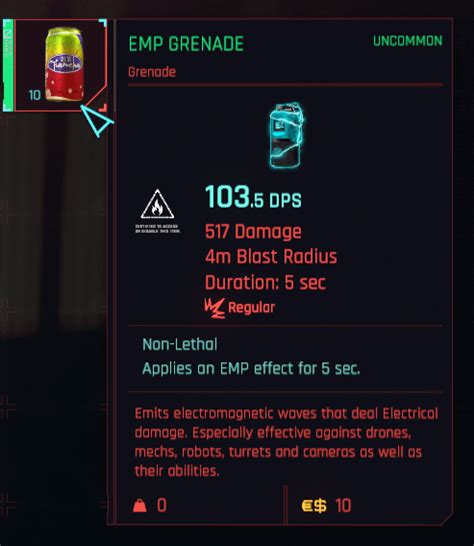
Sometimes, the biggest change isn’t in your build, but in how you play it. Consumables like potions, flasks, food buffs, and elixirs can provide significant temporary boosts that help bridge any gaps created by meta shifts. Are enemies now dealing more specific magic damage? Use a resistance potion. Is a specific encounter now a pure DPS race? Stack damage-increasing consumables.
Furthermore, even if your abilities haven’t changed, the optimal rotation or priority list might have. Review top players’ strategies for your class in the current meta. Are they holding certain cooldowns for different phases? Are they prioritizing a previously lower-ranked ability? Adapting your execution can often yield substantial performance gains without touching your talent points or core gear.
Deep Dive into Meta Analysis
Understanding *why* the meta shifted is crucial for effective adaptation. Was it a direct nerf to your class, a buff to another, a change in encounter design, or the introduction of new content that favors different archetypes? Don’t just copy builds blindly; analyze the underlying reasons. For instance, if single-target damage has become paramount, focus your adjustments on maximizing that aspect, even if it means sacrificing some AoE capability that was strong last patch.
By understanding the core problem the meta shift creates, you can make more informed and targeted adjustments to your build, ensuring that every minor change contributes meaningfully to your overall effectiveness. This targeted approach prevents wasteful changes and helps maintain your character’s core identity.
The Power of Incremental Changes
Embracing incremental changes not only saves resources but also allows for a more agile and responsive approach to game updates. Instead of waiting for a complete re-spec opportunity, you can make small, calculated adjustments as soon as a meta shift is identified. This keeps your main character competitive and relevant without the often-daunting task of rebuilding them from the ground up.
By focusing on talent point flexibility, smart gear swaps, consumable optimization, and adapting your playstyle, you can effectively navigate the ever-changing landscape of game metas and keep your main character performing at their best, proving that sometimes, less truly is more when it comes to build adaptation.