How do I analyze my competitive VODs effectively to identify core mistakes?

In the highly competitive world of esports, raw talent can only take you so far. The true differentiator often lies in the ability to learn, adapt, and improve systematically. One of the most potent tools at any competitive player’s disposal is Video-on-Demand (VOD) analysis. Merely re-watching your gameplay isn’t enough; you need a structured, critical approach to dig beneath the surface and pinpoint the core mistakes hindering your progress. This guide will walk you through an effective method to transform your VODs into powerful learning opportunities.
The Foundation: Setting Up for Success
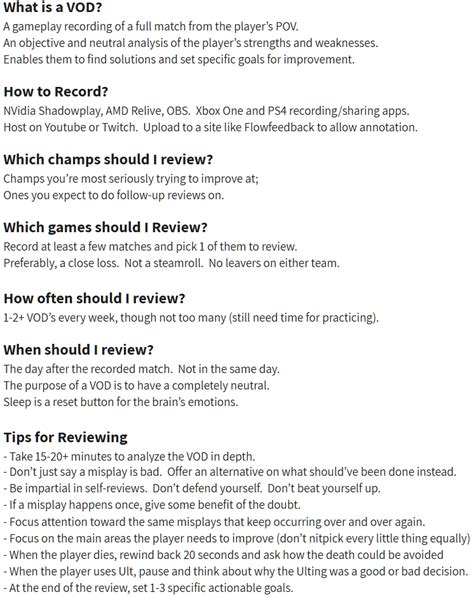
Before you even hit play, proper preparation can significantly enhance your analysis. First, ensure you have the right tools: a reliable VOD recording software (like OBS Studio, GeForce Experience, or a built-in game replay system), a note-taking application (digital or physical), and ideally, a way to timestamp key moments. A quiet, focused environment is also crucial to minimize distractions and maximize concentration. Approach each VOD with an objective, growth-oriented mindset, free from emotional bias about the outcome of the game.
It’s also beneficial to define your analysis goals beforehand. Are you looking to improve your early game decision-making? Your team fight positioning? Your mechanical consistency? Having a clear focus prevents you from getting overwhelmed by the sheer volume of information and helps you prioritize what to look for.

The Structured Analysis Process
First Pass: The Broad Strokes
Begin with a passive, uncritical watch-through of the entire VOD. The goal here is to get a general overview of the game’s flow, key moments, and overall narrative. Pay attention to big picture elements: when did your team have power spikes? When did the enemy? What were the major objectives contested? What was the general pace of the game? Don’t stop to scrutinize small details yet; just absorb the overall experience.
Second Pass: Deep Dive into Specifics
Now, it’s time to get granular. Rewatch the VOD, but this time, pause frequently and take detailed notes. This pass is where you start identifying specific mistakes. Break down your analysis into key areas relevant to your game:
- Decision-Making: Did you make the optimal choice given the information available? Could you have gathered more information? Did you overcommit, disengage too late, or miss a crucial opportunity?
- Positioning: Were you in a safe yet impactful position? Were you exposed unnecessarily? Did you effectively use cover or terrain?
- Mechanical Execution: Did you miss crucial abilities or last-hits? Were your combos executed smoothly? Was your aiming precise? Distinguish between a bad decision and a mechanical miss.
- Resource Management: Were your abilities, cooldowns, or economic resources utilized efficiently? Did you spend gold/resources wisely?
- Communication (Teamplay VODs): Was your communication clear, concise, and timely? Were you listening effectively? Were there any miscommunications?

Identifying Core Mistakes and Patterns
Simply listing individual errors isn’t enough. The true power of VOD analysis lies in identifying patterns of mistakes that stem from a single, underlying issue. For example, consistently getting caught out in the early game might not just be a positioning error; it could be a deeper problem with map awareness, minimap checking frequency, or a lack of understanding of enemy jungle pathing. Look for recurring themes. If you make the same mistake three times in a game, or across multiple games, that indicates a core issue that needs addressing.
Ask ‘why’ repeatedly. Why did I push up alone? Because I didn’t see the enemy jungler. Why didn’t I see them? Because I didn’t check the minimap. Why didn’t I check the minimap? Because I was too focused on last-hitting. This chain of ‘why’ can lead you to the root cause of the problem.

Turning Insights into Actionable Improvements
Once you’ve identified core mistakes, the next critical step is to formulate actionable plans. For each identified core mistake, brainstorm specific, measurable actions you can take to mitigate it. Instead of ‘get better at aiming,’ try ‘spend 15 minutes in aim trainers before each play session.’ For ‘improve map awareness,’ try ‘check minimap every 5 seconds, especially before pushing’ and set a mental reminder or a physical trigger in-game.
Prioritize your improvements. You can’t fix everything at once. Focus on 1-2 core mistakes per week or per play session. Implement these changes consciously in your next games. After a few games, re-evaluate by watching new VODs. Are you making fewer mistakes in the targeted area? Is a new core mistake emerging?
Common Pitfalls to Avoid
- Emotional Bias: Don’t let the outcome of the game (win or loss) or personal frustration cloud your judgment. Be objective.
- Over-analysis: Don’t try to fix every single micro-error. Focus on the core issues that yield the biggest improvements.
- Lack of Specificity: General statements like ‘I played badly’ are useless. Pinpoint exact moments and precise reasons.
- Ignoring Strengths: While the focus is on mistakes, don’t forget to acknowledge what you did well. Reinforce good habits.
- Isolation: If possible, review VODs with teammates or a coach. External perspectives can highlight blind spots you might miss.
Conclusion
Effective VOD analysis is a skill, and like any skill, it improves with practice. By adopting a structured, objective, and action-oriented approach, you can transform hours of gameplay into a powerful curriculum for personal improvement. It demands discipline and critical self-reflection, but the payoff in understanding your gameplay on a deeper level and elevating your competitive performance is immeasurable. Start reviewing, start improving, and watch your game evolve.