How do pro esports teams effectively analyze opponent VODs to gain a competitive edge?

The Critical Role of VOD Analysis in Professional Esports
In the high-stakes world of professional esports, success isn isn’t solely about raw mechanical skill. While individual talent is crucial, the ability to outthink and outmaneuver opponents often dictates the outcome of crucial matches. This is where meticulous Video On Demand (VOD) analysis comes into play. For top-tier teams, VOD analysis is a sophisticated, multi-layered process, integral to developing comprehensive game plans and gaining that all-important competitive edge.
It goes far beyond simply rewatching games; it’s a deep dive into an opponent’s psyche, strategy, and habits. Every move, every decision, every spell cast or shot fired is a piece of data waiting to be interpreted and exploited.
The Structured Approach to Opponent Scouting
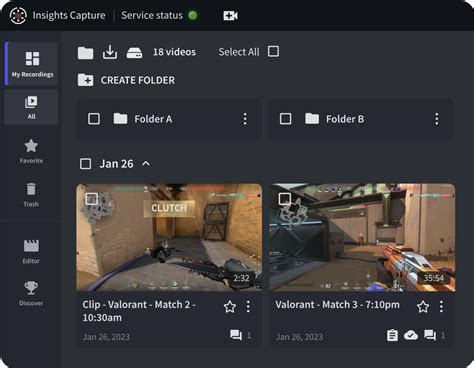
Professional teams employ a highly structured approach to VOD analysis, often involving dedicated analytical staff alongside coaches and players. This process typically begins with extensive data collection, where every match, whether competitive or even high-level scrims, is recorded and archived. Analysts then categorize and tag these VODs by opponent, map/game mode, patch version, and specific compositions or strategies used.
The initial phase involves a ‘broad strokes’ review. This means identifying overarching patterns: an opponent’s preferred champions/heroes, common early-game strategies, standard item builds, and typical objective priorities. Teams look for their opponents’ default playstyle – are they aggressive or passive? Do they favor specific lanes or map sides? Are they reactive or proactive?
Deep Dive: Uncovering Micro Habits and Weaknesses
Once the general patterns are established, the analysis shifts to a ‘deep dive’ or ‘micro-analysis.’ This is where the real competitive advantage is forged. Analysts scrutinize individual player habits, looking for tells that can be exploited. This could include:
- Positioning Mistakes: Does a player consistently overextend or get caught out in certain situations?
- Ability/Cooldown Tracking: Do they always use a specific ability at a certain time, leaving them vulnerable afterward? When are their ultimate abilities typically available?
- Decision-Making Under Pressure: How do they react when ganked or surprised? Do they panic, or make predictable retreats?
- Vision Control Habits: Where do they typically place wards? Are there blind spots they consistently ignore?
- Communication Patterns: While harder to discern without direct audio, understanding how a team moves together can hint at their communication style.

Furthermore, analysts track specific timings. For games like League of Legends or Dota 2, this might mean jungle clear times, objective spawn timings, or wave management patterns. For FPS titles, it could be common peek spots, grenade usage, or rotation timings. Every small detail contributes to a larger profile of the opposing team and its players.
Leveraging Technology and Collaborative Insight
Modern esports teams utilize sophisticated tools to aid in VOD analysis. Specialized software allows for frame-by-frame playback, multi-perspective viewing (from various players’ points of view), and annotation capabilities to highlight key moments. Some advanced systems even integrate with game data APIs to provide real-time statistics and heatmaps alongside the video footage.
However, technology is only part of the equation. The human element—the collective intelligence of the coaching staff, analysts, and players—is paramount. Analysts present their findings to the team, often broken down into digestible segments. Players then provide their unique insights, drawing on their in-game experience to confirm or refine the analysis.

This collaborative environment fosters a deeper understanding. For example, a coach might identify a strategic pattern, an analyst might pinpoint a specific player’s vulnerability, and a player might explain why that vulnerability exists from an in-game perspective, suggesting a practical way to exploit it. Counter-strategies are then developed, ranging from specific picks and bans in a draft phase to intricate in-game movements designed to capitalize on identified weaknesses.
From Analysis to Execution: The Practice Phase
The insights gained from VOD analysis aren’t just theoretical; they are immediately applied to practice. Scrims (practice matches) become testing grounds for new strategies devised to counter specific opponents. Teams will deliberately try to recreate scenarios identified in VODs, practicing how to exploit a player’s overextension or punish a predictable rotation. This iterative process of analysis, strategy formulation, and practice refines their approach until it becomes second nature.
It’s an ongoing cycle. After implementing a new strategy, teams will then analyze their own VODs and their opponents’ reactions to see if the strategy was effective, and if opponents have started to adapt. This continuous learning and adaptation are crucial in an ever-evolving meta.

The Unseen Battle for Information and Advantage
Ultimately, VOD analysis is the unseen battle fought before the actual game even begins. It’s about minimizing surprises, maximizing efficiency, and creating a robust game plan that plays to a team’s strengths while dismantling an opponent’s. The teams that excel at this detailed, often tedious, work are the ones that consistently find themselves on top. It transforms what might appear to be random in-game moments into predictable patterns, allowing professional esports teams to turn knowledge into a decisive competitive advantage.