How to adapt your favorite build after major patch meta shifts?

Major game patches are a double-edged sword. They bring exciting new content, balance changes, and often a complete shake-up of the established ‘meta’ – the current most effective tactics available. While this keeps games fresh, it can also leave players feeling lost, especially when their carefully crafted, beloved build suddenly feels underpowered or obsolete. But don’t despair! Adapting your favorite build post-patch is a skill, not a sacrifice, and mastering it can deepen your understanding and enjoyment of the game.
Understanding the Shake-Up: Deconstructing Patch Notes
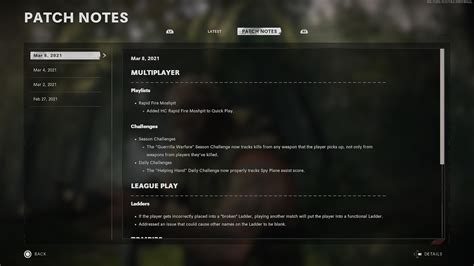
The first and most crucial step is to meticulously read the patch notes. Don’t just skim for your character or class; look at the bigger picture. Were there significant changes to items, abilities, or even fundamental game mechanics that indirectly affect your build? Pay attention to:
- Direct Nerfs/Buffs: Obvious changes to your character’s skills or gear.
- Indirect Changes: Buffs to counters, nerfs to synergies, or alterations to monster/boss mechanics that make certain strategies less viable.
- New Additions: New items, skills, or even entire systems that might offer new avenues for your build or invalidate old ones.
A deep dive into the specifics will reveal not just *what* changed, but *why* it changed, giving you insight into the developers’ intended direction for the meta.
Identifying Your Build’s Core Identity
Before you start making changes, clearly define what makes your build *your favorite*. Is it the high burst damage? The unkillable tankiness? The unique utility or crowd control? Understanding the core fantasy and functional purpose of your build is key. Many players abandon builds too quickly because they focus on *specific numbers* rather than the *playstyle and concept*.
Ask yourself: What fundamental aspect of my build has been truly broken by this patch? Is it the core mechanic, or just one or two synergistic components that can be replaced?
Pinpointing the Meta Shifts: What’s Strong Now?
While you don’t want to blindly copy the new meta, understanding it is vital for adaptation. Observe what other players are doing, especially top-tier ones. Watch streams, read community forums, and check out new guides. This isn’t about ditching your build; it’s about understanding the new competitive landscape.
Are certain damage types now stronger? Are sustain builds dominating? Is mobility suddenly paramount? This knowledge will inform your adjustments, allowing you to incorporate aspects of the new meta into your existing framework rather than starting from scratch.
Strategic Adaptation: Tweaks vs. Overhauls
Once you understand the patch and the new meta, it’s time for action. There are different levels of adaptation:
- Minor Tweaks: Swapping out a single item, changing a few talent points, or adjusting a rotation. This is ideal if your build’s core is still solid, but some components lost efficacy.
- Moderate Adjustments: Reworking a primary stat priority, completely swapping a gear set, or changing a secondary talent tree. This happens when a significant synergy was broken, but the fundamental class/character concept remains viable.
- Major Overhauls: A complete re-evaluation of your build’s talents, items, and possibly even primary role within a team. This is necessary if your build’s central mechanic was severely nerfed or if a new system completely changes the game’s landscape. Even here, try to retain as much of your preferred playstyle as possible.

The goal is to find the minimum viable change that restores your build’s competitive edge while preserving its unique feel.
Test, Refine, and Re-Engage
Theorycrafting is important, but practical application is paramount. Take your adapted build into actual gameplay. Pay attention to what works and what doesn’t. Don’t be afraid to make further small adjustments based on your experiences. The first iteration of your adapted build won’t be perfect, and that’s okay.

Utilize practice modes, lower-stakes content, or friendly matches to experiment without the pressure of high-level play. Gather data, compare results, and iteratively improve your build until it feels good again.
Conclusion
Major patches are not a death sentence for your favorite build; they are an invitation to innovate and learn. By approaching meta shifts with a strategic mindset—deconstructing patch notes, understanding your build’s core, analyzing new trends, and making iterative adjustments—you can adapt your playstyle, maintain your competitive edge, and ultimately find even greater satisfaction in mastering the evolving landscape of your favorite game.