How to design interactive game guides for easy navigation and spoiler-free discovery?

The Challenge of Modern Game Guides
Traditional game guides, while helpful, often suffer from being overwhelming, difficult to navigate, and rife with unavoidable spoilers. In today’s rich and expansive gaming landscapes, players seek guidance that complements their discovery journey rather than dictates it. Designing interactive game guides means moving beyond simple text dumps to create dynamic, user-friendly resources that empower players without spoiling the fun.
Core Principles for Interactive & Spoiler-Free Design
Crafting a truly effective interactive game guide requires adherence to several fundamental principles:
- Modularity and Granularity: Break down information into small, digestible chunks. Instead of a single massive walkthrough, think in terms of quests, locations, characters, or specific mechanics. This allows players to access only what they need.
- Progressive Disclosure: This is key to spoiler protection. Information should be revealed only when explicitly requested or contextually relevant. Players should have control over how much they see.
- Intuitive Navigation: A guide, no matter how comprehensive, is useless if players can’t easily find what they’re looking for. Implement clear hierarchical structures, robust search functions, and logical linking.
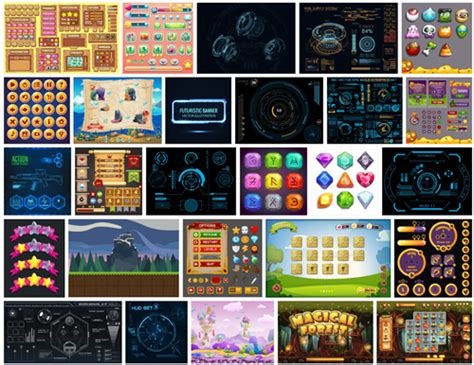
- Visual Engagement: Leverage screenshots, maps, and even short video clips to explain complex mechanics or locations more effectively than text alone.
- User-Centric Flexibility: Acknowledge that different players have different needs. Some want a hint, others a full solution. The guide should cater to various levels of assistance.

Implementing Spoiler Protection and Navigation Features
To achieve a balance between helpfulness and discovery, consider integrating these specific features:
Interactive Maps with Filters
An interactive map is arguably the most powerful tool for navigation. Allow players to filter points of interest (POIs) based on categories (e.g., collectibles, side quests, vendors, fast travel points). Crucially, POIs should often be initially marked generically, with details (and potential spoilers) revealed only upon clicking.
Collapsible Sections and Accordions
For quest steps, puzzle solutions, or detailed character backstories, use collapsible sections (e.g., accordions or dropdowns). The header can provide a non-spoiler summary (e.g., “Quest: The Ancient Relic – Step 3”), and the full details are hidden until the player chooses to expand it. This is a simple yet highly effective way to gate information.
Contextual Search and Filtering
Beyond a general search bar, implement contextual filtering. If a player is viewing a guide for a specific region, allow them to filter results to show only collectibles or quests within that region. This narrows down the information and makes it more relevant.

Spoiler Tags, Blur, or Toggle Buttons
Directly mark sensitive information (e.g., “BOSS WEAKNESS,” “MAJOR PLOT REVEAL”) with a visible spoiler tag that blurs or hides the text until the user clicks or hovers over it. This puts the power of discovery directly in the player’s hands.
Progress Tracking and Personalization
While more advanced, allowing users to mark quest steps as complete or track collected items can significantly enhance the guide’s utility. This personalizes the experience and makes the guide feel like a living companion rather than a static document.

Best Practices for a Seamless User Experience
- Clear UI/UX: Ensure the guide’s interface is clean, uncluttered, and easy to understand. Consistent iconography, clear headings, and a logical layout are paramount.
- Mobile Responsiveness: Many players access guides on secondary devices. Ensure the design is fully responsive and functions well on various screen sizes.
- Regular Updates: Games change. Ensure the guide is regularly updated to reflect patches, new content, and community-discovered strategies.
- Community Contribution (Optional): For larger guides, consider allowing community members to submit tips or corrections, with moderation.

Conclusion
Designing interactive game guides for easy navigation and spoiler-free discovery is about respecting the player’s journey. By embracing modularity, progressive disclosure, intuitive navigation, and robust spoiler protection features, creators can develop invaluable resources that enhance the gaming experience without diminishing the thrill of exploration and achievement. A well-designed guide becomes a true companion, offering help only when needed, and preserving the magic of discovery.