



How to reduce input lag for faster reactions in competitive online games?
In the fiercely competitive world of online gaming, every millisecond counts. Input lag, the delay between your action (like a mouse click or key press) and its corresponding visual or in-game response, can be the critical difference between victory and defeat. While often subtle, reducing this delay can significantly improve your reaction time, aiming precision, and overall performance. This article will guide you through a comprehensive approach to minimize input lag, from optimizing your hardware to fine-tuning your software settings.

Understanding Input Lag and Its Impact
Input lag isn’t just about your internet connection; it’s a complex chain of delays that can occur at multiple points: your input device, your PC’s processing, your monitor’s display, and even the game engine itself. For competitive players, even a small reduction can translate into more accurate shots, timely ability usage, and a more responsive, fluid gameplay experience. Our goal is to shorten this chain as much as possible.
Hardware Optimizations for Low Latency
High-Performance Peripherals
- Wired vs. Wireless: Always opt for wired mice, keyboards, and controllers in competitive scenarios. Wired connections eliminate the wireless signal delay and potential interference, offering a more direct and consistent input.
- High Polling Rate: Choose peripherals with a high polling rate (e.g., 1000Hz or 1ms). This indicates how frequently the device reports its position or state to your computer, meaning more frequent updates and less potential for lag.
- Mechanical Keyboards: While not directly reducing input lag in terms of signal transmission, the tactile feedback and rapid actuation points of mechanical keyboards can contribute to perceived responsiveness and faster key presses.
Monitor Settings and Technology
- High Refresh Rate Monitor: A monitor with a higher refresh rate (144Hz, 240Hz, 360Hz) displays more frames per second, meaning visual updates are presented to you faster. This doesn’t directly reduce input lag, but it ensures that the frames your PC produces quickly are shown to you without delay.
- Low Response Time: Look for monitors with 1ms or 0.5ms GtG (Gray-to-Gray) response times. This metric refers to how quickly pixels can change color, minimizing motion blur and ghosting, which can indirectly affect perceived input lag.
- Adaptive Sync (G-Sync/FreeSync): While G-Sync and FreeSync are excellent for preventing screen tearing and stuttering, enabling them can introduce a slight amount of input lag, especially if V-Sync is also enabled through the driver. For absolute lowest input lag, some competitive players disable these and cap frames slightly below the refresh rate.
- Game Mode: Many modern TVs and gaming monitors include a “Game Mode.” This mode typically bypasses image processing features that add latency, prioritizing speed over visual enhancements.

Powerful PC Components
Your CPU and GPU must be capable of rendering frames at a consistent rate above your monitor’s refresh rate. If your system is struggling to maintain high FPS, it will inevitably introduce processing delays. Ensure your drivers are up-to-date for optimal performance.
Software and System-Level Optimizations
In-Game Settings
- Disable V-Sync: V-Sync synchronizes your game’s frame rate with your monitor’s refresh rate to prevent screen tearing. However, it often does so by buffering frames, which directly introduces significant input lag. Disable it for competitive play.
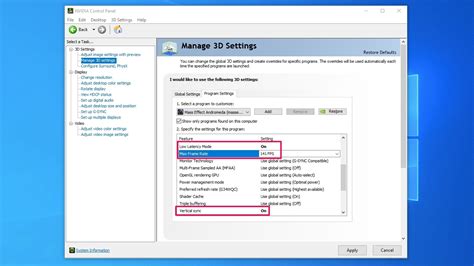
- Frame Rate Cap: If you experience screen tearing without V-Sync, consider capping your frame rate slightly below your monitor’s refresh rate (e.g., 141 FPS for a 144Hz monitor) if you’re using Adaptive Sync. If not, cap it to a very high number or leave uncapped if your system can handle it.
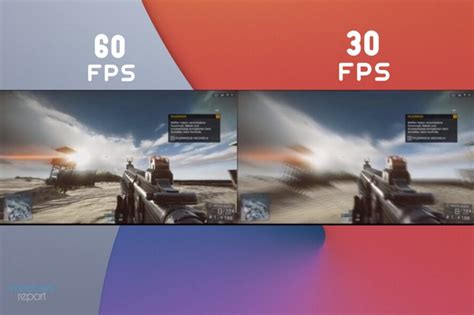
- Lower Graphics Settings: Reduce demanding graphical settings (shadow quality, anti-aliasing, post-processing effects) to ensure your GPU can render frames as quickly as possible. Higher FPS directly translates to lower system latency.
Operating System and Driver Settings
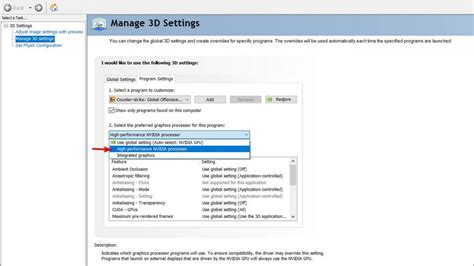
- GPU Control Panel Settings: Nvidia’s Control Panel and AMD’s Radeon Software offer low-latency modes (e.g., “Nvidia Reflex Low Latency Mode,” “AMD Anti-Lag”). These are designed to reduce rendering latency by optimizing the CPU-GPU pipeline.
- Game Mode (Windows): Ensure Windows Game Mode is enabled. While its impact varies, it aims to prioritize game processes and allocate system resources more effectively.
- Close Background Applications: Any application consuming CPU, GPU, or memory resources in the background can detract from your game’s performance and potentially introduce lag. Close browsers, streaming apps, and unnecessary programs.

Network Connection and Stability
While often conflated with input lag, network latency (ping) is crucial for competitive online gaming. It’s the delay in communication between your client and the game server. However, a stable, low-ping connection also contributes to the overall responsiveness of your game.
- Wired Ethernet Connection: Always use an Ethernet cable instead of Wi-Fi for your gaming PC. Wired connections are far more stable, have lower latency, and are less susceptible to interference than wireless.
- Quality Router: Ensure your router is up-to-date and offers good performance. Consider features like QoS (Quality of Service) to prioritize game traffic.
- High-Speed Internet: While high bandwidth isn’t as critical as low ping, a stable high-speed connection helps ensure consistent data flow without bottlenecks.

Conclusion
Reducing input lag is a multi-faceted endeavor that involves optimizing every link in your gaming chain. By investing in high-performance wired peripherals, a high refresh rate monitor, and a powerful PC, then meticulously tuning your in-game and system settings, you can significantly enhance your responsiveness. These optimizations won’t just make you feel faster; they will objectively improve your reaction times and give you a tangible edge in the competitive online arena.