How to review Early Access & live-service games fairly?

Reviewing video games has always been a nuanced art, but the advent of Early Access and the proliferation of live-service titles have added layers of complexity never before seen. Traditional review models, designed for discrete, finished products, often struggle to fairly assess games that are constantly evolving, perpetually unfinished, or heavily reliant on post-launch content and community interaction. This guide explores how critics and players alike can approach evaluating these dynamic experiences with a balanced and insightful perspective.
The Evolving Landscape of Game Development
The rise of digital distribution platforms has empowered developers to release games in various stages of completion, directly engaging with players throughout the development cycle. This model, while offering transparency and community-driven improvements, fundamentally challenges the concept of a “final” product review.
Early Access: A Promise, Not a Product
Early Access games are, by definition, unfinished. They offer a glimpse into a game’s potential, inviting players to contribute feedback and support development. Reviewing such a game requires a different mindset. It’s less about a definitive score and more about evaluating the current core mechanics, the stability of the build, the clarity of the developer’s vision, and the demonstrable progress being made.

Live-Service Games: The Marathon, Not the Sprint
Live-service titles, often launching as “complete” but designed for years of ongoing content, present their own set of challenges. Their value proposition often lies in long-term engagement, seasonal updates, and evolving meta-games. A review must consider not just the launch state but also the game’s sustainability, its monetization practices, and the developer’s track record for delivering on promises.
Strategies for a Fair and Insightful Review
To provide fair and useful evaluations, reviewers must adapt their methodology to account for the unique characteristics of Early Access and live-service titles.
Grounding the Review in the Present
The most crucial aspect is to review the game as it stands at the moment of evaluation. For Early Access, clearly state that the game is unfinished and what version was played. For live-service, focus on the current content offerings, gameplay loops, and technical performance. Avoid speculative praise or condemnation based purely on future roadmaps, as these can change or be abandoned.
Addressing Future Potential (and Pitfalls)
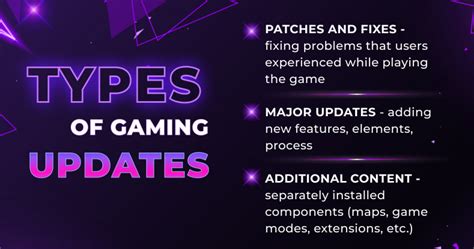
While the present is paramount, a good review can still contextualize the game within its stated development path. For Early Access, discuss the developer’s communication, past updates, and the coherence of their vision. For live-service, touch upon the existing content pipeline and the apparent health of the player base. However, always frame discussions of future content as potential, not guaranteed reality. Acknowledge that the game could improve dramatically or stagnate.
Evaluating Monetization and Community Impact
Monetization schemes (loot boxes, battle passes, cosmetics, paid expansions) are integral to the live-service experience and must be thoroughly scrutinized. Are they fair? Do they impact gameplay? Do they feel predatory? Similarly, the community surrounding a live-service game can heavily influence the experience, for better or worse. Discuss how developer-community interaction is managed and its effect on the game’s evolution.

The “Living Review” Concept
Given the dynamic nature of these games, a single, static review may quickly become outdated. Consider the concept of a “living review” where the original review is periodically updated, or supplementary “check-in” articles are published. This acknowledges that the game reviewed today might be vastly different in six months, offering continued value to readers.

Conclusion: Evolving Review Practices for Evolving Games
Fairly reviewing Early Access and live-service games demands a departure from traditional critical approaches. It requires transparency about the game’s state, a focus on current content, careful consideration of monetization and community, and an understanding that a review is a snapshot, not an eternal judgment. By adopting these evolving practices, reviewers can better serve readers, providing valuable insights into games that are designed to grow and change long after their initial release.