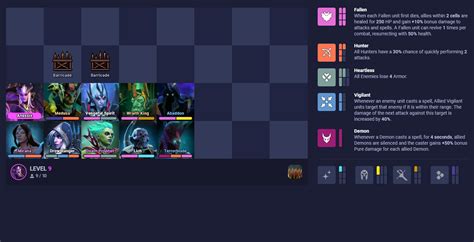
My build underperforms. What are common synergy mistakes & optimal stat priorities?
The Frustration of an Underperforming Build
It’s a common scenario for many players: you spend hours theorycrafting, meticulously selecting gear, and investing skill points, only to find your character struggling in content where it should excel. The feeling of an underperforming build can be incredibly frustrating, leaving you questioning your choices and the game’s mechanics. More often than not, the issue isn’t that your build is fundamentally flawed, but rather that there are overlooked synergy mistakes or suboptimal stat priorities.
Understanding Synergy: More Than Just Matching Numbers
Synergy is the interaction between different components of your build, where the combined effect is greater than the sum of their individual parts. A truly synergistic build feels cohesive, with each piece enhancing the others. Conversely, a lack of synergy can create bottlenecks, wasted stats, and a general feeling of inefficiency.
Common Synergy Missteps
- Conflicting Scaling & Damage Types: A frequent mistake is mixing too many damage types or primary scaling stats. For example, a character trying to equally maximize both Intelligence (for spell damage) and Strength (for physical attack damage) without a clear interaction between the two will likely spread their resources too thin and underperform compared to one focusing on a single primary attribute. Similarly, stacking fire damage bonuses with gear that provides only cold penetration is a clear anti-synergy.
- Neglecting Defensive Layers: Focusing solely on offense is tempting, but a dead character deals no damage. A common mistake is not ensuring defensive mechanics synergize. For instance, relying purely on evasion without a solid health pool or damage reduction can lead to one-shot scenarios against un-evadable attacks. Combining armor, resistances, health, and perhaps some form of damage mitigation (like block or dodge) in a balanced, synergistic way is crucial.
- Over-Specialization vs. Utility Balance: While specializing is good, over-specialization can be detrimental. A build might maximize raw damage but lack utility like crowd control, movement speed, or resource regeneration, making it clunky and less effective in practical combat scenarios. Finding a balance where utility enhances your primary damage output or survivability is key.

- Misunderstanding Core Mechanics: Every game has unique mechanics. Not understanding how buffs stack, how resistances are calculated, or whether certain debuffs override or combine can lead to poor choices. For example, if a certain debuff provides ‘X% reduced damage taken’ while another provides ‘Y% increased damage dealt to enemy’, knowing if these are additive, multiplicative, or apply at different stages of calculation is vital for maximizing impact.
Optimal Stat Prioritization: Every Point Counts
Once you’ve ensured your build components work together, the next step is to prioritize your stats effectively. This isn’t just about picking the biggest numbers, but understanding which stats provide the most value at different stages of your build and current gear level.
Identifying Your Primary Scaling Stats
Your build likely revolves around one or two primary attributes or damage types. Identify these and prioritize gear and skill points that directly boost them. If you’re an Intelligence-based spellcaster, Intelligence, Spell Damage, and Cast Speed will be paramount. For a Strength-based melee attacker, Strength, Physical Damage, and Attack Speed might take precedence. Always prioritize the stats that directly multiply your core damage or healing output.
Be aware of breakpoints and diminishing returns. Some stats have specific thresholds where they become incredibly powerful (e.g., reaching 100% crit chance, or a certain attack speed for specific skill interactions), while others may offer less value after a certain point. Investing in a stat past its point of diminishing returns can be a wasted opportunity to boost other, more impactful stats.
Resource Management & Cooldown Reduction
A powerful ability is useless if you can’t cast it. Prioritize stats that ensure smooth resource regeneration (mana, energy, stamina, rage) and optimal cooldown management. Cooldown Reduction (CDR) is often an undervalued stat; being able to cast a high-impact ability more frequently can vastly outweigh a small increase in its raw damage per cast.
Defensive & Survivability Stats
As mentioned, survivability is key. Prioritize health (or equivalent base survivability), followed by damage mitigation (armor, resistances, damage reduction) relevant to the threats you face. If a boss deals primarily fire damage, stacking fire resistance will be more valuable than general armor. Understand the damage profiles of the content you’re attempting and tailor your defensive stats accordingly. Sometimes, a little more survivability allows you to stay in the fight longer, indirectly increasing your damage output.

Utility and Quality-of-Life Stats
Don’t completely overlook utility. Movement speed, cast/attack speed (even beyond damage scaling), status effect resistance, or resource gain on hit/kill can significantly improve your gameplay experience and indirectly boost your performance by making you faster, more responsive, or less vulnerable to specific mechanics. These often make a build feel much smoother to play.
Adapting to the Meta and Testing Your Build
Game metas constantly shift due to patches, new content, and community discoveries. What was optimal yesterday might be suboptimal today. Stay informed about balance changes and the current meta. Don’t be afraid to adapt your build or try new strategies based on what top players are finding success with, but always consider if their approach aligns with your playstyle and available resources.

The true test of any build is in practice. Don’t just theorycraft; play the game! Actively test your build in various scenarios. Pay attention to what feels weak, what feels strong, and where you’re dying or struggling. Use in-game damage meters (if available) or simply observe combat logs to see which abilities are contributing most to your damage or survivability. This iterative process of testing, analyzing, and refining is essential for build mastery.
Conclusion: Iteration is Key to Mastery
An underperforming build can be a puzzle, but it’s one that can be solved. By meticulously examining your build for synergy mistakes and ensuring your stat priorities are aligned with your character’s strengths and the content you’re facing, you can transform a struggling character into a powerhouse. Remember, building is an ongoing process of learning, adapting, and refining. Embrace the iteration, and you’ll unlock your build’s full potential.