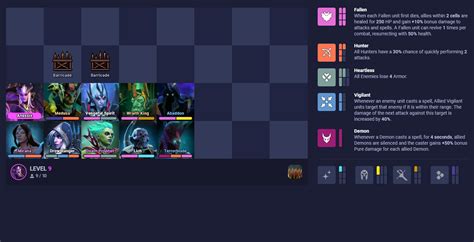
My main build got nerfed. How do I adapt to the new meta without fully rerolling?

Navigating the Post-Nerf Landscape: Adapting Your Beloved Build
It’s a familiar sting for any dedicated gamer: logging in to find your meticulously crafted, highly effective main build has been hit by the nerf hammer. Suddenly, your go-to strategy feels sluggish, ineffective, or simply outclassed. The immediate thought might be to scrap everything and start fresh, but a full reroll can be a daunting, time-consuming, and often resource-intensive endeavor. The good news is, often, adaptation is possible without completely abandoning your investment. This guide will walk you through strategies to pivot and thrive in the new meta.

Understanding the Nerf and the Emerging Meta
Before making any changes, it’s crucial to understand what exactly was nerfed and how it impacts your build’s core functionality. Was it a specific skill, an item’s synergy, a stat scaling, or a fundamental mechanic? A deep dive into the patch notes and community discussions will illuminate the precise changes. Equally important is observing the emerging meta. What builds are now rising to prominence? What strategies are proving effective? Identifying the new strengths and weaknesses in the game will inform your adaptation process.
Don’t just look at the raw numbers; consider the qualitative impact. Did your build lose a crucial utility, a defensive layer, or burst damage? Understanding these nuances helps pinpoint where your build needs bolstering or re-strategizing.
Low-Cost Adjustments: Skill and Gear Tweaks
The first line of defense against a nerf is often the most accessible: making small, targeted adjustments. This approach minimizes resource expenditure and allows you to test changes incrementally.
- Skill Tree/Talent Respec: Most games allow for partial or full respecs. Identify skills or talents that were nerfed heavily and look for alternatives that provide similar utility or damage, or bolster other aspects of your build that are now weaker. Sometimes, shifting just a few points can open up new synergies.
- Minor Gear Swaps: You likely have some alternative gear pieces in your stash. Can you swap out one or two items (e.g., a ring, amulet, or off-hand) to compensate for lost stats, gain a new proc, or provide a missing defensive layer? Look for gear that aligns with untouched parts of your build or boosts emerging meta stats.
- Gem/Rune/Mod Changes: Many games feature systems where abilities are augmented by gems, runes, or mods. Swapping these out for ones that boost different damage types, provide new crowd control, or enhance survivability can significantly alter your build’s performance without changing core items or skills.
Leveraging Existing Strengths and Strategic Swaps
Even a heavily nerfed build usually retains some core strengths. The goal isn’t always to replace what was lost, but to amplify what’s still good. Identify the aspects of your build that remain viable or even strong. Is your character still tanky, fast, or good at applying certain status effects? Can you lean into these strengths more heavily?
- Damage Type Diversification: If your primary damage type was nerfed, can you pivot to a secondary damage source that your current gear partially supports? Or, if enemies are now resistant to your main damage, can you invest in a different type?
- Main Weapon/Accessory Swap: This is a more significant change but often less impactful than a full reroll. If your primary weapon was the core of the nerf, consider if a different weapon type or specific legendary/unique weapon could be slotted in. Many builds can adapt to a new weapon with only moderate changes to skills and passive trees.
- Rethink Your Rotation/Playstyle: Sometimes, the build itself isn’t completely broken, but the optimal way to play it has changed. Experiment with different skill rotations, positioning, or engagement strategies to maximize efficiency with your current toolkit.
Mid-Cost Reinvestment: When More is Needed
If low-cost adjustments aren’t enough, you might need to make more substantial, but still not total, changes. This involves targeting specific, high-impact components of your build.
- Core Skill/Ability Change: If your signature skill was gutted, research if another skill within your class or archetype could serve a similar role. You might need to adjust more of your passive tree and supporting gear, but it often preserves your character’s identity and overall gearing strategy.
- Major Attribute/Stat Redistribution: If your game allows for it, a more significant reallocation of attribute points might be necessary if the nerf significantly changed the value of certain stats (e.g., critical hit chance vs. raw damage, defensive stats vs. offensive).
- Targeted Legendary/Set Item Acquisition: Sometimes, one or two key legendary or set items can completely redefine a build. If there’s a new item or set that synergizes well with the un-nerfed parts of your character, farming for it might be a worthwhile investment.
Conclusion: Embrace the Evolution
Adapting to nerfs and new metas is a fundamental part of the journey in many online games. Rather than seeing a nerf as the end of your build, view it as an opportunity to experiment, learn new mechanics, and deepen your understanding of the game. By starting with small, incremental changes and progressively investing more resources if needed, you can often bring your cherished build back to competitive viability without the frustration and effort of a complete reroll. Stay flexible, be observant, and don’t be afraid to try new things – your main build might just evolve into something even more robust and satisfying.