





NVMe SSD vs SATA SSD for gaming load times: Which upgrade offers the best value?
The Quest for Faster Gaming: SSDs Under the Microscope
For PC gamers, the agony of staring at a loading screen can feel like an eternity. Long gone are the days when a mechanical hard drive (HDD) was the only storage option; solid-state drives (SSDs) have revolutionized system responsiveness. But with two primary types dominating the market – NVMe SSDs and SATA SSDs – a common question arises: which offers the best bang for your buck specifically for cutting down gaming load times?

Understanding Your Storage Options
Before diving into gaming benchmarks, it’s crucial to understand the fundamental differences between these two SSD technologies.
SATA SSDs: The Reliable Workhorse
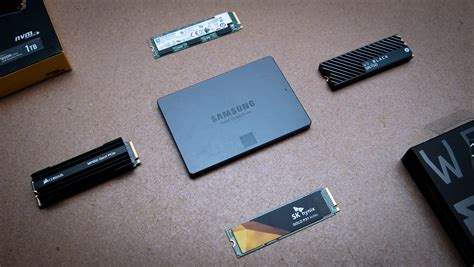
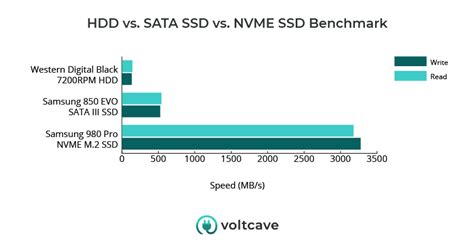
SATA (Serial Advanced Technology Attachment) SSDs connect to your motherboard via a SATA cable, similar to traditional HDDs. They utilize the older SATA interface, which has a theoretical bandwidth limit of 600 MB/s (megabytes per second). In real-world performance, most SATA SSDs achieve sequential read/write speeds of around 500-550 MB/s. They come in a 2.5-inch form factor, making them compatible with almost any modern PC case or laptop.
NVMe SSDs: The Speed Demon
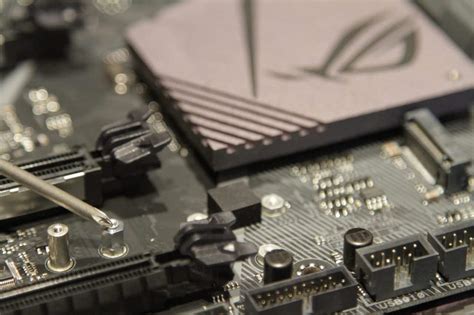
NVMe (Non-Volatile Memory Express) SSDs, on the other hand, leverage the PCIe (Peripheral Component Interconnect Express) interface, which is the same high-speed lane used by graphics cards. This connection bypasses the SATA bottleneck entirely, offering significantly higher bandwidth. Modern NVMe drives can achieve sequential read/write speeds ranging from 3,500 MB/s to over 7,000 MB/s, depending on the generation of PCIe (Gen3, Gen4, or Gen5). Most NVMe SSDs come in the compact M.2 form factor, which plugs directly into a dedicated slot on your motherboard.
The Gaming Load Time Showdown: Real-World Impact
On paper, NVMe SSDs are undeniably faster. But does this translate into a noticeable difference in gaming load times? This is where the debate truly heats up.
Numerous real-world tests and benchmarks conducted by tech reviewers consistently show that while NVMe SSDs are faster than SATA SSDs, the difference in game loading times is often marginal. We’re talking about a few seconds, or even fractions of a second, in many popular titles. For example, a game that loads in 15 seconds on a SATA SSD might load in 12-13 seconds on a high-end NVMe drive.
Why such a small difference? Modern game engines are optimized to load assets efficiently, and often the bottleneck isn’t the drive’s raw sequential speed but rather the CPU, GPU, or the way game assets are packaged and decompressed. Many games simply don’t fully saturate the bandwidth even of a SATA SSD, let alone an NVMe drive.

The Rise of DirectStorage
It’s important to note that the landscape is evolving. Microsoft’s DirectStorage API, introduced with Xbox Series X/S and now available for PC, aims to fully leverage the immense speeds of NVMe SSDs. By allowing game data to be sent directly from the SSD to the GPU, bypassing the CPU, DirectStorage promises to unlock truly transformative load times and more seamless asset streaming in future games. However, games utilizing DirectStorage are still relatively few, and its full impact on PC gaming is yet to be widely realized.
Beyond Load Times: Other Performance Impacts
While gaming load times might see modest gains, NVMe SSDs do offer clear advantages in other areas:
- Operating System Boot Times: NVMe drives can significantly shave off seconds from your PC’s boot-up process.
- Application Loading: Large applications like video editing software, CAD programs, or complex developer tools will launch and operate noticeably faster on an NVMe drive.
- File Transfers: Moving large files (e.g., big game installs, 4K video files) between NVMe drives is dramatically quicker than with SATA drives.
- General System Responsiveness: The overall snappiness and responsiveness of your system, especially under heavy multitasking, will generally feel better with an NVMe SSD.
The Value Proposition: Where Does Your Money Go?
This is where the core of the upgrade decision lies. Price per gigabyte is a critical factor for many gamers.
- SATA SSDs: Generally, SATA SSDs offer a much better price-per-gigabyte ratio. You can often get a larger SATA drive for the same price as a smaller NVMe drive. This makes them an excellent value for those upgrading from an HDD, providing a massive performance leap for a relatively low cost.
- NVMe SSDs: While prices have come down, NVMe drives are still typically more expensive per gigabyte, especially the latest PCIe Gen4 and Gen5 models. The value here comes from future-proofing, achieving the absolute peak performance for specific workloads, and being ready for games that fully utilize DirectStorage.
For most current games, the performance difference between a SATA SSD and an NVMe SSD is minimal enough that the extra cost of NVMe might not justify the slight reduction in load times, especially for budget-conscious gamers.

Making Your Decision
So, which upgrade offers the best value? It depends on your specific needs and budget:
- If you’re upgrading from an HDD: Any SSD is a massive upgrade. A SATA SSD will provide a phenomenal improvement in boot times, application loading, and gaming load times compared to an HDD, and it does so at a very attractive price point. This is arguably the best value upgrade for most gamers.
- If you’re on a tight budget and primarily gaming: A high-capacity SATA SSD will give you excellent gaming performance without breaking the bank. You’ll enjoy vastly reduced load times over an HDD for less investment than an NVMe drive.
- If you’re an enthusiast, content creator, or want to future-proof: If budget allows and your motherboard supports it, an NVMe SSD (especially a Gen4 or Gen5 model) offers the highest theoretical performance, superior speeds for non-gaming tasks, and readiness for future games leveraging DirectStorage. While not the absolute best value for *current* pure gaming load times, it’s the better investment for overall system performance and longevity.
Conclusion
For most gamers today, particularly those upgrading from an HDD, a SATA SSD offers the best value for significantly reducing gaming load times and improving overall system responsiveness. The performance gains for gaming are substantial compared to HDDs, and the cost is considerably lower than NVMe.
NVMe SSDs are undeniably faster in benchmarks and for specific demanding tasks like large file transfers or professional content creation. While their impact on current gaming load times is often less dramatic than their price difference suggests, they represent the future of storage and offer superior overall system snappiness. If you have the budget and want the absolute peak performance and future-proofing, NVMe is the way to go. Otherwise, a SATA SSD remains a fantastic, cost-effective upgrade for a vastly improved gaming experience.


