





NVMe vs SATA SSD: What’s the real gaming load time difference?
Understanding SSDs in Gaming: NVMe vs. SATA
For PC gamers, every millisecond counts, especially when it comes to immersion. Storage drives play a critical role in how quickly your games load, levels transition, and textures stream. In the modern landscape, Solid State Drives (SSDs) have largely replaced traditional Hard Disk Drives (HDDs) due to their superior speed. However, within the SSD family, two primary interfaces dominate the discussion: SATA and NVMe. While both offer significant upgrades over HDDs, a common question persists: does NVMe truly offer a noticeable advantage in gaming load times over its SATA counterpart?
The Technical Divide: SATA vs. NVMe
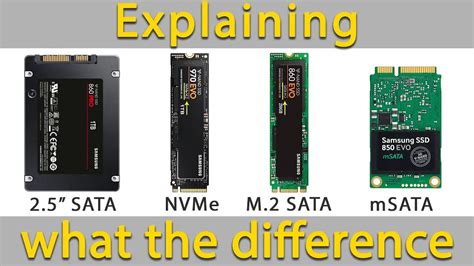
To understand the practical differences, it’s essential to grasp the technical foundations of each. SATA (Serial Advanced Technology Attachment) SSDs connect to your motherboard via the SATA 3.0 interface, which typically offers a maximum theoretical bandwidth of 600 MB/s. They communicate using the older AHCI (Advanced Host Controller Interface) protocol, originally designed for slower HDDs, which can introduce some overhead.
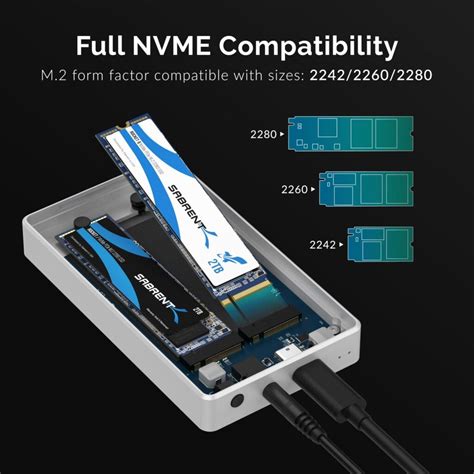
NVMe (Non-Volatile Memory Express) SSDs, on the other hand, represent a more modern and powerful storage solution. They connect directly to your motherboard via the PCI Express (PCIe) bus, bypassing the SATA bottleneck entirely. Utilizing the NVMe protocol, which was specifically designed for flash memory, these drives can achieve significantly higher sequential read/write speeds, often reaching 3,500 MB/s to over 7,000 MB/s, depending on the PCIe generation (Gen3, Gen4, Gen5).
Decoding Gaming Load Times
When a game loads, it’s not simply pulling one massive file. Instead, it’s accessing a multitude of smaller files: textures, character models, sound files, level geometry, and more. This process involves a combination of sequential reads (reading large, contiguous blocks of data) and random reads (accessing many small files scattered across the drive). While NVMe excels at sequential reads, its advantage in random read performance, though still present, is often less dramatic compared to SATA.
The Real-World Gaming Test: Is NVMe Faster?
This is where the rubber meets the road. In numerous real-world benchmarks and comparisons across a wide variety of modern games, the difference in load times between a good SATA SSD and a fast NVMe SSD is often surprisingly small. We’re talking about differences of typically 1 to 3 seconds, if any, in most scenarios.
Why isn’t the difference more significant given NVMe’s vastly superior theoretical bandwidth? The primary reasons are:
- Game Engine Bottlenecks: Many older game engines weren’t designed to fully saturate the bandwidth of even SATA SSDs, let alone NVMe drives. They often introduce their own processing bottlenecks that limit how quickly assets can be loaded and rendered, regardless of storage speed.
- CPU/GPU Bottlenecks: The CPU and GPU play crucial roles in decompressing game assets, processing physics, and rendering graphics. If these components are struggling, even an ultrafast NVMe drive won’t make your game load instantly.
- Random vs. Sequential Reads: As mentioned, games rely heavily on random reads of many small files. While NVMe is better at this, the gap between it and SATA isn’t as vast as their sequential read speeds suggest.

Where NVMe Shines and Future Prospects
While the immediate gaming load time benefits might be marginal for most current titles, NVMe SSDs do offer clear advantages in other areas:
- Large File Transfers: If you frequently move multi-gigabyte files (e.g., video editing projects, game installations), NVMe will dramatically reduce transfer times.
- Content Creation: Professionals working with massive datasets, 4K/8K video editing, or complex 3D rendering will benefit significantly from NVMe’s sustained high performance.
- Future Gaming: DirectStorage: This is the game-changer. Microsoft’s DirectStorage API, already implemented on Xbox Series X/S and coming to PC, allows games to load assets directly from the NVMe SSD to the GPU, bypassing the CPU bottleneck. This technology promises to fully leverage NVMe’s speed for truly instant loading and highly detailed, seamlessly streaming worlds in future games. For these titles, an NVMe drive will be a prerequisite for the best experience.

Making the Right Choice for Your Gaming Rig
When deciding between NVMe and SATA for your gaming PC, consider these points:
- Current Games: For most games released today, a high-quality SATA SSD (like a Samsung 870 EVO or Crucial MX500) will provide an excellent gaming experience with virtually indistinguishable load times compared to an NVMe drive.
- Budget: SATA SSDs are generally more affordable per gigabyte, offering great value for money.
- Future-Proofing: If you’re building a new PC and want to be ready for upcoming DirectStorage-enabled games, or if you also perform tasks that benefit from extreme storage speeds, an NVMe SSD (especially a PCIe Gen4 or Gen5 model) is a wise investment.
- Primary vs. Secondary Drive: You could opt for a smaller NVMe drive as your primary boot drive and for your most-played games, with a larger, more affordable SATA SSD or even an HDD for secondary storage of older games or media.
![6 BEST SSD For Gaming [Tested] - Tech4Gamers](/images/aHR0cHM6Ly90czMubW0uYmluZy5uZXQvdGg/aWQ9T0lQLnRyMUJGejdadXA1SVN3cDR5QTlZelFIYUQ0JnBpZD0xNS4x.webp)
Conclusion
In the current gaming landscape, the real-world difference in load times between NVMe and SATA SSDs is often minimal, typically a matter of a few seconds at most. While NVMe holds a significant technical advantage, existing game engines and system bottlenecks prevent it from fully flexing its muscle for most titles. However, with the advent of technologies like DirectStorage, NVMe is poised to become genuinely transformative for future gaming experiences. For now, a good SATA SSD remains an excellent and cost-effective choice for gamers, but investing in an NVMe drive will ensure you’re ready for the next generation of gaming performance.


