



Optimal monitor settings for competitive FPS games?
The Competitive Edge: Why Monitor Settings Matter
Winning in competitive First-Person Shooter (FPS) games isn’t just about raw skill; it’s also heavily influenced by your hardware and how it’s configured. Your monitor is your primary window into the game world, and optimizing its settings can provide a tangible advantage, allowing you to spot enemies faster, react quicker, and reduce visual fatigue. This guide will walk you through the essential monitor settings you should tweak to elevate your FPS performance.
Prioritizing Speed: Refresh Rate and Response Time
When it comes to competitive FPS, these two settings are paramount. Refresh Rate (measured in Hz) dictates how many times your monitor updates the image on screen per second. A higher refresh rate (e.g., 144Hz, 240Hz, or even 360Hz) means smoother motion, reduced ghosting, and quicker visual feedback, making enemies easier to track. Ensure your in-game settings match your monitor’s maximum refresh rate.
Response Time (measured in milliseconds, ms) refers to how quickly pixels can change from one color to another (typically grey-to-grey, GtG). Lower response times (1ms, 0.5ms) minimize motion blur and ghosting, crucial for clarity during fast-paced action. Most gaming monitors offer an ‘Overdrive’ or ‘OD’ setting; experiment to find the lowest setting that doesn’t introduce inverse ghosting or artifacting.

Clarity and Smoothness: Resolution and Adaptive Sync
While higher resolutions like 4K offer stunning detail, in competitive FPS, 1080p (Full HD) or 1440p (QHD) are often preferred. They demand less GPU power, allowing for higher frame rates, which directly benefits from high refresh rate monitors. Maintaining a consistent frame rate is more beneficial than pixel density when every millisecond counts. Stick to your monitor’s native resolution for the sharpest image.
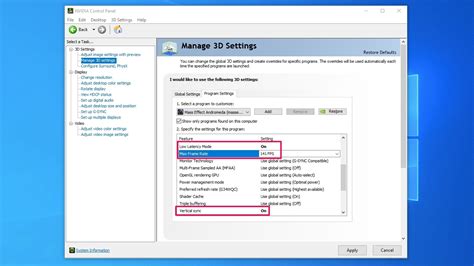
Adaptive Sync technologies like NVIDIA G-Sync and AMD FreeSync synchronize your monitor’s refresh rate with your GPU’s frame rate. This eliminates screen tearing and reduces stuttering, providing a much smoother visual experience. While competitive players often disable it to minimize potential input lag (though modern implementations have significantly reduced this), for most, the benefits of tear-free gameplay outweigh the minor potential lag. Test it yourself to see if you notice a difference.
Optimizing Visibility: Color, Brightness, and Contrast
Getting your display’s visual properties right can significantly improve target acquisition. Start by setting your Brightness to a comfortable level that doesn’t strain your eyes during long sessions but is bright enough to distinguish details in darker areas. Too bright can wash out details, too dim can hide enemies.
Contrast defines the difference between the brightest and darkest parts of an image. A well-set contrast ratio helps objects stand out from the background. Avoid overly aggressive contrast settings that might crush blacks or blow out whites. Many monitors have a “Black Equalizer” or “Shadow Boost” feature specifically designed to brighten dark areas without overexposing the rest of the screen, which can be a game-changer for spotting enemies lurking in shadows.
Color settings (Vibrance, Gamma, Color Temperature) are crucial for visual clarity and enemy distinction. A slightly cooler color temperature (closer to 6500K or a ‘Standard’ preset) is generally recommended for accuracy, though some prefer warmer tones for eye comfort. Experiment with digital vibrance settings (often found in GPU control panels like NVIDIA Control Panel or AMD Radeon Software) to make enemy models pop more against the environment. Gamma settings influence the brightness of mid-tones; a higher gamma might reveal more details in shadows but can darken the overall image, while a lower gamma brightens shadows but can wash out the picture.
Minimizing Latency and Using Presets
While not a monitor setting you can directly tweak, Input Lag is an inherent characteristic of your display and refers to the delay between receiving a signal and displaying it. Gaming monitors are designed to have minimal input lag. To further reduce it, ensure any image processing features like dynamic contrast, noise reduction, or sharpness enhancers are turned off, as these can add milliseconds of delay. Many monitors have a “Game Mode” preset which often disables these processing features automatically.
Most gaming monitors come with various picture presets (e.g., FPS Mode, RTS Mode, Cinema Mode). While these can be a good starting point, they are often not perfectly optimized for your specific preferences or game. Use them as a baseline and then fine-tune settings like brightness, contrast, and black equalizer yourself. Some monitors also offer custom crosshairs or overlays; while these can be distracting, some players find them useful for games without native crosshairs or for hard-to-see default ones.
Finding Your Perfect Setup
Optimizing your monitor settings for competitive FPS games is a journey of fine-tuning and personal preference. Start with the core principles: maximize refresh rate and minimize response time. Then, adjust brightness, contrast, gamma, and color to achieve the best visibility for spotting enemies and comfortable viewing. Remember to test your settings in-game, as what looks good on a desktop might not translate perfectly to the fast-paced, high-stakes environment of an FPS match. A well-configured monitor can be the unsung hero of your competitive arsenal, giving you the clarity and responsiveness needed to climb the ranks.