Optimal monitor settings for responsive competitive FPS gaming?
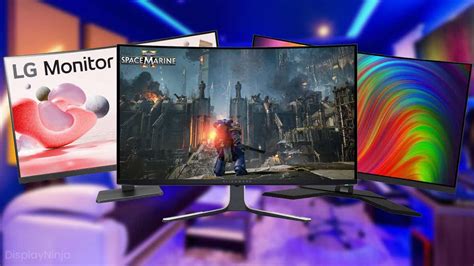
The Edge in Pixels: Why Monitor Settings Matter in FPS Gaming
In the high-stakes world of competitive First-Person Shooter (FPS) gaming, every millisecond and pixel can dictate victory or defeat. While a powerful GPU and a skilled player are paramount, often overlooked is the critical role of monitor settings. Optimizing your display isn’t just about making the game look good; it’s about minimizing input lag, reducing motion blur, and ensuring the most responsive visual feedback possible. Dialing in these settings can give you the precious fraction of a second needed to spot an enemy, react, and land that crucial headshot.
Core Settings for Unparalleled Responsiveness
Refresh Rate (Hz)
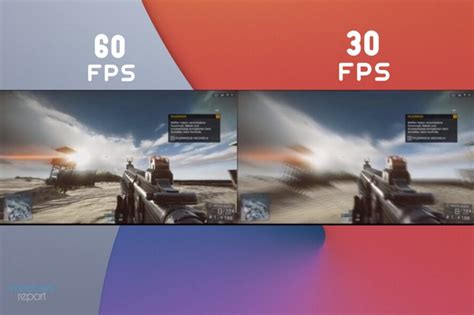
This is arguably the most impactful setting for competitive FPS gaming. A higher refresh rate means your monitor updates the image on screen more times per second, resulting in smoother motion and reduced input lag. While 60Hz is standard, competitive gamers should aim for at least 144Hz, with 240Hz or even 360Hz being the gold standard for top-tier play. Ensure your in-game settings also match your monitor’s maximum refresh rate to take full advantage.
Response Time (ms)
Response time refers to how quickly a pixel can change from one color to another. A low response time (e.g., 1ms Gray-to-Gray) is crucial to minimize ghosting or blurring of fast-moving objects, like enemy players or projectiles. This is particularly important for TN and some IPS panels. Faster response times ensure that what you see is crisp and clear, even during rapid camera movements.
Input Lag
While not a direct monitor setting, input lag is a critical factor influenced by your monitor. It’s the delay between an action (like a mouse click) and the corresponding visual change on screen. Many gaming monitors are designed with low input lag. Some monitors have a ‘Game Mode’ which bypasses certain processing to reduce input lag – ensure this is enabled if available.
Advanced Display Adjustments
Overdrive/Response Time Compensation
Most gaming monitors include an ‘Overdrive’ or ‘Response Time Compensation’ setting in their On-Screen Display (OSD). This accelerates pixel transitions. Experiment with different levels; too low and you get ghosting, too high and you might experience ‘inverse ghosting’ or ‘overshoot artifacts,’ where pixels temporarily over-darken or over-brighten before settling. The optimal setting is usually one step below the maximum.
Adaptive Sync (G-Sync/FreeSync)
Adaptive Sync technologies synchronize your monitor’s refresh rate with your GPU’s frame rate, eliminating screen tearing and stuttering. While beneficial for overall smoothness, some competitive players debate its impact on input lag, with some preferring to disable it for absolute minimal latency, especially when frame rates consistently exceed the monitor’s refresh rate. However, for most, the tear-free experience outweighs any negligible lag increase.
Brightness, Contrast, and Gamma
- Brightness: Set to a comfortable level that doesn’t strain your eyes, but bright enough to distinguish details in dark areas without washing out the image.
- Contrast: Adjust to achieve a good separation between light and dark elements. Too high can crush whites; too low makes the image look flat.
- Gamma: This affects the luminance of mid-tones. A higher gamma makes the image darker, while lower gamma brightens it. For competitive play, a slightly lower gamma (e.g., 2.0 or 2.2) can make enemies in shadows more visible, but be careful not to completely wash out the scene.
Black Equalizer/Dynamic Black Stabilization
Many gaming monitors offer features like Black Equalizer or Dynamic Black Stabilization. These settings specifically lighten dark areas of the screen without significantly affecting brighter regions, making it easier to spot enemies hiding in dimly lit corners. Experiment carefully, as overdoing it can make the image look flat and reduce immersion, but a subtle adjustment can be a significant advantage.
Color Temperature/Vibrance
While less critical for pure responsiveness, accurate color representation (or a slightly tweaked one) can improve target acquisition. Some players prefer a cooler color temperature for a crisper, more ‘awake’ feel, while others might slightly boost digital vibrance (often via GPU control panel, not monitor OSD) to make enemy models ‘pop’ more against the background. Keep it subtle to avoid eye strain and unnatural looking visuals.
Putting It All Together: A Holistic Approach
The optimal monitor settings aren’t a one-size-fits-all solution; they’re a balance tailored to your specific monitor, PC hardware, and personal preferences. Start by prioritizing high refresh rate and low response time. Then, fine-tune overdrive, adaptive sync, and visual clarity settings (brightness, contrast, gamma, black equalizer) through your monitor’s OSD and your GPU’s control panel. Remember to test your settings in-game, in competitive scenarios, to ensure they provide a tangible advantage without causing discomfort or visual artifacts. A well-configured monitor is an invaluable tool in your arsenal, translating raw hardware power into visible, actionable performance on the battlefield.