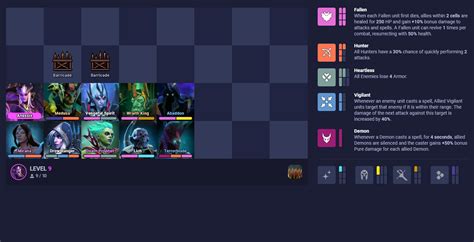
Post-nerf: How to adapt your main DPS build for the new meta?

Understanding the Impact of Nerfs on Your DPS
Game developers frequently implement balance changes, often referred to as “nerfs,” to characters, weapons, or abilities. These adjustments are designed to level the playing field, encourage diversity in gameplay, and prevent a single strategy from becoming overly dominant. For a dedicated DPS player, a significant nerf to your main build can feel like a setback, fundamentally altering your damage output, survivability, or utility. The first step in adapting is to thoroughly understand what precisely was nerfed and how those changes cascade through your existing build.
Analyze the patch notes carefully. Was it a direct reduction in a skill’s damage coefficient? A decrease in weapon base damage? A change in how certain stats scale, or perhaps an adjustment to a key talent or artifact set that your build relied upon? Pinpointing the exact nature of the nerf is crucial for identifying which components of your build are now underperforming and why.

Re-evaluating Your Core Stats and Gear Priorities
Once you understand the nerf, it’s time to critically examine your current stat distribution. A nerf might shift the value of certain stats. For instance, if a skill’s base damage was reduced, but its scaling with a particular stat (like Crit Damage or Elemental Mastery) remained high, you might need to prioritize that stat more heavily. Conversely, if a key stat’s scaling was nerfed, investing less in it and more into another stat for diminishing returns becomes logical.
Consider your weapon and armor pieces. Are their unique perks still as valuable? A weapon that was once best-in-slot due to a specific interaction might now be outshined by another option that benefits more from the current meta’s strongest stats or abilities. Similarly, artifact or gear set bonuses might need to be re-evaluated. Some sets might have received indirect buffs through changes to other systems, making them unexpectedly viable.
Adapting Skills, Talents, and Abilities
Beyond gear, your skill or talent tree often offers the most direct avenues for adaptation. If a primary damage ability was nerfed, explore secondary abilities or utility skills that might now contribute more effectively to your overall damage profile or team synergy. Perhaps a previously overlooked talent node now provides a significant boost, or a different rotation of abilities yields better results.
Sometimes, adapting means a partial or complete re-spec. Don’t be afraid to experiment with different talent paths that might unlock new synergistic interactions or bolster aspects of your character that were less emphasized before but are now more critical. This could involve sacrificing a small amount of raw damage for increased survivability, crowd control, or energy generation, allowing for more consistent damage over time in new encounters.

Exploring New Synergies and Playstyle Shifts
The meta isn’t just about individual character strength; it’s also about team compositions and synergistic interactions. A nerf to your main DPS might open opportunities for other characters in your roster or new support options to shine. Could a different support character amplify your remaining strengths more effectively? Are there new debuffs or buffs you can apply to enemies to compensate for your lost damage?
Furthermore, consider your playstyle. If your build was highly reliant on burst damage and that was nerfed, you might need to transition to a more sustained damage approach, focusing on consistent uptime and resource management. Conversely, if a nerf made sustained damage harder, perhaps a new, quicker burst window can be identified. Practice new rotations, understand altered timings, and be open to fundamentally changing how you engage in combat.
Testing, Refining, and Embracing the Evolution
Adaptation is an iterative process. Theorycrafting is a great start, but real-world testing is essential. Take your modified build into various content – dungeons, raids, PvP – and observe its performance. Use damage meters if available, track ability cooldowns, and pay attention to how smooth your rotations feel. Be prepared to make further tweaks based on your findings.
The meta is constantly evolving, and nerfs are a natural part of that evolution. Instead of viewing them as roadblocks, see them as opportunities to explore new facets of your game and deepen your understanding of its mechanics. A truly skilled player isn’t just someone who follows the meta; it’s someone who can adapt and innovate within it, turning challenges into new strengths.