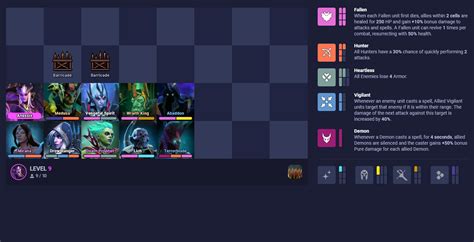
Post-patch meta: What essential build adjustments guarantee competitive performance?
Understanding the Shifting Sands of the Meta
Every major game patch introduces a seismic shift in the competitive landscape. What was once optimal can become obsolete overnight, and understanding these changes is paramount for players aiming to stay at the top. The post-patch meta isn’t just about adapting your playstyle; it primarily hinges on making essential build adjustments that align with the new game balance. Ignoring these shifts is a surefire way to fall behind, as your once-dominant strategies become vulnerable.
Re-evaluating Core Stat Prioritization
One of the most fundamental changes a patch can bring is a re-evaluation of stat efficiency. Developers might buff defensive stats while nerfing offensive ones, or vice-versa, directly impacting how you should allocate your build resources. For example, if a patch significantly increases base health pools across the board, percentage-based damage items might see a surge in value, while flat penetration items could become less potent. Conversely, if healing is nerfed, survivability stats like armor or magic resistance might become more crucial than ever, pushing players away from pure damage outputs.
Always check the patch notes for numerical adjustments to base stats, scaling, and the effectiveness of various attributes. This initial assessment forms the backbone of any subsequent build modifications. A slight tweak in stat weights can have a cascading effect on your entire item and talent progression, so prioritizing correctly is key.
Crucial Itemization Shifts and New Synergies
Item changes are often the most impactful aspect of a new patch. This could involve direct buffs or nerfs to existing items, the introduction of entirely new items, or the removal of others. Players must meticulously analyze the new item landscape to identify new power spikes, cost-efficient builds, and powerful item synergies that weren’t previously available. A previously niche item might become a core component of a top-tier build due to a small stat adjustment or a new unique passive.

Furthermore, consider how item interactions have changed. Does a new legendary item combine exceptionally well with an older epic? Have certain item sets been rebalanced, making them more or less attractive? Competitive players often spend hours in theory crafting, simulating, and testing these new item paths to uncover optimal solutions. The goal is to maximize your champion’s (or character’s) potential within the new economic and power curve of the game.
Talent, Rune, and Skill Tree Overhauls
Beyond items, talent trees, rune systems, or skill allocations frequently receive significant adjustments. A particular talent that was once a mandatory pick might be nerfed into obscurity, while an overlooked option could become the new meta-defining choice. These changes often dictate specific playstyles. For instance, if a talent offering increased early-game survivability is buffed, players might opt for more aggressive early game plays. Conversely, buffs to late-game scaling talents could encourage a more passive, farming-focused approach.
It’s vital to not only understand the direct changes but also their indirect implications on your core build strategy. Does a new keystone rune fundamentally alter how you engage in combat? Does a re-worked skill make a previously unviable combo now incredibly potent? These are the questions that competitive players must answer to truly optimize their builds post-patch.
Adapting Playstyles and Counter-Meta Builds
Build adjustments don’t exist in a vacuum; they inform and are informed by meta-gameplay. If the patch heavily favors tankier compositions, your build might need to incorporate more armor penetration or percentage-health damage. If burst damage is king, you might need to prioritize survivability items or abilities that disrupt high-damage windows. The truly competitive player not only identifies the strongest builds but also understands how to craft ‘counter-meta’ builds that exploit the weaknesses of the most popular strategies.
This dynamic interplay between build and playstyle is what separates good players from great ones. It requires constant observation, analysis of high-level gameplay, and a willingness to experiment. Sometimes, the ‘optimal’ build is not the one that maximizes your own damage, but the one that maximizes your team’s overall effectiveness or severely cripples the opponent’s strategy.
Conclusion: The Edge of Adaptability
In the ever-evolving world of competitive gaming, continuous adaptation is the most powerful tool in your arsenal. Post-patch meta shifts demand more than just minor tweaks; they require a thorough re-evaluation of every aspect of your build, from stat prioritization and itemization to talent choices and how they influence your in-game strategy. By meticulously analyzing patch notes, theorycrafting new combinations, and testing them rigorously, you can ensure your builds are always optimized for competitive performance, guaranteeing you stay ahead of the curve and consistently secure victory.