Pro VOD review: What’s the most efficient method for rapid skill improvement?

In the high-stakes world of esports and competitive gaming, mere practice is often not enough to climb the ranks. To truly accelerate skill improvement, players must adopt a more analytical, surgical approach to their gameplay. This is where Video on Demand (VOD) review shines as an unparalleled tool. But simply rewatching your games isn’t enough; the key lies in an efficient, structured methodology designed for rapid growth.
The Foundation: Why VOD Review is Non-Negotiable
Unlike live gameplay, which is driven by instinct and real-time decision-making, VOD review offers the invaluable opportunity for detached, objective analysis. It allows players to dissect every micro-moment, from positioning errors and missed damage opportunities to suboptimal rotations and communication breakdowns, without the pressure of an ongoing match. This meta-perspective is essential for identifying patterns of error and understanding the ‘why’ behind losses or suboptimal performance.
Efficient Method 1: Focused Sessions, Not Just Watching
The biggest pitfall in VOD review is passive consumption. To be efficient, each review session must have a clear objective.
Define Your Objective
Before hitting play, ask yourself: What am I looking for? Am I focusing on my laning phase? My ultimate usage? My teamfight positioning? My communication? A broad “review my game” approach is often unproductive. Pick one or two specific areas of improvement to scrutinize.
Segment and Conquer
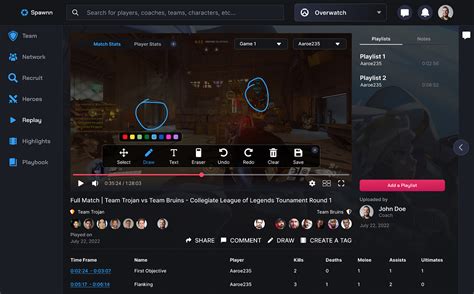
Don’t feel obligated to watch an entire 30-minute game. Identify key moments – pivotal team fights, crucial objective contests, or specific laning phases – and jump directly to them. Use timestamps to mark areas of interest during the game, or review tools that highlight specific events. This targeted approach saves time and keeps your analysis focused on high-impact scenarios.

Efficient Method 2: Active Analysis & Note-Taking
Watching is passive; analyzing is active. Combine your VOD review with a robust note-taking system.
The 3-Bucket System
Categorize your observations into three main buckets:
- Mistakes: What did I do wrong? (e.g., mispositioned, failed ability, poor decision).
- Missed Opportunities: What could I have done better? (e.g., missed kill potential, late rotation, poor resource management).
- Good Plays: What did I do well? (These are important to reinforce positive habits and understand situational strengths).
For each point, note the timestamp and a brief description.
Quantify and Categorize
Take it a step further by quantifying recurring errors. If you notice you’re missing a specific type of last hit 10 times per game, or consistently out of position in team fights, these are high-priority areas. Use tags or labels in your notes (e.g., #Positioning, #AbilityUsage, #Macro) to easily track patterns across multiple games and identify your biggest weaknesses.
Efficient Method 3: Iteration & Implementation
VOD review is useless without action. The insights gained must be translated into tangible changes in your gameplay.
Targeted Practice Drills
Based on your identified weaknesses, design specific practice drills. If you’re struggling with a particular combo, dedicate time in practice mode. If your map awareness is lacking, play games with a specific focus on checking the minimap every few seconds. Don’t just queue up and hope for the best; actively try to implement your learned lessons.
Reviewing Your Review
Periodically review your VOD notes from past sessions. Are you still making the same mistakes? Have new ones emerged? This meta-review helps track your progress and ensures you’re not falling back into old habits. It creates a feedback loop essential for sustained improvement.
Beyond Solo: Peer and Coach Review
While solo VOD review is powerful, external perspectives can provide invaluable insights you might miss. Sharing your VODs with higher-ranked peers or professional coaches can unlock new layers of understanding. They can spot nuanced errors, offer alternative strategies, and provide tailored advice that accelerates your learning curve even further.

Conclusion: The Iterative Path to Mastery
Efficient VOD review is not a one-time fix but a continuous, iterative process. By approaching your replays with a focused objective, actively analyzing and noting observations, and then deliberately implementing those lessons through targeted practice, competitive players can unlock a powerful engine for rapid skill improvement. It transforms passive observation into an active learning cycle, pushing you closer to mastery with every game analyzed.